

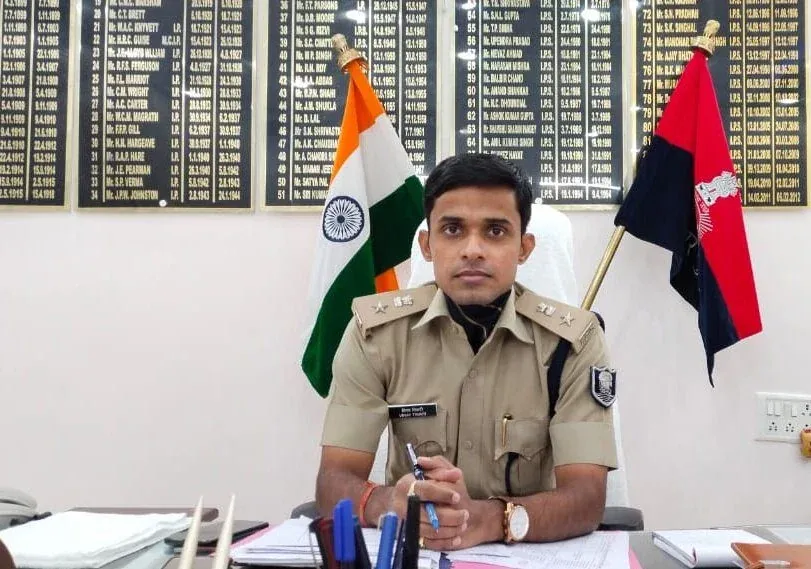
The Indian Police Service (IPS) is one of the country’s most respected civil services. Officers serving in this prestigious organization are responsible for maintaining law and order, preventing crime, protecting citizens and ensuring that the justice system functions effectively. Their professional journeys often attract public attention because they involve discipline, responsibility, difficult decisions and service to society. Among the names that have received attention in discussions about Indian policing is Vinay Tiwari, an IPS officer whose professional identity is associated with police administration and public service.
The interest surrounding Vinay Tiwari IPS also reflects a broader curiosity about the lives and responsibilities of Indian police officers. People frequently want to understand how IPS officers enter the service, what challenges they face during their careers and how their administrative decisions influence communities. A police officer’s work extends far beyond responding to emergencies. It involves managing teams, coordinating investigations, maintaining public confidence and adapting to changing security requirements.
Understanding an officer’s professional journey requires looking beyond headlines and isolated incidents. Education, training, field experience, administrative responsibilities and ethical conduct all contribute to the development of an effective police leader. This article examines the professional context surrounding Vinay Tiwari while explaining the wider responsibilities, challenges and expectations associated with serving in the Indian Police Service.
Who Is Vinay Tiwari IPS?
Vinay Tiwari is an Indian Police Service officer belonging to the 2015 batch and the Bihar cadre. He originally comes from Lalitpur district in Uttar Pradesh. His professional journey is particularly interesting because it combines a technical educational background with experience in engineering, competitive examinations and police administration. His selection into the IPS represents a transition from an engineering-oriented career path to a public service profession involving law enforcement and governance.
According to published accounts of his career, he completed his civil engineering education at the Indian Institute of Technology (BHU), Varanasi. Before entering the police service, he also achieved success in the Indian Engineering Services examination. His academic achievements demonstrate the value of technical knowledge, analytical thinking and consistent preparation when pursuing competitive career opportunities.
Basic Profile and Professional Details
The following table presents key publicly reported information about the officer.
| Category | Details |
|---|---|
| Name | Vinay Tiwari |
| Service | Indian Police Service |
| IPS batch | 2015 |
| Cadre | Bihar |
| Home state | Uttar Pradesh |
| Hometown | Lalitpur |
| Education | B.Tech in Civil Engineering |
| Institution | IIT (BHU), Varanasi |
| UPSC Civil Services rank | AIR 193, as reported |
| Professional background | Engineering and police administration |
These details provide an overview of his background, although official service records should be preferred for verifying changes in designation and posting.
Educational Background and Early Ambitions
Education played an important role in shaping Tiwari’s professional direction. Coming from Lalitpur, he pursued engineering studies and eventually secured admission to IIT (BHU), one of India’s established technical institutions. He studied civil engineering, a discipline that requires mathematical understanding, problem-solving abilities and the capacity to approach complicated situations systematically. These skills can also be useful in administrative positions where officers must assess information, manage resources and make decisions under pressure.
His academic journey was not limited to engineering. Reports about his career indicate that he secured the 50th rank in the Indian Engineering Services examination. This achievement reflects his ability to perform in highly competitive national examinations. However, he eventually decided to pursue the Civil Services because he wanted to contribute more directly to society. This change in direction illustrates an important career lesson: professional success does not always mean following the same path throughout life. Sometimes, a different ambition provides a stronger sense of purpose.
From Engineering to Civil Services Preparation
After completing his engineering education, Tiwari reportedly gained professional experience before concentrating on civil services preparation. The decision to prepare for the UPSC examination requires considerable commitment because the selection process tests candidates across several areas, including general knowledge, analytical ability, decision-making and understanding of public affairs.
His reported success in the Civil Services Examination, with an All India Rank of 193, opened the door to the Indian Police Service. This transition also demonstrates how candidates from technical educational backgrounds can enter administrative and law enforcement careers. Engineering knowledge may not directly determine police performance, but the habits developed through technical education can support logical reasoning, structured planning and problem-solving.
Entry into the Indian Police Service
Becoming an IPS officer is a significant achievement because the selection process is highly competitive. Candidates must clear the Civil Services Preliminary Examination, Main Examination and Personality Test before receiving service allocation according to their rank, preferences and available vacancies. After selection, IPS probationers undergo professional training to prepare for responsibilities involving criminal investigation, public safety, police leadership and administration.

Tiwari joined the IPS on 28 December 2015 as a Bihar cadre officer. His professional development subsequently involved different police assignments, allowing him to gain experience in urban policing, district administration, railway security and specialised investigation. The official IPS civil list records his service details and educational qualification.
Career Journey and Important Police Postings
A police officer’s career generally involves several transfers and changes in responsibility. Every posting introduces different administrative requirements, geographical conditions and public safety concerns. An officer working in a large city may concentrate on traffic management, organised crime and public gatherings, whereas a district superintendent must address local disputes, criminal investigations, rural security and coordination with other government departments.
During his career, Tiwari served in different capacities within Bihar Police. His assignments included City SP in Patna, SP in Bhojpur, responsibilities connected with prohibition enforcement, SP in Samastipur, SP (Rail) in Muzaffarpur and a specialised assignment in the Economic Offences Unit. These positions provided exposure to different aspects of policing and administration.
Major Career Postings
| Location or department | Reported responsibility |
|---|---|
| Patna | City Superintendent of Police |
| Bhojpur | Superintendent of Police |
| Patna | Prohibition-related police responsibility |
| Samastipur | Superintendent of Police |
| Muzaffarpur | Superintendent of Police, Rail |
| Economic Offences Unit | SP, Cyber Investigation and related responsibilities |
| Gopalganj | Superintendent of Police |
The table summarises reported career assignments rather than presenting every transfer date. The official district administration currently identifies him as the Superintendent of Police of Gopalganj.
Responsibilities as Superintendent of Police
The position of Superintendent of Police is among the important district-level leadership roles in the Indian police system. An SP supervises police stations, reviews investigations, coordinates security arrangements and ensures that personnel perform their responsibilities according to established procedures. The officer must also work with district administration, judicial authorities and other departments whenever situations require coordinated action.
In a district such as Gopalganj, policing involves a combination of urban and rural security requirements. Officers must respond to criminal complaints, monitor sensitive areas, address traffic concerns and maintain public order during festivals, elections and other major gatherings. An effective SP must balance operational priorities with public communication and accountability. This makes district policing a demanding administrative responsibility rather than simply a law enforcement position.
The Sushant Singh Rajput Case and National Attention
One of the most widely reported episodes associated with Tiwari’s career occurred in August 2020, following the death of actor Sushant Singh Rajput. The case attracted enormous public attention and became the subject of extensive media coverage and discussions involving different investigative authorities. After an FIR was registered in Patna following a complaint from the actor’s family, Bihar Police became involved in investigating aspects of the matter.

Tiwari, who was serving as Patna City SP (Central) at the time, travelled to Mumbai on 2 August 2020 to coordinate with the Bihar Police investigation team. However, shortly after his arrival, the Brihanmumbai Municipal Corporation placed him under institutional quarantine under the COVID-19 restrictions operating at that time. The decision became controversial because Bihar Police officials questioned the circumstances surrounding the quarantine and its impact on the investigation.
Why Did the Quarantine Become a Major Issue?
The incident developed into a wider discussion about coordination between state police departments during an investigation. Bihar Police officials wanted their team to participate in the investigation, while Mumbai authorities referred to the public health restrictions applicable during the pandemic. The disagreement attracted attention from national media outlets and brought the officer’s name into the public spotlight.
Tiwari was eventually released from quarantine and returned to Patna on 7 August 2020. The episode highlighted the practical difficulties that can arise when police forces from different states need to cooperate under unusual circumstances. It also demonstrated how administrative procedures, public health requirements and investigative responsibilities can sometimes intersect in complicated ways.
It is important to understand that the quarantine episode was an administrative controversy surrounding inter-state coordination. It should not be confused with a final finding about responsibility for the actor’s death or the outcome of the broader investigation.
Leadership Approach and Community Policing
Effective policing requires more than enforcing laws and taking action against offenders. Police officers also need to establish relationships with residents, understand local concerns and encourage people to cooperate with law enforcement agencies. Community policing is based on the idea that public safety improves when citizens and police personnel work together rather than interacting only during emergencies.
During his tenure in Bhojpur, Tiwari spoke about initiatives intended to address practical public concerns. One reported initiative involved helping residents recover mobile phones through police efforts. Such activities can make a meaningful difference because losing a mobile phone can create financial difficulties, expose personal information and disrupt everyday communication. Recovering a missing device also provides an opportunity for citizens to experience police assistance in a direct and useful way.
Examples of Community-Focused Police Work
Some important areas of community-oriented policing include:
-
Recovering lost or stolen mobile phones and other belongings.
-
Improving communication between police stations and local residents.
-
Taking action against drug-related offences and illegal activities.
-
Improving traffic management and road safety.
-
Encouraging citizens to report suspicious activities responsibly.
These activities illustrate how police administration can combine enforcement with public assistance. When residents receive timely support, they may become more comfortable approaching police stations and sharing information about local problems.
Interest in Poetry and Creative Expression
An interesting aspect of Tiwari’s public profile is his reported interest in poetry. While police work is commonly associated with discipline, investigation and operational responsibilities, creative interests provide another perspective on an individual’s personality. Writing poetry can offer an opportunity to express thoughts about society, personal experiences, difficult circumstances and human emotions.
His interest in creative writing attracted attention during the COVID-19 quarantine episode in Mumbai. News reports highlighted how he shared self-composed poems on social media while staying in quarantine. He also discussed how surroundings and peaceful locations influenced his writing process.
This creative side offers an interesting contrast to the demanding nature of police administration. Police officers regularly encounter distressing situations, complicated disputes and difficult decisions. Creative expression can provide a personal outlet for reflection, although professional responsibilities and public accountability remain central to their roles.
Current Posting and Administrative Responsibilities in Gopalganj
According to the official Gopalganj district administration website, Vinay Tiwari is currently serving as the Superintendent of Police of Gopalganj, Bihar. The district’s official police directory also identifies him in this position. His current assignment places him in charge of district-level policing, including supervision of police personnel, crime prevention, public safety and coordination with other administrative authorities.
Gopalganj has its own geographical and administrative challenges. Its location near the Uttar Pradesh border makes effective coordination and monitoring important for maintaining public security. Police authorities must remain attentive to criminal activities, illegal transportation, substance-related offences and other local security concerns. The SP must also ensure that police stations respond appropriately to complaints and that investigations are conducted professionally.
The responsibilities associated with Vinay Tiwari IPS in this position extend beyond routine law enforcement. They include evaluating police performance, reviewing sensitive cases, arranging security during public events and improving communication between the police and residents. The district administration’s official directory provides confirmation of his current designation, making it a useful source for readers interested in his latest professional position.
Modern Policing and the Importance of Technology
Technology has significantly changed the way police departments operate. Traditional investigation methods remain important, but modern policing increasingly depends on digital evidence, surveillance systems, cybercrime reporting platforms and electronic databases. Criminal activities involving online fraud, identity theft, financial scams and unauthorised access to personal information require specialised knowledge and technical investigation methods.
An officer with an engineering background can bring an analytical perspective to these changing requirements. However, successful cybercrime investigation also requires continuous training, specialised personnel, coordination with financial institutions and cooperation with digital service providers. The work involves identifying suspicious transactions, examining electronic evidence and following legally appropriate investigation procedures.
The professional experience of Vinay Tiwari IPS across district policing and specialised assignments provides an opportunity to understand how police responsibilities are evolving. Cybersecurity awareness, digital investigation capabilities and timely public assistance are increasingly important components of effective policing. These areas will continue to influence the expectations placed on police leadership in the coming years.
Challenges Faced by IPS Officers in India
The responsibilities of an IPS officer are demanding because policing involves unpredictable situations and decisions that can directly affect people’s lives. Officers must maintain discipline within their departments while ensuring that citizens receive fair treatment. They also need to manage limited resources, respond to emergencies and maintain professional standards during periods of public pressure.
Some of the major challenges associated with modern police administration include:
-
Managing increasing cybercrime and technology-enabled financial fraud.
-
Addressing organised criminal networks and inter-state offences.
-
Improving public confidence and police accessibility.
-
Ensuring transparent investigations and accountability.
-
Maintaining law and order during sensitive public situations.
These challenges require patience, professional knowledge and effective leadership. A police officer must also understand the importance of constitutional rights, due process and impartial enforcement. Public trust cannot be built through enforcement alone; it depends on consistent and responsible conduct.
What Makes His Professional Journey Interesting?
The professional journey of Vinay Tiwari IPS attracts interest because it combines several different experiences. His engineering education, success in competitive examinations, entry into the police service and experience across multiple administrative assignments provide an example of a career that developed through different stages of preparation and responsibility.
His experience during the Sushant Singh Rajput investigation also demonstrates how police officers can become subjects of national discussion when investigations involve complex administrative or inter-state issues. Meanwhile, his reported interest in poetry adds a personal dimension to his public profile. These aspects make his career interesting to readers who want to understand both the professional and individual sides of civil servants.
However, it is equally important to evaluate police officers through verified professional information rather than relying entirely on social media discussions or sensational headlines. Official service records, government announcements and credible news reporting provide a stronger foundation for understanding an officer’s background and responsibilities.
Conclusion
The journey of Vinay Tiwari reflects the opportunities available to individuals who combine academic preparation, professional ambition and an interest in public service. From studying civil engineering at IIT (BHU) to achieving success in competitive examinations and joining the Bihar cadre of the Indian Police Service, his career demonstrates a transition from technical education to a demanding administrative profession.
His different assignments in Bihar, involvement in the widely reported Sushant Singh Rajput investigation, community-focused police initiatives and current responsibility as Gopalganj Superintendent of Police form important parts of his professional profile. His interest in poetry also illustrates that individuals serving in demanding government positions can have creative interests beyond their official duties.
For students preparing for the UPSC examination, his journey offers useful lessons about career planning, determination and the possibility of changing professional direction. For readers interested in Indian policing, his experience provides an opportunity to understand the responsibilities of district police leadership and the changing nature of law enforcement.
Ultimately, the significance of an IPS officer’s career should be measured through professional integrity, responsible administration, effective investigations and public service. The continuing work of Vinay Tiwari IPS in Bihar provides a relevant example of the varied responsibilities associated with modern Indian police administration.