

The journey of becoming a civil servant in India requires determination, patience, discipline, and the ability to overcome repeated challenges. Every year, millions of students prepare for the Union Public Service Commission (UPSC) Civil Services Examination, but only a small percentage achieve their dream of entering prestigious services such as the Indian Administrative Service (IAS) and Indian Police Service (IPS). Among the inspiring personalities who have attracted attention through their determination and academic achievements is Aashna Chaudhary, an Indian Police Service officer whose success story demonstrates the importance of persistence and self-belief.
Coming from Pilkhuwa in Uttar Pradesh’s Hapur district, she developed an interest in education and public service at an early stage. Her academic background, experiences during university, and commitment to civil services helped shape her professional ambitions. However, her journey was not without difficulties. She faced unsuccessful attempts in the UPSC examination before eventually securing an impressive All India Rank of 116 in the Civil Services Examination 2022. Her achievement brought her recognition among civil services aspirants and encouraged many students to reconsider how they approach competitive examinations.
Today, her professional journey represents more than an examination result. It highlights how a clear goal, consistent preparation, and the willingness to learn from mistakes can help someone move closer to a challenging career. Her educational qualifications and decision to join the Indian Police Service have also made her journey interesting for young people who want to understand the opportunities available through the civil services.
Who Is Aashna Chaudhary?
Aashna Chaudhary is an Indian Police Service officer belonging to the 2023 batch of the Uttar Pradesh cadre. She secured All India Rank 116 in the UPSC Civil Services Examination 2022 and subsequently entered the police service. Her professional identity is connected with public administration, law enforcement, and responsibilities associated with maintaining public safety.
She comes from Pilkhuwa, a town in the Hapur district of Uttar Pradesh. Her background and academic journey have received considerable attention because she demonstrated that students from smaller towns can compete successfully in national-level examinations. Rather than allowing geographical limitations or examination setbacks to determine her future, she continued working towards her objective.
Her career also attracts interest because she pursued higher education in different academic fields before entering public service. Her graduation in English Literature and postgraduate studies in International Relations provided her with exposure to subjects involving communication, society, politics, and international affairs. These subjects offer useful perspectives for individuals preparing for administrative and law enforcement responsibilities.
Early Life and Family Background
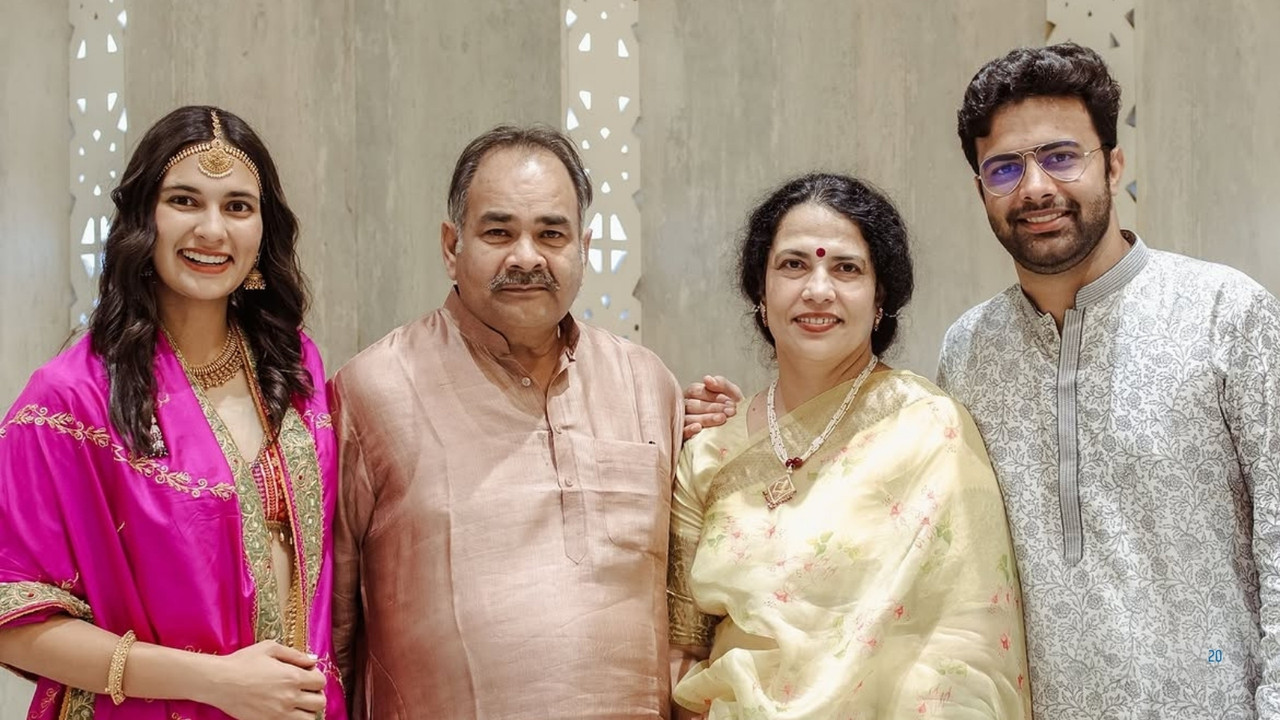
Growing up in Uttar Pradesh, she experienced an environment where education and personal development played important roles. Her family supported her academic ambitions and encouraged her to pursue meaningful professional goals. Her father, Dr. Ajeet Singh, has been described in media reports as a government college professor, while her mother, Indu Singh, has also been mentioned in accounts of her family background.
Her early surroundings helped develop an appreciation for education and social responsibility. Coming from a smaller town did not prevent her from exploring opportunities in different educational institutions. As she progressed through school, she gained the academic foundation that later supported her higher studies in Delhi and her preparation for the civil services examination.
Family encouragement can be particularly valuable during competitive examination preparation because the process often involves uncertainty, long study hours, and emotional pressure. Students preparing for UPSC frequently experience periods when their efforts do not immediately produce the expected results. Having a supportive environment can help them maintain confidence and continue improving their preparation strategy.
Educational Qualifications and Academic Journey
Education played an important role in shaping her career ambitions. Her schooling included St. Xavier’s School in Pilkhuwa, St. Mary’s School in Udaipur, and Delhi Public School in Ghaziabad. She reportedly achieved 96.5 percent in her Class 12 examinations, reflecting her strong academic performance during school.
After completing her school education, she joined Lady Shri Ram College for Women, University of Delhi, where she pursued a bachelor’s degree in English Literature. Studying at a reputed university exposed her to a wider academic environment and helped develop important abilities such as analytical thinking, reading comprehension, writing, and communication.
She later completed a master’s degree in International Relations from South Asian University in New Delhi. This postgraduate qualification broadened her understanding of political systems, international developments, diplomacy, and global affairs. Such subjects can be particularly useful for civil services aspirants because the UPSC examination evaluates knowledge across multiple areas of society, governance, history, politics, and current affairs.
Her academic path demonstrates that a candidate does not necessarily need an engineering, medical, or traditional public administration background to succeed in the civil services examination. Students from humanities and social science disciplines can also develop the knowledge and analytical skills required to perform well.
UPSC Journey: From Two Setbacks to AIR 116
One of the most inspiring aspects of her professional story is her UPSC preparation journey. The Civil Services Examination is widely considered one of India’s most competitive examinations because it tests candidates through multiple stages, including Preliminary Examination, Main Examination, and Personality Test.
Her preparation journey began around 2019. However, her first two attempts did not produce the desired result, as she could not clear the Preliminary Examination in 2020 and 2021. These setbacks could have discouraged her from continuing, but she chose to examine her preparation methods and identify areas that needed improvement.
Instead of treating failure as the end of her ambition, she approached it as an opportunity to understand the examination more carefully. She worked on improving her revision methods, strengthening conceptual understanding, practising mock tests, and developing better answer-writing techniques.
Her efforts eventually produced a remarkable result in the UPSC Civil Services Examination 2022. She secured All India Rank 116, which brought her closer to her long-term goal of joining the civil services. Her success became an encouraging example for students who had experienced unsuccessful attempts and were uncertain about continuing their preparation.
The most important lesson from this experience is that competitive examinations require more than simply studying for long hours. Candidates must understand their weaknesses, evaluate their performance, and make practical changes whenever their preparation strategy is not producing results.
UPSC Preparation Strategy and Study Approach
The preparation approach associated with her journey offers useful lessons for students who are planning to appear for the Civil Services Examination. Although every candidate needs an individual strategy, certain principles remain valuable across different preparation styles.
One important element is consistency. The UPSC syllabus is extensive, and candidates need sufficient time to understand subjects, revise information, practise questions, and remain updated with current affairs. Studying regularly can help build stronger conceptual understanding than depending entirely on last-minute preparation.
Another important factor is learning from previous mistakes. Candidates who repeatedly appear for competitive examinations should carefully evaluate their mock-test performance and identify areas where they lose marks. For example, someone who understands a topic but struggles to complete an answer within the given time may need to practise writing under examination conditions.
The following preparation principles are particularly useful for serious aspirants:
- Develop a realistic timetable based on the complete UPSC syllabus.
- Revise important subjects regularly instead of collecting excessive study material.
- Practise mock examinations to improve accuracy and time management.
- Analyse mistakes and improve answer-writing skills consistently.
Her experience also highlights the value of maintaining confidence after unsuccessful attempts. Preparation should not become a competition based only on the number of hours spent studying. Understanding concepts, retaining information, and applying knowledge effectively are equally important.
Choosing IPS and Beginning a Professional Career
Securing a good rank in the UPSC examination provides candidates with an opportunity to enter different civil services, depending on their rank, preferences, category, vacancies, and other allocation rules. In her case, she entered the Indian Police Service rather than pursuing a career in the Indian Administrative Service.
The decision to join IPS reflects an interest in the responsibilities associated with policing and public safety. The Indian Police Service is one of the country’s major All India Services. Its officers work in areas involving crime prevention, investigation, public order, security management, and police administration.
After completing the required selection and training process, she joined the IPS on 1 August 2023 as an officer of the 2023 batch in the Uttar Pradesh cadre. Her entry into the service marked the beginning of a professional journey involving practical responsibilities rather than only academic achievement.
The transition from examination preparation to police training requires a different set of abilities. While written examinations assess knowledge and analytical skills, professional policing also requires communication, leadership, decision-making, discipline, emotional balance, and the ability to respond to difficult situations.
Current Posting and Responsibilities in Uttar Pradesh
As of November 2026, available officer-profile information identifies her as serving as Assistant Superintendent of Police (ASP) in Mathura, Uttar Pradesh. She assumed this posting in July 2025. The position involves responsibilities connected with police administration and field-level law enforcement.
An Assistant Superintendent of Police generally works within an assigned area and coordinates activities related to maintaining law and order. The role can involve supervising police personnel, monitoring investigations, addressing public complaints, coordinating security arrangements, and responding to situations requiring immediate administrative attention.
Mathura is an important district in Uttar Pradesh because of its cultural, religious, and tourism-related significance. Managing public safety in such an area requires coordination, planning, and awareness of local conditions. Police officers may need to handle large gatherings, traffic management, public events, and routine law enforcement responsibilities.
Her present role represents an important stage in her early career. As she gains additional field experience, she will have opportunities to develop professional knowledge and understand the practical challenges associated with policing in a large and diverse state.
Career Details at a Glance
The following table provides an overview of the publicly reported professional and educational information associated with her journey.
| Particular | Details |
|---|---|
| Name | Aashna Chaudhary |
| Profession | Indian Police Service Officer |
| Birthplace | Pilkhuwa, Hapur, Uttar Pradesh |
| Date of Birth | 28 August 1998 |
| Age | 28 years (November 2026) |
| Graduation | BA Honours in English Literature |
| Postgraduation | MA in International Relations |
| Graduation Institution | Lady Shri Ram College |
| Postgraduate Institution | South Asian University |
| UPSC Examination | Civil Services Examination 2022 |
| All India Rank | 116 |
| IPS Batch | 2023 |
| Cadre | Uttar Pradesh |
| Current Posting | ASP, Mathura |
Professional Responsibilities of an IPS Officer
Working in the Indian Police Service involves a combination of administrative duties, field operations, and public interaction. Officers must understand the legal framework governing policing and ensure that their actions remain consistent with established procedures.
One of the major responsibilities is maintaining law and order. Police officers coordinate with local teams to prevent disturbances, respond to emergencies, and ensure that citizens can carry out their daily activities safely. Effective planning and communication become especially important during festivals, public gatherings, demonstrations, and other major events.

Crime prevention and investigation are also essential parts of police administration. Officers supervise police personnel, monitor investigations, evaluate operational requirements, and work towards improving the effectiveness of law enforcement. They must also ensure that complaints receive appropriate attention and that legal procedures are followed.
Public trust is another important part of the profession. A successful police administration system depends not only on enforcement but also on transparency, accessibility, and responsible behaviour. Officers are expected to understand community concerns and encourage cooperation between citizens and law enforcement agencies.
Social Media Presence and Public Recognition
The increasing use of digital platforms has changed how people learn about civil servants and their professional journeys. Many young aspirants follow officers who share information about examination preparation, career experiences, and personal development.
Her growing public recognition is connected partly with interest in her UPSC achievement and professional journey. Through social media appearances and interviews, she has become a familiar personality among sections of the civil services aspirant community.
However, it is important to distinguish between public recognition and professional responsibilities. Social media can help communicate experiences and motivate students, but an officer’s primary role remains the performance of official duties. Public service requires dedication, accountability, and a clear understanding of professional boundaries.
Her journey also demonstrates how digital platforms can make information about civil services more accessible. Students who may not have direct access to experienced officers can learn from publicly available discussions, interviews, and preparation-related experiences.
Lessons Students Can Learn From Her Success
The story of an aspirant who continues preparing after two unsuccessful attempts offers several lessons for students facing competitive examinations. The first lesson is that an unsuccessful result does not automatically indicate a lack of ability. Sometimes, candidates need to improve their understanding of the examination pattern, revise more effectively, or change their approach to answer writing.
The second lesson is the importance of choosing a career based on personal interests and professional goals. Civil services offer different opportunities, and candidates should understand the responsibilities of each service before making their preferences. The IAS, IPS, and other services involve different working environments and administrative responsibilities.
Another valuable lesson is the importance of maintaining a balanced routine. Competitive examination preparation can become stressful when students focus entirely on results. Taking appropriate breaks, maintaining realistic targets, and reviewing progress can make the process more sustainable.