

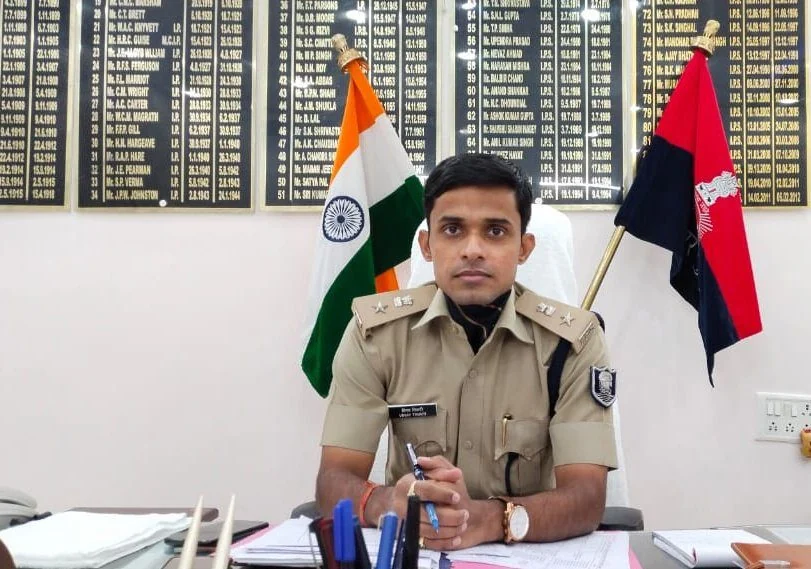
The Indian Police Service (IPS) plays an important role in maintaining law and order, protecting citizens and strengthening the country’s criminal justice system. Among the officers who have attracted public attention through their professional journey and administrative responsibilities is Vinay Tiwari. His educational background, experience in policing and involvement in significant investigations have made him a recognised name among people interested in civil services and Indian administration.
Vinay Tiwari is an officer of the 2015 batch of the Indian Police Service belonging to the Bihar cadre. Originally from Lalitpur in Uttar Pradesh, he pursued engineering before choosing a career in public administration. His journey demonstrates how professional experience, academic preparation and a commitment to public service can lead someone towards a demanding government responsibility. His work has also attracted attention because of his approach to policing, crime prevention and public accountability.
For UPSC aspirants, students and readers interested in police administration, his professional journey offers several useful insights. Understanding his educational qualifications, career milestones and responsibilities provides a broader picture of the challenges faced by an IPS officer working at the district and state levels.
Early Life and Family Background
Vinay Tiwari comes from Lalitpur district in Uttar Pradesh, a region associated with the Bundelkhand area. His early background is frequently discussed in accounts of his journey because it reflects the importance of education and determination in pursuing competitive careers. He grew up in a farming family, where his father played an important role in supporting his education and encouraging him to pursue professional opportunities.
His family background also illustrates the sacrifices that many Indian households make to provide better educational opportunities for their children. Pursuing engineering and later preparing for the civil services required discipline, financial planning and considerable personal effort. These experiences form an important part of the story behind his transition from an engineering graduate to a senior police officer.
Educational Qualifications and Academic Journey
Education played a significant role in shaping his professional career. Before entering the police service, Tiwari developed an interest in engineering and worked towards securing admission to a respected technical institution. He cleared the IIT-JEE examination and pursued civil engineering at the Indian Institute of Technology (BHU), Varanasi.
His engineering education provided exposure to analytical thinking, technical subjects and structured problem-solving. These abilities can also be useful in administrative positions, where officers regularly evaluate complicated situations, examine available information and make decisions under pressure. His academic background is particularly interesting because he eventually moved from a technical profession towards the civil services.
After completing his engineering degree, he also gained experience in the corporate sector. However, he gradually became interested in contributing to society through public administration. This change in career direction encouraged him to prepare for the Union Public Service Commission examination.
UPSC Journey and Selection into the IPS
The Union Public Service Commission examination is one of India’s most competitive recruitment examinations. It requires candidates to develop knowledge across subjects such as history, geography, economics, polity, science, current affairs and ethics. Along with academic preparation, candidates must demonstrate analytical ability, decision-making skills and effective communication during the selection process.
Tiwari cleared the UPSC Civil Services Examination in 2014 with an All India Rank of 193. He was subsequently selected for the Indian Police Service and became part of the 2015 batch. Reports also mention that he secured an All India Rank of 50 in the Indian Engineering Services examination in the same examination year. These achievements highlight his strong academic preparation and ability to succeed in highly competitive examinations.
His selection is particularly interesting for engineering graduates who are considering a career change. It demonstrates that technical education does not restrict someone to engineering-related professions. With suitable preparation, candidates from different academic backgrounds can pursue civil services and contribute to public administration.
Joining the Indian Police Service and Training
After clearing the civil services examination, Vinay Tiwari entered the Indian Police Service as a direct-recruit officer. He belongs to the Bihar cadre and is associated with the 2015 batch. Before taking up independent administrative responsibilities, newly recruited IPS officers undergo professional training to understand policing procedures, criminal law, investigation methods and leadership responsibilities.
The Sardar Vallabhbhai Patel National Police Academy in Hyderabad provides professional training to IPS probationers. Training includes physical fitness, law enforcement, investigation techniques, internal security, leadership development and practical exercises. These subjects prepare officers to handle different situations, ranging from routine police administration to serious criminal investigations.
His transition from engineering to policing represents a shift from technical problem-solving towards public administration. An IPS officer must understand local conditions, coordinate with different departments and make decisions that directly affect public safety. The combination of educational experience and professional police training provides a foundation for these responsibilities.
Professional Career and Important Postings
The career of an IPS officer involves working in different administrative positions, districts and specialised departments. Every posting introduces new challenges and opportunities to understand public concerns. During his career in Bihar, Tiwari served in several important assignments, gaining experience in urban policing, district administration, railway security and specialised investigations.
His professional journey includes responsibilities in Patna, Bhojpur, Samastipur and Muzaffarpur, followed by work connected with the Economic Offences Unit. These assignments helped expand his experience across different areas of policing.
City SP in Patna
One of his early prominent assignments was as City Superintendent of Police (Central) in Patna. Working in a major urban centre involves managing several law enforcement challenges, including property-related offences, public disturbances, traffic issues and criminal investigations. Urban policing also requires coordination between police stations, investigation teams and senior administrative officials.
During this period, he became more widely recognised because of his involvement in the investigation connected with the death of actor Sushant Singh Rajput. His assignment in the case attracted considerable media attention and brought discussions about coordination between police forces in different states into the public spotlight.
SP of Bhojpur
Tiwari later served as Superintendent of Police in Bhojpur district. District-level police administration involves supervising police stations, reviewing investigations, monitoring criminal activities and maintaining public order. The SP is also responsible for coordinating with local administration and ensuring that police personnel perform their duties effectively.
Such assignments require officers to understand the social and geographical conditions of their districts. Effective policing depends not only on responding to criminal incidents but also on identifying local problems and building public confidence in law enforcement.
Responsibilities in Samastipur
His posting in Samastipur further expanded his experience in district policing. During this assignment, he received attention for initiatives aimed at recovering stolen and snatched mobile phones. A campaign associated with his work reportedly recovered mobile phones worth approximately one crore rupees between January and June 2023 and returned them to their rightful owners.
This initiative demonstrated the practical importance of investigation techniques and coordination in addressing everyday crimes. Mobile phone theft can cause financial losses and expose personal information to misuse. Recovering stolen devices therefore helps victims while also discouraging organised theft networks.
SP Railway in Muzaffarpur
In September 2024, he was assigned responsibility as Superintendent of Police (Rail) in Muzaffarpur. Railway policing has its own operational requirements because crimes can take place inside trains, at railway stations and across different jurisdictions.

The responsibilities of railway police include passenger safety, prevention of theft, investigation of criminal incidents and coordination with railway authorities. Officers must also ensure that investigations continue effectively even when incidents involve multiple locations or travelling suspects.
Economic Offences and Cyber Investigation Responsibilities
Tiwari subsequently held responsibilities associated with Bihar’s Economic Offences Unit. Such specialised assignments involve dealing with financial irregularities, organised economic offences and investigations requiring technical or documentary analysis.
His work also became connected with cyber investigation and monitoring online criminal activity. Cybercrime has become an important challenge for modern police departments because criminals increasingly use digital platforms to target individuals and organisations. Online fraud, identity theft, impersonation and manipulated digital content require specialised investigation methods.
Vinay Tiwari IPS Career at a Glance
| Career detail | Information |
|---|---|
| Name | Vinay Tiwari |
| Service | Indian Police Service |
| IPS batch | 2015 |
| Cadre | Bihar |
| Home state | Uttar Pradesh |
| Hometown | Lalitpur |
| Educational background | Civil Engineering |
| Engineering institution | IIT (BHU), Varanasi |
| UPSC examination | Civil Services Examination 2014 |
| Reported UPSC rank | All India Rank 193 |
| Notable assignment | City SP, Patna |
| Other assignments | Bhojpur, Samastipur and Muzaffarpur |
| Public recognition | Sushant Singh Rajput investigation |
Role in the Sushant Singh Rajput Case
One of the most widely discussed episodes associated with Vinay Tiwari IPS was his involvement in the investigation following the death of Bollywood actor Sushant Singh Rajput in June 2020. The case received nationwide attention, with extensive public discussion about the circumstances surrounding the death and the investigation conducted by different authorities.
Following the registration of a case in Bihar, a police team was sent to Mumbai to investigate matters connected with the complaint. Tiwari arrived in Mumbai on 2 August 2020 to lead the Bihar Police team. However, the Brihanmumbai Municipal Corporation placed him under institutional quarantine under the COVID-19 restrictions applicable at that time.
The quarantine became a significant issue because Bihar Police questioned the restrictions placed on their investigating officer, while the Mumbai civic authorities maintained that they were following applicable public health rules. The incident generated considerable debate about inter-state police coordination and the practical difficulties involved when investigations cross state boundaries.
The episode brought Tiwari into the national spotlight. It also highlighted the importance of cooperation between law enforcement agencies, especially when a case involves different jurisdictions. His involvement should be understood as part of the wider investigation rather than as a final determination of the facts or responsibility in the case.
Current Posting and Administrative Responsibilities
As of 2026, recent media reports identify him as the Superintendent of Police of Gopalganj district in Bihar. His appointment was reported as part of a major administrative reshuffle involving IPS officers in the state. Gopalganj is an important district because of its geographical position near the Uttar Pradesh border. Maintaining law and order in such an area requires attention to local criminal networks, transportation routes, public safety and coordination with neighbouring authorities.
The position of district SP carries significant administrative responsibility. The officer must supervise police stations, review serious criminal cases, monitor investigations and ensure that complaints from citizens receive appropriate attention. The role also involves maintaining coordination with district officials, courts and other government departments. For Vinay Tiwari IPS, this responsibility represents another important stage in a career involving different aspects of police administration.
Importance of Surprise Inspections
Surprise inspections are an important administrative practice because they allow senior officials to assess ground realities rather than depending entirely on routine reports. During his Gopalganj assignment, Tiwari attracted media attention for conducting a late-night inspection of the Model Sadar Hospital. The inspection reportedly covered areas such as the intensive care unit, emergency ward, laboratory and facilities for admitted prisoners.
Such visits demonstrate how police administration can extend beyond conventional crime control. When police officials inspect facilities connected with public safety, they can identify operational concerns and communicate with the relevant authorities. However, the responsibilities of hospital administration and police administration remain distinct, and effective coordination between them is essential.
Approach Towards Modern Policing and Technology
Modern policing increasingly depends on technology, data analysis and specialised investigation methods. Traditional approaches remain important, but digital tools can help officers identify patterns, trace suspects and respond to criminal activities more efficiently. The growing use of smartphones, online payments and social media has also created new opportunities for criminals.
Vinay Tiwari IPS has been associated with responsibilities involving cyber investigation and economic offences. These areas require officers to understand digital evidence, financial transactions and online communication systems. For example, investigating an online financial fraud may involve tracing suspicious transactions, identifying digital accounts and coordinating with banks and technical experts.
Cybercrime prevention also requires public awareness. Citizens need to understand the importance of protecting passwords, avoiding suspicious links and verifying requests for money. Police departments can strengthen prevention efforts through awareness campaigns, timely complaint registration and better coordination with specialised cybercrime teams.
Notable Qualities and Professional Strengths
The professional journey of Vinay Tiwari reflects several qualities that are important for effective public administration. His academic achievements, transition from engineering to civil services and experience in different police assignments provide useful examples for people interested in government careers.
Some important aspects of his professional journey include:
-
Academic discipline: His engineering education and competitive examination success demonstrate the importance of consistent preparation.
-
Administrative experience: His different postings have exposed him to urban, district and specialised policing responsibilities.
-
Investigative involvement: His association with prominent investigations brought attention to inter-state police coordination.
-
Adaptability: His movement across different departments reflects the varied responsibilities of an IPS career.
These qualities are relevant to understanding the demands of police leadership. However, professional performance should ultimately be evaluated through documented results, institutional accountability and the effectiveness of public services.
Personal Interests and Public Recognition
Apart from his professional responsibilities, Tiwari has attracted attention for his interest in poetry and creative expression. His writing has included themes related to life, emotions, society and human experiences. This creative interest presents another dimension of his personality beyond his administrative identity.
His poetry has also contributed to his public recognition, particularly among people who follow the personal interests of civil servants. Public officials often have interests outside their professional responsibilities, and creative activities can provide an opportunity to communicate ideas and reflect on social experiences.
For readers, this aspect of his journey offers an interesting reminder that government officers have personal interests and individual perspectives alongside their demanding professional duties.
What UPSC Aspirants Can Learn from His Journey
The journey of Vinay Tiwari IPS offers useful lessons for candidates preparing for the UPSC Civil Services Examination. One important lesson is that educational background does not have to determine an individual’s entire career. Engineering graduates, medical professionals, commerce students and humanities graduates can all pursue civil services through dedicated preparation.
Another lesson is the importance of having a clear purpose. Moving from a technical profession towards public administration requires an understanding of personal goals and the willingness to accept new challenges. Candidates should focus on building conceptual clarity rather than relying only on memorisation.
Aspirants can take inspiration from several practical principles:
-
Develop a consistent study routine and follow it with discipline.
-
Strengthen general knowledge and analytical thinking.
-
Read newspapers and understand important national developments.
-
Practise answer writing and improve communication skills.
-
Maintain patience throughout the competitive examination process.
These principles are useful not only for UPSC preparation but also for other competitive examinations and professional careers.
The Importance of Responsible Police Leadership
An IPS officer’s responsibility extends beyond investigating crimes and supervising police personnel. Effective police leadership also requires transparency, fairness, accountability and sensitivity towards ordinary citizens. People approach police stations during difficult circumstances, making respectful communication and timely assistance essential parts of public service.
District police administration must balance crime prevention with the protection of individual rights. Officers need to ensure that investigations follow legal procedures and that police powers are exercised responsibly. Public confidence develops when citizens believe that complaints are heard fairly and law enforcement operates without unnecessary discrimination.
The experience associated with Vinay Tiwari IPS provides an opportunity to understand these broader responsibilities. His different assignments illustrate how police officers must adapt to changing administrative requirements, whether they involve district security, railway policing, economic offences or cybercrime.
Conclusion
Vinay Tiwari’s professional journey represents an interesting transition from engineering education to public administration and police leadership. His success in the UPSC Civil Services Examination, selection into the 2015 IPS batch and experience across different Bihar Police assignments have made him a familiar name among people following Indian civil services.
His involvement in the Sushant Singh Rajput investigation brought national attention, while his subsequent administrative responsibilities expanded his experience in district policing and specialised investigations. His reported Gopalganj posting in 2026 further highlights the changing responsibilities of an IPS officer throughout a professional career.