

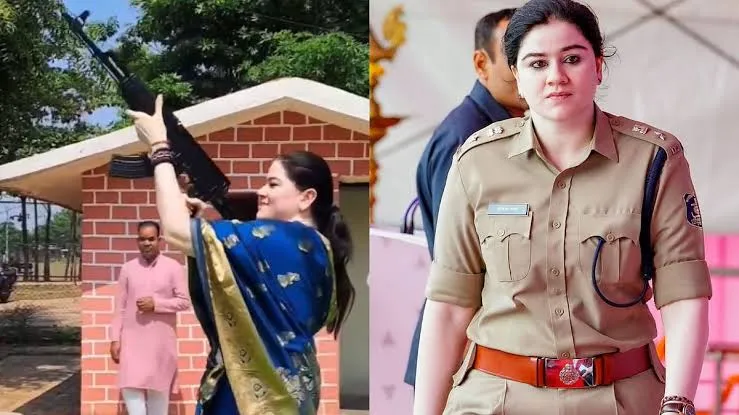
The Indian Police Service is one of the most respected and challenging career paths in the country. Every year, thousands of candidates prepare for the UPSC Civil Services Examination with the dream of becoming an IPS officer. However, only a small number successfully achieve this goal. Among the officers who have inspired young aspirants through their determination and professional journey is Ankita Sharma, a 2018-batch IPS officer of the Chhattisgarh cadre. Her story is particularly interesting because it combines personal ambition, repeated examination challenges, dedication and a commitment to public service.
Ankita Sharma IPS became widely recognised for her work in Chhattisgarh, particularly in areas where maintaining law and order requires strong leadership and practical decision-making. Originally from Durg district, she secured All India Rank (AIR) 203 in the UPSC Civil Services Examination 2017 and entered the Indian Police Service. Her journey demonstrates that success does not always come immediately and that setbacks can become valuable learning experiences. Her professional responsibilities, public interactions and efforts to encourage aspiring civil servants have also contributed to her recognition.
Over the years, she has attracted public attention for several reasons, including her leadership in policing, assignments in challenging regions and her approach towards motivating young people. Her recent posting as Superintendent of Police in Rajnandgaon and the discussion surrounding a Dussehra weapon-worship event have brought renewed attention to her career.
Who Is Ankita Sharma?
Ankita Sharma is an Indian Police Service officer belonging to the 2018 batch of the Chhattisgarh cadre. She was born on June 25, 1990, in Durg, Chhattisgarh. Her educational background and professional journey reflect the importance of determination and consistent preparation when pursuing a competitive career. She completed her schooling in Durg and continued her higher education in Bhilai.
She comes from a family that supported her ambition of entering the civil services. Her father, who works in business, has been described by her as an important source of inspiration. Growing up in Chhattisgarh also gave her an understanding of the region and its social environment. Rather than pursuing a conventional career immediately after completing her education, she decided to prepare for one of India’s most demanding examinations.
Her selection into the IPS brought her the opportunity to serve in her home state. This is an important aspect of her professional story because she could contribute to policing and public administration in the region where she grew up.
Educational Background and Early Life
School Education
Ankita completed her schooling at St. Xavier’s School in Durg. Interestingly, her early academic experiences were not always smooth. In interviews, she has discussed facing difficulties with mathematics during her school years. She recalled receiving only five marks out of 50 in the subject in Class 5 and having to appear for a supplementary examination.
However, this early academic setback did not determine her future performance. Her approach towards education gradually changed when she reached Class 9 and selected the Commerce stream. She became more focused on her studies and developed greater confidence in her academic abilities.
This experience provides an important lesson for students who sometimes believe that poor marks during their early school years permanently limit their opportunities. Academic performance can change considerably when students discover their interests, develop suitable learning habits and receive encouragement from their families and teachers.
Higher Education
After completing school, she pursued her graduation and postgraduate studies in Bhilai. Her educational background includes a Bachelor of Commerce degree. She also enrolled in an MBA programme but eventually decided to concentrate on preparing for the UPSC Civil Services Examination.
Choosing competitive examination preparation over a conventional professional route required considerable commitment. Civil services preparation involves extensive reading, regular revision, understanding current affairs and developing the ability to analyse complicated subjects. Her decision reflected a clear preference for public service and a long-term professional ambition.
UPSC Preparation and the Journey to Success
The UPSC Civil Services Examination is widely regarded as one of India’s toughest competitive examinations. It evaluates candidates through Preliminary, Main and Personality Test stages. Preparing for all three stages requires not only subject knowledge but also discipline, analytical thinking and the ability to remain consistent over an extended period.

Ankita’s preparation journey included several difficulties. Initially, she began studying from home before moving to Delhi for coaching and additional preparation. However, she later realised that managing everyday responsibilities in a large city was affecting her study routine. She therefore returned to Chhattisgarh and continued preparing from home.
Her experience highlights an important point for UPSC aspirants: expensive coaching or studying in a particular city does not automatically guarantee success. A suitable environment, access to quality study material, regular practice and an effective timetable can be more important than the location where someone prepares.
Three Attempts and AIR 203
Her first two attempts did not produce the desired result. During the first attempt, she cleared the Preliminary examination but could not secure a position in the final selection list after the Main examination. Her second attempt ended at the Preliminary stage.
Instead of abandoning her ambition, she analysed her preparation and continued working towards the examination. Her third attempt finally brought success. She secured All India Rank 203 in the UPSC Civil Services Examination 2017, which led to her selection for the Indian Police Service.
| UPSC journey | Details |
|---|---|
| Examination year | 2017 |
| Successful attempt | Third attempt |
| All India Rank | 203 |
| Service | Indian Police Service |
| IPS batch | 2018 |
| Cadre | Chhattisgarh |
Her selection became an important milestone in her life. It also demonstrated that candidates can overcome unsuccessful attempts through improved preparation, patience and a willingness to learn from previous mistakes.
Professional Career in the Indian Police Service
After joining the Indian Police Service in 2018, she began developing practical experience through different responsibilities in Chhattisgarh. Police service requires officers to understand criminal investigations, public safety, administrative procedures, team management and the relationship between law enforcement agencies and local communities.
Her early professional assignments helped her understand the realities of district policing. These responsibilities involved working with police personnel, addressing complaints, maintaining law and order and responding to local security concerns. Each posting offered different experiences and opportunities to develop leadership skills.
An important feature of her career has been her association with areas where policing can be particularly demanding. Chhattisgarh has districts affected by security challenges, including Left-Wing Extremism. Officers working in these regions must balance operational responsibilities with community engagement and the protection of ordinary residents.
Important Police Postings
Throughout her career, she has held several responsibilities in the state. Her professional journey includes service in Bhatapara, Raipur, Bastar, Khairagarh and Sakti before her appointment in Rajnandgaon.
Her appointment as Superintendent of Police in Khairagarh in May 2022 attracted attention because she became the district’s first woman SP. She subsequently served as SP of Sakti before taking charge in Rajnandgaon in October 2025.
These assignments reflect the different dimensions of district policing. While some responsibilities involve urban law enforcement and public complaints, others require coordination in geographically challenging areas and attention to regional security issues.
Role in Chhattisgarh’s Challenging Security Environment
Chhattisgarh has several regions where security concerns have historically created difficulties for police administration. In particular, parts of the Bastar region have experienced Left-Wing Extremist activities. Police officers serving in such locations face responsibilities that extend beyond routine law enforcement.
Maintaining security requires coordination between different police units, intelligence gathering, careful operational planning and communication with local communities. Officers must also consider the social and geographical conditions of the areas in which they work. Effective policing is not limited to conducting operations; it also involves building trust and ensuring that residents can approach the administration without fear.
Her professional association with operations in challenging areas has contributed to her public recognition. Such assignments require officers to make decisions under pressure while following established procedures and maintaining accountability.
The broader lesson from these responsibilities is that modern policing involves multiple dimensions. Security operations, crime prevention, public awareness and community relationships must work together to create a safer environment.
Public Interaction and Support for UPSC Aspirants
One of the notable aspects of her public image is her interest in helping young people who aspire to enter the civil services. During her earlier posting in Raipur’s Azad Chowk area, she became known for conducting guidance sessions for UPSC aspirants.

These sessions were particularly valuable for students who could not afford expensive coaching programmes. She shared preparation advice, discussed examination strategies and helped candidates understand the challenges associated with civil services preparation.
For students from smaller cities and economically modest backgrounds, direct guidance from an experienced officer can provide valuable encouragement. Many aspirants struggle not because they lack ability but because they do not have access to reliable information about the examination process.
Her approach highlighted several useful preparation principles:
- Develop a realistic daily study schedule and follow it consistently.
- Understand the UPSC syllabus before selecting study resources.
- Practise answer writing and revise important subjects regularly.
- Learn from unsuccessful attempts instead of losing confidence.
Such guidance can help students understand that competitive examination preparation is a gradual process. Success depends on building a strong foundation rather than searching for shortcuts.
Current Posting and Recent Public Attention
As of November 2026, Ankita Sharma IPS is serving as the Superintendent of Police of Rajnandgaon district in Chhattisgarh. Her appointment to this position was recorded in the Government of India’s IPS civil list for 2026, which provides official information about officers, their cadres and service assignments.
The role of a district SP is important because the officer oversees the district police administration and has responsibility for maintaining law and order. The position involves supervising police stations, reviewing investigations, coordinating security arrangements and responding to major incidents.
In October 2026, she also became the subject of considerable public discussion following a video showing her firing an AK-47 during a Dussehra Shastra Puja event at the police lines in Rajnandgaon. The incident attracted different reactions on social media. While some viewers praised her confidence and participation in the traditional event, others raised questions about firearm safety and the circumstances surrounding the firing.
According to media reports, the Chhattisgarh Police headquarters sought an explanation from her regarding the incident, including concerns about compliance with safety procedures. The final administrative outcome should be distinguished from the initial notice. Seeking an explanation does not, by itself, establish misconduct or indicate that a final disciplinary decision has been taken.
This episode demonstrates how public attention can quickly develop around the actions of senior public officials. It also highlights why firearm handling, institutional protocols and professional accountability are important subjects within police administration.
Leadership Style and Professional Responsibilities
Leadership in the police service requires more than authority or seniority. An effective officer must be able to communicate clearly, make decisions during difficult situations and ensure that the police force performs its responsibilities professionally.
District police leadership involves managing personnel, reviewing crime trends, coordinating with other government departments and responding to public concerns. An SP must also ensure that police officers follow legal procedures and treat citizens fairly.
Her career provides an example of the variety of responsibilities that come with the IPS. From working in different districts to handling security-related assignments and supervising district police administration, her professional journey reflects the demanding nature of the service.
Public recognition can create expectations, but the long-term value of an officer’s work is best understood through professional conduct, institutional performance, public safety and accountability. These factors remain important standards for evaluating every police officer, regardless of popularity or media attention.
Why Her Journey Inspires Young Women
The presence of women in senior positions within India’s police administration represents an important development in public service. Although women have made progress in different areas of law enforcement, they continue to work in an environment that demands physical readiness, administrative knowledge and strong decision-making abilities.
Her journey can encourage young women from smaller cities to consider careers that may initially appear difficult or inaccessible. Her educational background, unsuccessful UPSC attempts and eventual selection show that professional achievement is not necessarily determined by an individual’s early academic performance.
For young women interested in the civil services, her story offers an opportunity to understand the importance of confidence, preparation and independence. It also reinforces the value of having a clear professional goal and developing the patience required to achieve it.
However, inspiration should always be connected with practical learning. Becoming an IPS officer requires years of preparation, a strong understanding of public administration and a willingness to accept demanding responsibilities. A successful career in policing also requires continuous learning after selection.
Lessons UPSC Aspirants Can Learn from Her Career
There are several useful lessons that students can take from her professional journey. The first is that an unsuccessful attempt should not automatically be considered the end of an ambition. Competitive examinations are challenging, and candidates often need to improve their preparation methods before achieving their goals.
The second lesson concerns the importance of choosing a suitable study environment. Her decision to return home after spending time in Delhi demonstrates that students should identify the conditions in which they can study most effectively. A quiet environment, consistent routine and reliable resources can support preparation regardless of location.
Another important lesson is the value of practical guidance. Learning from experienced candidates and officers can help aspirants understand common mistakes, examination expectations and the importance of revision.
Ultimately, civil services preparation is not simply about clearing an examination. It is about developing the knowledge, discipline and sense of responsibility needed to serve society. These qualities become particularly important after candidates enter administrative or police services.
Conclusion
The journey of Ankita Sharma represents determination, professional ambition and the challenges associated with entering India’s prestigious civil services. From her early academic difficulties in Durg to securing AIR 203 in the UPSC Civil Services Examination 2017, her career demonstrates how persistence can help individuals move beyond setbacks. Her selection into the 2018 IPS batch opened the door to a demanding career involving district policing, security responsibilities and public administration.
Her different postings in Chhattisgarh, including her responsibilities in Khairagarh, Sakti and Rajnandgaon, have made her a recognised figure in the state’s police administration. Her efforts to guide UPSC aspirants have also added an educational dimension to her public profile. At the same time, recent public discussion surrounding the Dussehra firing incident highlights the importance of safety standards and accountability in public service.
For aspiring civil servants, her story offers a meaningful reminder that success requires patience, preparation and the ability to learn from failure. Ultimately, a police officer’s contribution is measured not only by public recognition but also by professional integrity, responsible leadership and service to the community.