
Remote work has moved from being an occasional workplace benefit to an important operating model for growing businesses. As digital communication, cloud applications, project management platforms, and virtual collaboration tools continue to improve, companies can build productive teams without requiring every employee to work from the same physical office. For a startup, this shift can be particularly meaningful because early-stage businesses often need to expand quickly while carefully managing resources. Remote hiring can provide access to talent in different cities and regions while allowing businesses to develop teams around skills rather than geographical proximity.
Scaling a team is more complicated than simply adding more employees. A growing organization needs reliable communication, clear responsibilities, consistent workflows, effective leadership, and a strong culture. Remote work can support these areas when it is designed intentionally. Without appropriate systems, however, distributed teams can experience communication gaps, unclear expectations, duplicated work, or employee isolation. The difference between a successful remote operation and a struggling one often comes down to how well the organization builds its processes as the team expands.
For a startup, remote work therefore needs to be treated as a business strategy rather than simply an alternative to office-based employment. When hiring, onboarding, collaboration, performance management, and employee engagement are designed around remote operations from the beginning, companies can create a scalable structure that remains useful as the workforce becomes larger and more diverse.
Why Remote Work Supports Team Scaling
One of the biggest advantages of remote work is that it expands the potential talent pool. Traditional office-based hiring can restrict recruitment to people who live within commuting distance or are willing to relocate. Remote organizations can consider candidates from different cities, regions, and sometimes countries, depending on their legal and operational requirements. This gives growing businesses more opportunities to find people with specialized skills that may be difficult to locate locally.
For a startup, access to a wider talent pool can become particularly valuable when the business moves beyond its initial development stage. A company may begin with a small group handling product development, marketing, sales, and customer support. As demand increases, it may need specialists in areas such as data analysis, cybersecurity, content strategy, engineering, finance, or customer success. Remote recruitment can make it easier to search for these capabilities without automatically increasing the cost and complexity associated with relocation.
Another important factor is flexibility. Employees working remotely may have greater control over how they organize their working environment and daily routines. While organizations still need defined working hours, availability expectations, and communication standards, flexibility can help employees work in environments where they are comfortable and productive. For growing companies, this can contribute to employee satisfaction and help create a workplace that appeals to a broader range of professionals.
Building a Remote-First Team Structure
A successful remote team needs more than video meetings and messaging applications. The company must establish a clear structure that explains who owns specific responsibilities, how decisions are made, and where information is stored. When employees work from different locations, informal office communication is less available. A person cannot simply walk to another desk to ask a question, which makes documented processes much more important.
A startup should establish clear responsibilities before expanding rapidly. Each employee should understand their role, expected outcomes, reporting relationships, and major priorities. Managers should also communicate how individual responsibilities connect with broader company objectives. This prevents employees from working in isolation and helps different departments coordinate their activities.
Documentation becomes especially important as a team grows. Processes that were previously understood by three or four employees may become confusing when the organization reaches twenty, fifty, or more people. Written guidelines, project documentation, onboarding materials, meeting notes, and standard operating procedures can reduce dependency on individual employees and make information easier to access.
Creating Clear Communication Practices
Communication is one of the central challenges of distributed work. Remote teams can easily become overloaded with messages, meetings, notifications, and email. At the same time, important information can become difficult to find when conversations are scattered across multiple applications.
A growing company should establish communication rules that distinguish between urgent and non-urgent matters. Instant messaging may be appropriate for quick questions, while project management systems can be used for task discussions and progress updates. Important decisions should be documented rather than left inside temporary conversations. This creates a reliable information trail that employees can review later.
Managers should also avoid creating a culture where employees feel they must always be online. Constant availability can create unnecessary stress and reduce focused working time. Instead, teams can establish reasonable response expectations while protecting periods for concentrated work.
Technology as the Foundation of Remote Collaboration
Technology plays a major role in supporting distributed teams, but choosing more tools does not automatically create better collaboration. The goal should be to build a simple technology environment where employees know which platform to use for each type of work.
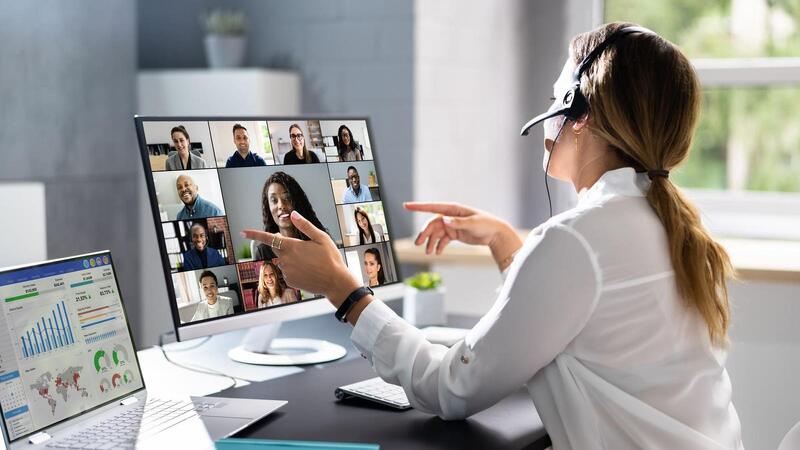
Cloud-based document systems allow employees to access shared files without relying on a physical office network. Project management platforms can provide visibility into deadlines, responsibilities, and progress. Video conferencing supports discussions that require real-time interaction, while communication platforms can handle quick questions and team conversations.
A startup should periodically review its technology stack as the workforce grows. A tool that works well for five people may become difficult to manage for fifty employees. Organizations should look for unnecessary duplication and reduce the number of platforms employees are expected to monitor. A streamlined technology environment can make onboarding easier and reduce confusion.
| Remote Work Area | Useful Practice | Scaling Benefit |
|---|---|---|
| Communication | Define channels and response expectations | Reduces confusion |
| Project Management | Assign owners and deadlines | Improves accountability |
| Documentation | Maintain centralized information | Preserves organizational knowledge |
| Meetings | Use agendas and clear outcomes | Protects productive time |
| Security | Apply access controls and secure devices | Reduces operational risk |
Technology should also be supported by appropriate security practices. Remote employees may access company information through home networks and personal environments, making account security, authentication, device management, access permissions, and employee awareness increasingly important. As a business grows, security cannot remain an afterthought.
Hiring Remote Employees for Long-Term Growth
Remote hiring requires companies to evaluate candidates differently from traditional office-based recruitment. Technical qualifications remain important, but organizations may also need to assess communication skills, self-management, time management, collaboration habits, and the ability to work independently.
A candidate can be highly skilled while still struggling in an environment where direct supervision is limited. During recruitment, companies can therefore ask candidates to explain how they organize projects, communicate delays, manage competing priorities, and collaborate with colleagues who are working in different locations.
The hiring process should also provide a realistic understanding of the organization’s remote culture. Candidates should know whether the company operates synchronously, asynchronously, or through a combination of both approaches. They should understand expected availability, meeting schedules, communication channels, performance expectations, and opportunities for professional development.
For a startup, hiring should focus not only on immediate workload but also on future organizational needs. Bringing in people who can adapt as responsibilities change can be useful during periods of rapid expansion. Early employees often take on broader responsibilities than their original job descriptions, so adaptability can become an important characteristic.
Onboarding Employees in a Distributed Environment
Traditional office onboarding often depends on physical introductions, informal conversations, and direct observation. Remote onboarding needs to replace those experiences with intentional processes. New employees should receive access to necessary systems, documentation, training materials, team information, and role expectations before or shortly after their first day.
A structured onboarding process can help new employees understand how the organization operates without requiring them to repeatedly ask basic questions. It can include a clear introduction to company goals, team responsibilities, communication practices, project systems, security procedures, and performance expectations.
Managers can also assign an onboarding partner or mentor who can answer everyday questions. This is particularly useful because new employees may hesitate to interrupt managers or colleagues when they are unsure about something. Having a designated person available for informal guidance can make remote onboarding feel more connected.
The onboarding process should not end after the first week. New employees may need several weeks to understand internal processes and relationships. Regular check-ins during the first month can help managers identify obstacles early and make adjustments before small issues become larger problems.
Maintaining Productivity Without Micromanagement
One common concern surrounding remote teams is productivity. Monitoring employee activity continuously, however, is not necessarily the best way to improve performance. Effective organizations generally need to focus more on outcomes, responsibilities, deadlines, and quality than on whether someone appears active every minute.
Managers should establish measurable objectives and provide employees with sufficient clarity to achieve them. When expectations are specific, employees have greater independence while managers still have a practical method for evaluating progress.

For example, a marketing employee might be responsible for developing a content strategy, producing a defined number of campaigns, analyzing performance, and meeting agreed deadlines. The manager does not need to observe every working hour to determine whether the objectives are being achieved.
A startup can support productivity by creating realistic workloads and prioritizing important projects. Remote workers often face distractions at home, but excessive meetings and constant digital notifications can also become workplace distractions. Protecting focused work periods can therefore be just as important as encouraging communication.
Developing Culture Across Remote Teams
Company culture can be more difficult to maintain when employees rarely meet physically, but remote work does not eliminate culture. Instead, culture develops through repeated behaviors, leadership decisions, communication practices, recognition, and shared experiences.
A growing startup should clearly communicate the values it expects employees to demonstrate. These values should appear in hiring, onboarding, management, performance discussions, and recognition. If collaboration is important, employees should see leaders rewarding collaborative behavior. If customer service is a major priority, customer outcomes should be part of team discussions and recognition.
Remote culture can also benefit from intentional social interaction. Not every meeting needs to be focused on deadlines or performance. Occasional informal conversations, virtual team activities, recognition sessions, and optional social gatherings can help employees develop relationships beyond their immediate tasks.
However, organizations should avoid forcing excessive social activity. Employees have different personalities, schedules, and preferences. A healthy remote culture provides opportunities for connection without making constant participation a requirement.
Managing Different Time Zones
As remote hiring expands geographically, time-zone differences can become an important operational consideration. A team spread across multiple regions may struggle if every decision requires everyone to be available simultaneously.
A combination of synchronous and asynchronous communication can help solve this problem. Meetings can be reserved for discussions that genuinely require real-time interaction, while project updates, documentation, and routine decisions can often happen asynchronously.
Teams can also establish a small amount of overlapping working time when necessary. For example, employees in different regions might share a few hours during the day for important discussions while completing individual work independently outside those hours.
The goal is not to eliminate time-zone differences but to design workflows that can function despite them. Clear documentation becomes especially valuable because employees should be able to understand project developments even when they were offline during a particular conversation.
Keeping Employees Engaged as the Team Expands
Employee engagement becomes increasingly important when an organization grows quickly. People who join during the early stages may have direct access to founders and senior managers, while later employees may feel more distant from leadership.
A startup can address this by maintaining transparent communication about company goals and progress. Employees should understand how their work contributes to larger objectives. Leadership updates can help teams understand major changes, business priorities, challenges, and upcoming opportunities.
Recognition also matters. Remote employees may not receive the informal acknowledgment that naturally happens in an office. Managers can intentionally recognize strong contributions during team meetings, internal communication, or performance discussions.
Career development should also remain visible. Remote employees need opportunities to develop skills, take on new responsibilities, receive feedback, and progress within the organization. A distributed workplace should not become an environment where employees feel that visibility depends on being physically present.
Common Challenges When Scaling Remote Teams
Remote operations can create challenges if growth happens faster than the company’s systems can support. Communication can become fragmented, new employees may struggle to understand processes, and managers may find it harder to maintain consistency across departments.
Some of the most common issues can be addressed through deliberate planning:
- Establish clear communication and documentation standards.
- Define measurable responsibilities for every role.
- Create structured onboarding and training processes.
- Review technology, security, and access requirements regularly.
- Maintain regular feedback between employees and managers.
Another challenge is maintaining consistency. Different managers may develop different communication habits, meeting structures, and performance expectations. As the workforce grows, leadership should establish organization-wide principles while still allowing individual teams some flexibility.
How a Startup Can Scale Remote Operations Gradually
Rapid hiring can create operational pressure if the company has not prepared its infrastructure. Instead of adding employees without improving processes, businesses can scale in stages. Each stage provides an opportunity to identify bottlenecks and improve workflows.
When the team is small, informal processes may be sufficient. As the company expands, however, documentation and role clarity become increasingly important. Eventually, dedicated people or teams may be needed for human resources, information security, internal operations, and employee development.
The important point is that scaling should involve both people and systems. Hiring more employees without improving communication can increase complexity rather than productivity. A well-designed remote model grows alongside the organization and is regularly adjusted according to changing needs.
The Future of Distributed Team Management
Remote work is likely to remain an important part of modern workforce strategies because businesses and employees have become increasingly familiar with digital collaboration. Artificial intelligence, automation, cloud computing, improved communication platforms, and advanced collaboration systems are also changing how distributed teams operate.
AI-powered tools may increasingly assist with routine documentation, meeting summaries, scheduling, information retrieval, customer communication, and workflow management. These technologies can reduce repetitive administrative work, allowing employees to focus more attention on creative and strategic activities.
At the same time, technology will not replace the need for effective leadership. Managers still need to establish priorities, resolve conflicts, support employees, communicate expectations, and make thoughtful decisions. The strongest remote organizations will likely combine technology with clear human-centered management rather than relying on software alone.
Conclusion
Remote work can provide a flexible foundation for organizations that need to expand their workforce without being restricted by a single geographic location. For a startup, this model can create access to broader talent pools, support flexible working arrangements, reduce some office-related constraints, and allow teams to operate across different regions. However, these benefits depend on deliberate planning rather than remote work alone. Successful remote scaling requires clear responsibilities, reliable communication, strong documentation, effective onboarding, appropriate technology, employee development, and consistent leadership. Companies must also pay attention to security, team culture, time-zone differences, and employee engagement as the workforce becomes larger.