


The way companies build teams has changed significantly as remote work becomes a normal part of modern business operations. Instead of limiting recruitment to people who live within commuting distance of an office, companies can now connect with professionals across cities, countries, and time zones. For a Startup, this shift can be particularly valuable because early-stage businesses often need specialized skills but may not have the financial resources, brand recognition, or local talent pool available to larger organizations.
Global hiring allows growing companies to look beyond traditional recruitment boundaries. A business developing a software product, for example, may need developers, designers, content specialists, customer support professionals, marketers, and project managers at different stages of growth. Finding all these skills locally can take considerable time. Remote teams create an opportunity to search for suitable professionals based on their experience and capabilities rather than their physical location.
The growth of remote collaboration tools has also made international teamwork easier to manage. Video conferencing, project management platforms, cloud-based documents, communication applications, and digital payment systems allow employees and contractors to work together without sharing the same office. As a result, remote teams are becoming an important part of how modern businesses discover and organize global talent.
Why Remote Teams Matter for Modern Businesses
One of the biggest advantages of remote hiring is access to a much larger talent pool. Traditional recruitment often focuses on candidates within a particular city or region, which can make it difficult to find people with highly specific skills. Remote recruitment removes much of that geographical limitation. A company can identify professionals in different countries who have experience in areas such as artificial intelligence, software engineering, cybersecurity, digital marketing, product design, data analysis, or international sales.
For a Startup, broader recruitment can be especially useful because specialized employees can have a major impact on development. Hiring the right developer may help accelerate product improvements, while an experienced marketing professional can introduce more effective customer acquisition strategies. Instead of filling positions simply because candidates are available nearby, companies can search for people whose skills match their actual business requirements.
Remote hiring can also create greater flexibility. Businesses can develop teams around projects rather than maintaining a rigid structure where every employee performs the same type of work from a central office. This approach allows organizations to increase or reduce team capacity according to business needs while maintaining access to specialized expertise.
How Global Talent Expands Hiring Opportunities
Global recruitment gives businesses access to professionals who may have different educational backgrounds, work experiences, cultural perspectives, and industry knowledge. These differences can contribute to stronger problem-solving because teams are exposed to multiple ways of approaching the same challenge.
Consider a company planning to expand into several international markets. Employees who understand local customer behavior, language preferences, communication styles, and business practices can provide valuable insight. A remote team can therefore become more than a cost-saving arrangement. It can become a source of market knowledge that helps a business understand customers in different regions.
For a Startup, this can be particularly useful when entering competitive markets. Instead of trying to learn every market exclusively through external research, the business can build relationships with professionals who already understand specific regions. A distributed workforce may include people working in marketing, sales, technology, customer service, and operations across multiple locations.
Access to Specialized Skills
Some skills are difficult to find in local recruitment markets. Areas such as machine learning, cloud infrastructure, advanced analytics, blockchain development, UX research, and specialized technical writing may have relatively limited talent pools in particular regions. Remote recruitment gives businesses more opportunities to locate experienced professionals with these capabilities.
This does not mean that every role should automatically be outsourced or hired internationally. Companies still need to evaluate communication, reliability, technical ability, availability, cultural compatibility, and long-term requirements. However, the ability to search internationally gives employers more options when conventional recruitment does not produce suitable candidates.
Remote Teams Can Support Cost-Efficient Growth
Office-based operations can involve substantial expenses, including commercial rent, utilities, furniture, commuting support, office equipment, and other workplace-related costs. Remote teams can reduce the need for some of these expenses, although remote employment still requires appropriate investments in software, equipment, security, communication, and employee support.
For an early-stage Startup, managing expenses carefully can be important because financial resources are often directed toward product development, customer acquisition, technology, and business expansion. A remote operating model can allow a company to build a capable workforce without immediately creating a large physical office infrastructure.

However, cost should not be the only factor behind global hiring decisions. Extremely low labor costs do not necessarily translate into better business results. An inexperienced employee may require additional supervision, produce inconsistent work, or create delays that ultimately cost more. Businesses should therefore focus on overall value, including expertise, reliability, productivity, communication, and expected contribution.
Building Effective Communication Across Time Zones
A distributed team can provide valuable flexibility, but it also introduces challenges that traditional office teams may not face. Time-zone differences are one of the most common issues. When employees are working several hours apart, scheduling meetings can become difficult, and waiting for responses may slow certain projects.
Businesses can address this by developing clear communication practices. Not every discussion needs to happen through a live meeting. Written project updates, shared documentation, recorded presentations, task-management systems, and clear deadlines can help employees continue working even when colleagues are offline.
A practical remote communication system may include:
- Clearly defined working hours and availability.
- Written documentation for important decisions.
- Project-management tools with visible responsibilities.
- Regular meetings for collaboration and problem-solving.
- Agreed response expectations for different communication channels.
The goal is not to keep employees online throughout the day. Instead, businesses should create a system where team members know what they need to accomplish, where information is stored, and when collaboration is required.
Technology Is Making Global Collaboration Easier
Modern cloud technology has played a major role in the growth of remote employment. Employees can access documents, applications, project information, customer data, and development environments from different locations. This makes it possible for teams to collaborate on the same projects without needing to work from a shared physical office.
Communication platforms also allow employees to maintain regular contact through video meetings, instant messaging, file sharing, and project discussions. When these technologies are combined with well-defined processes, teams can operate across borders while maintaining a consistent workflow.
Cybersecurity should remain a priority, particularly when employees are accessing company systems from different locations and devices. Businesses should establish appropriate access controls, authentication procedures, device security requirements, data-handling policies, and employee training. A global workforce can expand business opportunities, but protecting company and customer information must remain part of the operating strategy.
The Role of Remote Teams in Startup Growth
For a Startup, remote employees can contribute to different stages of development. During the early product stage, companies may require developers and designers. As the customer base grows, they may need marketing specialists, sales representatives, customer service staff, financial professionals, and operational managers.
A remote workforce can allow these roles to be introduced according to actual business requirements. Instead of creating a large permanent workforce immediately, companies can build teams gradually as new responsibilities emerge. This approach can help businesses remain adaptable while they test products, explore markets, and respond to customer demand.
Remote teams can also support continuity during periods of rapid growth. If a company suddenly receives customers from multiple countries, employees working across different regions may help provide broader coverage. Customer support, sales inquiries, technical assistance, and marketing activities can potentially continue beyond traditional local working hours.
Global Talent and Diversity of Ideas
International teams can bring together people who have different perspectives on products, customers, communication, and business practices. These differences can be valuable when companies are creating products for a global audience.
A team made up of people from different markets may notice usability issues that a geographically concentrated group could overlook. For example, a website design, payment process, advertising message, or customer-support approach may work well in one market but create difficulties in another. Diverse team perspectives can help identify such issues earlier.
For a Startup, this diversity can become particularly important when the company intends to scale internationally. Employees with direct knowledge of different markets can contribute practical insights that complement formal market research.
Challenges Businesses Need to Consider
Remote recruitment is not without difficulties. Companies must think carefully about employment regulations, taxation, contracts, payments, data protection, working hours, and communication expectations when hiring internationally. Legal requirements can vary significantly between countries, so businesses should obtain appropriate professional advice before establishing international employment arrangements.
There can also be challenges related to company culture. Employees who rarely meet in person may feel disconnected from the wider organization if communication is limited to task assignments. Businesses need to create opportunities for collaboration, recognition, informal interaction, and knowledge sharing.
| Remote Team Factor | Potential Business Benefit | Important Consideration |
|---|---|---|
| Global recruitment | Larger talent pool | Candidate verification |
| Flexible working | Wider time-zone coverage | Clear availability rules |
| Lower office dependency | Potential infrastructure savings | Technology and security costs |
| Diverse workforce | Broader perspectives | Cultural communication |
| Specialized hiring | Access to niche expertise | Skills and experience assessment |
Creating a Strong Remote Hiring Strategy
A successful global recruitment strategy begins with clearly defining the role. Businesses should identify the skills, experience, responsibilities, working hours, communication expectations, and performance outcomes required before searching for candidates. Clear job descriptions help attract professionals who understand what the position involves.
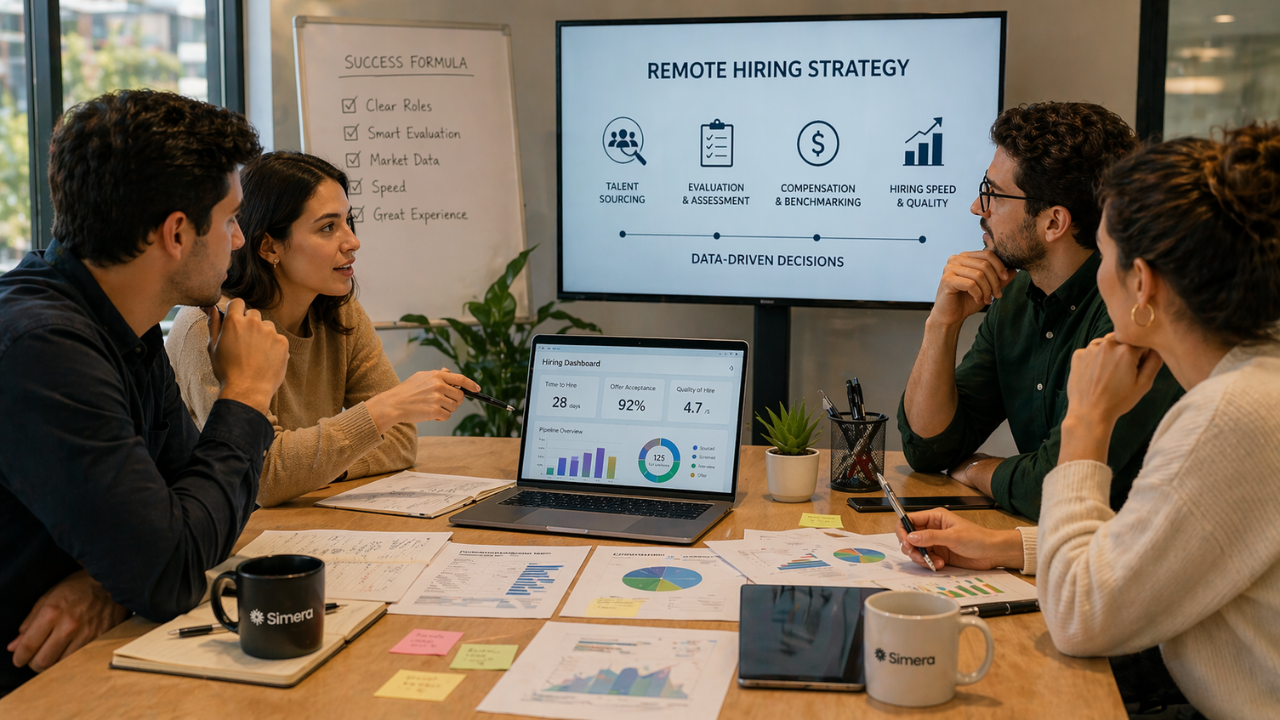
The selection process should also evaluate practical ability rather than relying entirely on resumes. Depending on the role, companies can use technical assessments, portfolio reviews, structured interviews, writing samples, or project-based evaluations. This can provide a clearer understanding of how a candidate performs in situations relevant to the actual job.
For a Startup, structured onboarding is equally important. A talented employee may struggle if they do not understand the company’s goals, tools, responsibilities, or communication processes. Providing documentation, introducing key team members, explaining workflows, and setting early objectives can help new employees become productive more quickly.
The Future of Global Remote Hiring
Remote work is likely to remain an important part of modern workforce planning as businesses continue to adopt cloud-based systems and digital collaboration. Advances in artificial intelligence, automation, communication technology, and cybersecurity may further change how distributed teams operate.
The future is unlikely to be based entirely on remote or entirely on office work. Many businesses may adopt flexible models where different roles follow different working arrangements. Some employees may work fully remotely, while others may combine remote work with occasional office collaboration.
For a Startup, this flexibility can provide room to experiment with different team structures. The most effective approach will depend on the company’s industry, customers, culture, regulatory environment, and operational requirements rather than following a single universal model.
Conclusion
Remote teams have changed the way businesses approach recruitment by making geographical location less restrictive. Companies can search for specialized skills across international markets, create flexible workforce structures, access diverse perspectives, and potentially reduce dependence on traditional office infrastructure. When supported by effective communication, strong cybersecurity, structured hiring, and clear performance expectations, remote collaboration can become a practical component of modern business growth. For a Startup, global talent can provide opportunities to build teams around skills and business requirements rather than geography alone.