
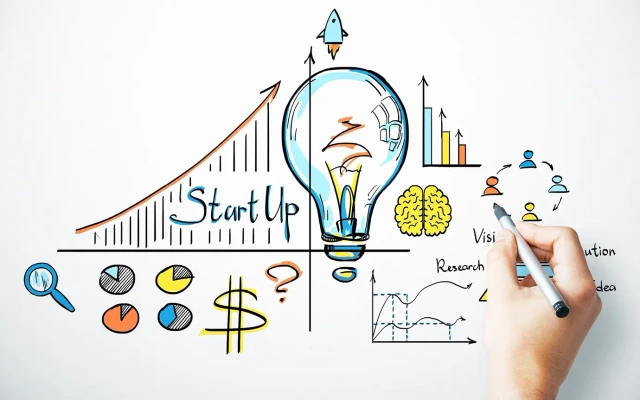
A startup is a newly established business created to solve a specific problem, serve a customer need, or introduce a new product or service to the market. Unlike a traditional small business, a startup often focuses on developing a repeatable business model that can grow rapidly. Technology, innovation, customer research, and access to capital frequently play important roles in this process.
The modern business environment has made entrepreneurship more accessible than ever. A person can begin with a simple idea, validate it with potential customers, create a basic product, and gradually expand operations. However, having an interesting idea alone does not guarantee success. A strong understanding of the market, financial planning, customer behavior, competition, and long-term strategy is equally important.
What Is a Startup?
A startup is generally a young company designed to develop and deliver a product or service while searching for a scalable and sustainable business model. Many startups begin with a small team and limited resources. Their initial objective is not necessarily to generate large profits immediately but to determine whether their solution genuinely solves a valuable problem.
For example, imagine a company developing software that helps small retailers manage inventory automatically. The founders may first create a basic version, test it with a small group of shop owners, collect feedback, and improve the product. If demand increases, the company can expand its customer base and operations.
Scalability is one of the most important concepts associated with this business model. A scalable company should be capable of serving substantially more customers without increasing costs at the same rate.
Key Characteristics of a Modern Startup
Although businesses differ considerably, successful young companies often share several characteristics. Innovation is usually important because founders need to provide customers with a compelling reason to choose their solution.
Another major characteristic is adaptability. Customer expectations, competitors, technology, and market conditions can change quickly. A young company therefore needs to learn from feedback and adjust its product or strategy when necessary.
Common characteristics include:
- Problem-solving: The business addresses a genuine customer problem or unmet need.
- Scalability: The model has potential to expand across larger markets.
- Innovation: The company offers a new product, process, service, or approach.
- Lean operations: Early teams generally try to use limited resources efficiently.
- Customer focus: Decisions are strongly influenced by user needs and feedback.
- Growth orientation: The business is usually designed with expansion in mind.
These characteristics do not mean every new business must become a technology company or seek millions in funding. A successful venture can grow at a measured pace while remaining focused on profitability.
Different Types of Startups
Not every new company follows the same path. Understanding the different categories can help entrepreneurs choose an appropriate strategy.
Small-business startups are created to serve a specific local or regional market. Examples include restaurants, consulting firms, repair services, and specialized retail businesses. Their goal may be stable income rather than aggressive expansion.
Scalable startups are designed to grow significantly, often by using technology or a highly repeatable business model. Software platforms and digital services commonly fall into this category.
Lifestyle startups are built around the founder’s skills, interests, or preferred way of working. Freelance businesses, online education brands, and specialized creative ventures can develop along these lines.
Social startups focus on solving social or environmental problems while maintaining a sustainable financial model. Their success may be measured through both business performance and social impact.
Corporate startups are new ventures developed within established organizations. Large companies sometimes create separate teams to experiment with new products, markets, or technologies without changing their core operations.
How a Startup Idea Becomes a Business
A business idea should be tested before significant money and time are invested. The first step is identifying a problem worth solving. Founders should understand who experiences the problem, how frequently it occurs, and what solutions people currently use.
Market research can then reveal competitors, customer expectations, pricing patterns, and potential gaps. Speaking directly with prospective customers is often more useful than relying entirely on assumptions.
The next stage is developing a minimum viable product, commonly called an MVP. Instead of building every planned feature, founders create a basic version containing the most important functionality. The purpose is to test the concept with real users.
Suppose an entrepreneur wants to launch an appointment-booking platform for local service providers. Rather than immediately developing a complex application, the founder could begin with a simple booking website and a limited group of businesses. Their feedback could reveal which features actually matter.
This approach reduces unnecessary spending and allows decisions to be based on evidence rather than assumptions.
Important Stages in Startup Development
A startup generally moves through several stages, although the exact journey varies from one company to another.
| Stage | Main Objective | Typical Focus |
|---|---|---|
| Idea | Identify an opportunity | Problem and customer |
| Validation | Test demand | Research and interviews |
| MVP | Build a basic solution | Product testing |
| Early growth | Gain initial traction | Customers and revenue |
| Expansion | Increase market reach | Team and operations |
| Maturity | Build sustainability | Profitability and efficiency |
The validation stage is particularly important because it helps determine whether customers actually care about the proposed solution. A founder may personally love an idea, but that does not necessarily mean enough people will pay for it.
Funding Options for New Businesses
Financing is another major consideration. Some entrepreneurs begin with personal savings, while others use revenue generated by early customers. This approach, often called bootstrapping, can provide greater control but may limit the speed of expansion.
 Other businesses seek external funding. Friends and family may provide early capital, while angel investors can support promising ventures at an early stage. Venture capital firms generally look for companies with significant growth potential.
Bank loans and government-backed business programs can also be relevant depending on the company’s location, eligibility, and financial position. Crowdfunding is another option for certain consumer products and community-focused ideas.
The right funding method depends on the business model, capital requirements, risk level, ownership preferences, and expected growth rate. Raising money should not be considered a success by itself; the funding should help the company reach meaningful business objectives.
Common Challenges Entrepreneurs Face
Building a new company involves considerable uncertainty. One of the biggest challenges is finding product-market fit—the point at which a product satisfies a strong and identifiable customer demand.
Cash-flow management is another frequent concern. A company may have sales but still experience financial pressure if expenses, salaries, inventory, marketing costs, and payment cycles are poorly managed.
Competition can also become intense, particularly in popular industries. Larger businesses may have stronger brands, greater resources, and established customer relationships.
Hiring the right people presents another challenge. Early employees often have broad responsibilities, so businesses need individuals who can learn quickly, collaborate effectively, and take ownership.
Founders should also prepare for setbacks. A failed product experiment, weak marketing campaign, or unexpected customer response can provide valuable information when treated as a learning opportunity rather than simply a failure.
Technology and Innovation in Business Growth
Technology has changed how entrepreneurs create, market, and operate companies. Cloud software can reduce infrastructure costs, digital payment systems simplify transactions, and online communication tools allow teams to collaborate across different locations.
Data can also improve decision-making. Businesses can analyze customer behavior, sales patterns, website activity, and feedback to identify opportunities for improvement.
However, technology should support a business objective rather than become the objective itself. Purchasing sophisticated tools without understanding the underlying customer problem can increase expenses without creating meaningful value.
Innovation can also occur outside technology. A company might introduce a better delivery process, simplify pricing, improve customer support, redesign packaging, or create a more convenient purchasing experience.
Practical Tips for Building a Strong Startup
Entrepreneurs can improve their chances of building a sustainable company by concentrating on fundamentals rather than chasing trends.
First, understand the customer deeply. Identify their frustrations, priorities, spending habits, and existing alternatives. Second, keep initial expenses under control and maintain accurate financial records. Third, test important assumptions before making large investments.
It is equally important to establish measurable goals. Instead of simply aiming to “grow,” a company might track customer retention, monthly revenue, conversion rates, repeat purchases, or acquisition costs.
Founders should also build relationships with mentors, industry professionals, potential customers, and other entrepreneurs. Useful feedback can expose weaknesses that may be difficult for an internal team to notice.
Finally, maintain a clear reason for the company’s existence. A strong mission can help guide product decisions, branding, hiring, and customer communication.
Startup vs Traditional Small Business
The terms are sometimes used interchangeably, but they can represent different approaches. A traditional small business may be designed to generate consistent income for its owner and operate successfully within a defined geographic market.
A startup is more commonly associated with experimentation, innovation, rapid growth, and scalability. Its founders may aim to enter larger markets or develop a model that can serve many customers efficiently.
Neither approach is automatically better. The appropriate structure depends on the entrepreneur’s goals. Someone opening a neighborhood bakery may prioritize steady profitability, while someone developing a global software platform may prioritize rapid customer acquisition and expansion.
What Makes a Startup Successful?
There is no guaranteed formula for success. Strong execution, timing, customer demand, financial discipline, and adaptability all influence outcomes.
A promising company usually understands its target market, solves a meaningful problem, monitors its finances, and continuously improves its offering. Founders must also recognize when an original assumption is incorrect and be willing to change direction.
Success should not be judged solely by valuation or funding. Sustainable revenue, satisfied customers, a capable team, healthy cash flow, and long-term resilience can be equally important indicators.
Conclusion
A startup begins with an opportunity, but turning that opportunity into a sustainable company requires much more than an innovative idea. Entrepreneurs need to validate demand, understand customers, manage finances, develop useful products, and adapt to changing market conditions.
Whether the goal is building a local service, a technology platform, or a socially focused venture, disciplined experimentation can reduce unnecessary risk. The strongest businesses remain close to their customers, learn from evidence, and create genuine value. With a clear problem to solve, realistic planning, and consistent execution, a startup can move from an early concept toward a sustainable and scalable business.