

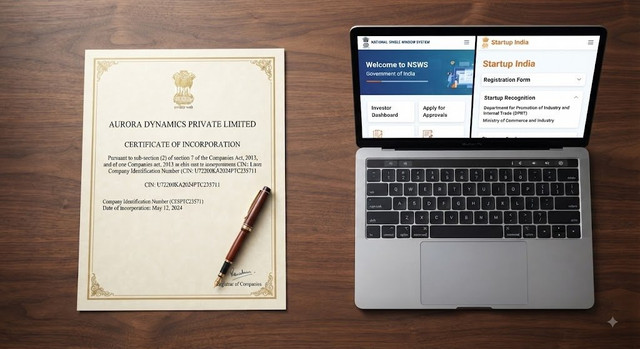
Getting official recognition can give a new business greater credibility and access to government-supported opportunities. In India, eligible businesses can apply for recognition under the Startup India initiative, which is designed to encourage innovation, entrepreneurship, and the growth of emerging companies. The startup india certificate serves as formal recognition that a business has been acknowledged as a startup by the relevant government authority.
For founders, this recognition can be useful when exploring tax-related benefits, intellectual property support, government schemes, easier compliance, and other startup-focused advantages. However, simply registering a company does not automatically make it a recognised startup. A business must satisfy specific eligibility conditions and complete the required application process.
Understanding the requirements before applying can help entrepreneurs avoid delays, incorrect information, and unnecessary documentation problems.
What Is a Startup India Certificate?
A startup india certificate is generally understood as the recognition issued to an eligible business under the Startup India framework. The recognition process is administered through the government’s startup recognition system, where businesses can submit their details and supporting information for evaluation.
Startup recognition is different from ordinary business registration. A company, limited liability partnership, or eligible partnership may be legally established but still need separate recognition to access certain startup-specific benefits.
The recognition focuses particularly on businesses that demonstrate innovation, improvement of products or services, or potential for employment and wealth creation. This makes the initiative relevant not only to technology companies but also to innovative businesses operating in areas such as manufacturing, services, agriculture, education, healthcare, and other sectors.
Who Can Apply for Startup Recognition?
Eligibility is one of the most important considerations before submitting an application. The business structure, age of the entity, turnover, and nature of its activities can all influence whether it qualifies.
Generally, an eligible entity needs to meet conditions prescribed under the prevailing Startup India framework. The business should be established as an appropriate legal entity and should be working toward innovation, development, improvement, or a scalable business model with potential for employment or wealth creation.
Some important considerations include:
- The business must fall within the eligible legal structures specified under the startup recognition framework.
- It should satisfy the applicable age and turnover conditions.
- The entity should be genuinely working toward innovation, improvement, or a scalable business model.
- The business should not have been created merely by reconstructing or splitting an existing business.
- The applicant must provide accurate information and supporting details.
Because government rules and definitions can change, founders should verify the latest eligibility conditions before submitting their application.
Why Startup Recognition Matters for Entrepreneurs
Recognition can provide more than a certificate for display on a website or in an office. It can help establish that the business has received official recognition within India’s startup ecosystem.
A recognised startup may become eligible to explore various government initiatives and support mechanisms, depending on its circumstances and the conditions of each scheme. These may include intellectual property-related assistance, certain compliance benefits, and access to startup-focused programs.
For example, imagine a small technology company developing software for improving supply-chain management. Although the founders may already have incorporated the company, obtaining official startup recognition can strengthen its profile when approaching incubators, investors, government programs, and ecosystem partners.
The startup india certificate can therefore function as an important part of the company’s broader credibility and compliance documentation.
Key Benefits of Startup India Recognition
The benefits available to recognised startups depend on eligibility and the specific government provisions applicable to them. Entrepreneurs should not assume that recognition automatically provides every benefit associated with the Startup India initiative.
Potential advantages can include support related to intellectual property, easier regulatory processes, participation in government-supported programs, and opportunities connected with the wider startup ecosystem.
Some recognised businesses may also explore tax benefits where separate eligibility requirements are satisfied. This distinction is important because startup recognition and eligibility for a particular tax exemption are not necessarily the same thing.
The startup india certificate can also be useful when communicating the company’s recognised status to stakeholders. It may help founders demonstrate that their enterprise has completed the relevant recognition process.
Documents Usually Required for the Application
The documentation required can vary according to the business structure and information provided in the application. Entrepreneurs should keep their corporate and business information consistent across all records.
Commonly relevant information may include incorporation or registration details, details of directors or partners, business activity information, and a description explaining how the company is pursuing innovation, improvement, or scalability.
 A concise explanation of the business model is particularly important. Founders should clearly explain the problem being addressed, the solution being developed, and how the business contributes to innovation or creates potential employment and economic value.
Before applying, it is sensible to check:
| Information | Why It Matters |
|---|---|
| Entity details | Confirms the legal identity of the business |
| Incorporation information | Establishes when and how the entity was formed |
| Business description | Explains the company’s activities and purpose |
| Innovation details | Helps demonstrate the innovative or improvement-focused nature of the business |
| Founder information | Identifies directors, partners, or authorised representatives |
| Supporting documents | Helps validate information submitted in the application |
Keeping these details ready can make the application process more efficient.
How to Apply for Startup India Recognition
The application process is completed through the official Startup India recognition platform. Applicants generally begin by creating or accessing the required account and providing information about their business.
The process involves submitting entity details and explaining the nature of the startup. Founders should ensure that the information is complete, consistent, and easy to understand. A vague business description can make it harder to communicate why the company qualifies for recognition.
Applicants should also carefully review declarations and supporting information before submission. Errors in legal names, registration details, dates, or business descriptions can create avoidable complications.
Once the application is submitted, it may be reviewed through the applicable government process. Entrepreneurs should retain copies of submitted information and relevant acknowledgements for their records.
If recognition is granted, the startup india certificate can then be used as evidence of the startup’s recognised status, subject to the terms and validity of the applicable framework.
Common Mistakes Founders Should Avoid
Many application problems are caused not by complicated issues but by incomplete or inconsistent information. Founders sometimes focus heavily on submitting the application quickly and overlook the importance of accuracy.
One common mistake is assuming that incorporation alone guarantees startup recognition. Another is providing a generic description that does not adequately explain the innovative or improvement-oriented aspect of the business.
Applicants should also avoid using outdated information or making unsupported claims about benefits. Government programs can have separate conditions, so entrepreneurs should check whether they qualify for a particular advantage rather than assuming recognition provides automatic access.
Another useful practice is to ensure that company information matches official registration records. Differences in names, dates, addresses, or entity details may require clarification.
Startup Recognition and Business Registration Are Different
A frequent source of confusion is the difference between incorporating a business and receiving startup recognition. Business incorporation creates the legal entity, while startup recognition is a separate government recognition process for eligible enterprises.
For example, a founder may establish a private limited company to operate an online education platform. That incorporation gives the business its legal structure, but it does not by itself establish that the company qualifies as a recognised startup.
The startup india certificate relates specifically to startup recognition rather than serving as a substitute for incorporation, tax registration, licences, or other mandatory business registrations.
Understanding this distinction helps entrepreneurs maintain the correct compliance structure from the beginning.
How Long Does the Recognition Process Take?
The time required can vary depending on the application, information submitted, verification requirements, and the applicable government process. There is therefore no universal timeline that should be treated as guaranteed.
Entrepreneurs can reduce avoidable delays by preparing accurate information before starting the application. They should also respond carefully if additional clarification or documentation is requested.
Instead of focusing only on speed, founders should prioritize accuracy. A properly prepared application is generally more useful than rushing through the process and having to correct mistakes later.
Does Every Startup Receive the Same Benefits?
No. Startup recognition should not be viewed as a guarantee of every benefit associated with the Startup India ecosystem.
Different benefits may have their own eligibility rules, application requirements, time limits, or sector-specific conditions. Some tax-related provisions, for instance, may require additional qualification beyond startup recognition.
The startup india certificate establishes recognised startup status, but entrepreneurs should separately review the requirements of any tax incentive, funding program, intellectual property benefit, procurement advantage, or compliance relief they wish to use.
This approach helps founders make realistic decisions and avoid relying on assumptions.
Tips for a Stronger Application
A well-prepared application should communicate the business clearly without unnecessary technical language. Founders should describe their product or service in a way that an evaluator can understand quickly.
It is useful to explain what makes the business different, which problem it solves, who benefits from the solution, and how the model could grow. Where applicable, entrepreneurs can describe their technology, process improvements, intellectual property, or other elements that demonstrate innovation.
The startup india certificate should be considered part of a larger business documentation strategy rather than an isolated achievement. Keeping incorporation documents, financial records, intellectual property documents, and government recognition records organized can make future applications and compliance tasks easier.
Conclusion
Startup recognition can be a valuable step for eligible entrepreneurs seeking to establish credibility and explore opportunities available through India’s startup ecosystem. The process requires more than simply owning a newly established business; applicants need to satisfy the applicable conditions and provide accurate information about their enterprise.
The startup india certificate can demonstrate that an eligible business has received official startup recognition, while separate benefits may require additional qualifications. Entrepreneurs should therefore understand both the recognition process and the rules attached to individual incentives.
With accurate documentation, a clear explanation of the business model, and careful attention to current eligibility requirements, founders can approach the application process with greater confidence. Most importantly, they should verify the latest government rules before applying, since eligibility criteria, procedures, and available benefits may change over time.