

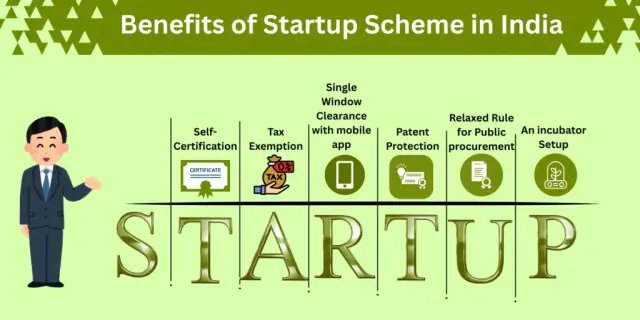
Introduction
Starting a new business in India involves more than developing a product or finding customers. Entrepreneurs also need to understand government recognition, compliance, funding opportunities, intellectual property protection, and available incentives. The Startup India initiative was introduced to create a supportive environment for innovative and scalable businesses. One of the most important steps for eligible businesses is obtaining official recognition from the Department for Promotion of Industry and Internal Trade (DPIIT). The recognition is commonly referred to as the Startup India Certificate.
The Startup India Certificate provides formal recognition that an eligible entity qualifies as a startup under the applicable government framework. It can help businesses access several benefits, although recognition does not automatically provide every tax exemption or government incentive. Specific benefits may have additional eligibility conditions and separate applications. Therefore, entrepreneurs should understand the difference between startup recognition and individual benefits before applying. This guide explains eligibility, documents, application steps, benefits, limitations, and other important details in a simple manner.
What Is a Startup India Certificate?
The Startup India Certificate is the digitally generated certificate issued after a startup receives recognition from DPIIT. It confirms that the eligible business has been recognized under the Startup India framework. The certificate can be downloaded after successful recognition and is designed to be verifiable.
DPIIT recognition is particularly useful for businesses that are developing innovative products, improving existing products or services, creating new processes, or operating scalable business models with strong potential for employment and wealth creation. The recognition process is based largely on information and documents submitted by the applicant, and businesses are expected to provide accurate information.
It is important to understand that simply registering a company does not automatically make it a DPIIT-recognized startup. A business must satisfy the prescribed criteria and successfully complete the recognition process. The current government information also states that the turnover threshold for normal startup recognition was revised to ₹200 crore in February 2026.
Who Is Eligible for Startup India Recognition?
Eligibility is one of the most important aspects to understand before applying. Under the current Startup India framework, an eligible entity generally needs to be incorporated or registered in an approved legal form, satisfy the applicable age and turnover limits, and demonstrate innovation, improvement, or scalability.
For a normal startup, the entity can generally be a Private Limited Company, Limited Liability Partnership, registered Partnership Firm, or Cooperative Society. The business should normally not have existed for more than 10 years from its incorporation or registration. The current turnover ceiling is ₹200 crore for a non-DeepTech startup. DeepTech startups have separate recognition parameters, including a higher turnover threshold and longer recognition period.
The business should also work toward innovation, development, or improvement of products, processes, or services, or have a scalable business model with significant potential for employment generation or wealth creation. An entity created by splitting up or reconstructing an existing business is not considered an eligible startup under the recognition framework.
Key Eligibility Criteria at a Glance
| Criteria | Current General Requirement |
|---|---|
| Business structure | Private Limited Company, LLP, registered Partnership Firm, or Cooperative Society |
| Startup age | Up to 10 years for normal startups |
| Turnover | Up to ₹200 crore for normal startups |
| Business objective | Innovation, improvement, or scalable growth |
| Existing business | Should not be formed by splitting or reconstructing an existing business |
| Recognition authority | DPIIT |
| Application route | National Single Window System |
The exact requirements can vary for DeepTech startups and other specific government benefits. Therefore, entrepreneurs should check the applicable recognition criteria before submitting an application.
Documents Required for the Application
The application process is designed to be largely online, but applicants should keep important business information and supporting documents ready. The exact documents can depend on the entity type and the information requested in the application.
Common requirements include proof of legal existence or incorporation, PAN details, information about directors or partners, a brief explanation of the business, and supporting material explaining the startup’s innovation or scalability. A Digital Signature Certificate may also be required for the authorized person submitting the application. DeepTech startups may have additional documentation requirements.
Businesses should make sure that names, incorporation details, identification information, and other details match their official records. If supporting evidence is requested, documents such as a pitch deck, website information, product details, prototype information, videos, patents, or other relevant material may help explain the business model and innovation.
How to Apply for a Startup India Certificate
The application is submitted through the National Single Window System (NSWS). According to the Startup India portal, applicants should create an investor account on NSWS if they do not already have one. After logging in, the applicant can use the dashboard to add the relevant central approval and select the registration option for startup recognition.
The applicant then needs to provide information about the organization, business activity, founders or directors, innovation, and other requested details. Supporting documents should be uploaded in the required format. Before submitting the form, applicants should carefully verify all declarations because the recognition application involves self-certification.
After successful submission, the application can be monitored through the relevant dashboard. The official Startup India information says that recognition can typically be issued within two working days after successful submission, although processing may depend on verification and the completeness of the application.
Benefits of the Startup India Certificate
Obtaining a Startup India Certificate can provide access to several advantages available to DPIIT-recognized startups. These benefits are designed to reduce some of the difficulties faced by young businesses and encourage innovation.
Recognized startups can receive support related to intellectual property rights, including access to mechanisms intended to make patent and trademark processes easier and faster. Recognition can also help eligible businesses participate in certain government programs and opportunities designed specifically for startups.
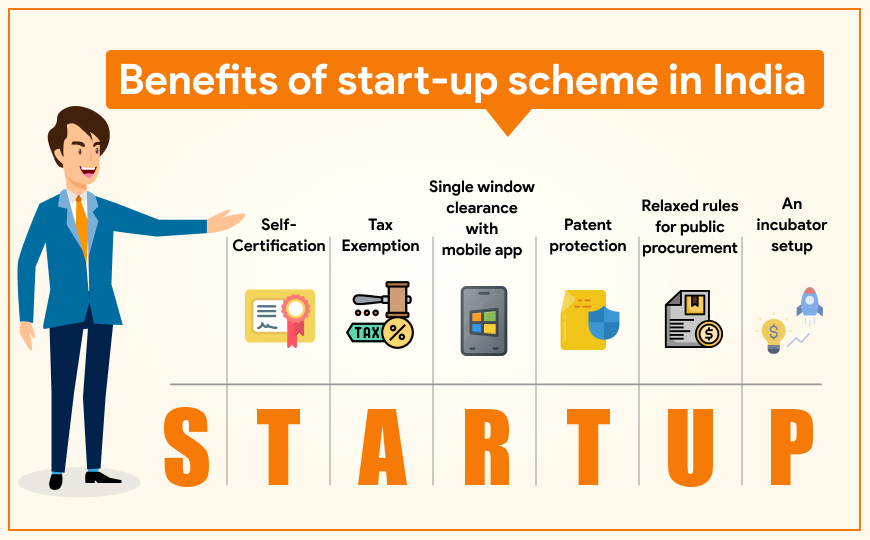 Another important area is compliance. Certain government provisions can provide eligible startups with simplified compliance requirements or exemptions under applicable laws. However, these benefits are not universal and may depend on the particular scheme, business structure, sector, and additional conditions.
The certificate can therefore be viewed as an important gateway rather than a guarantee of every Startup India benefit. Entrepreneurs should check individual eligibility requirements before claiming any particular incentive.
Startup India Certificate and Tax Benefits
Tax benefits are often associated with startup recognition, but the two should not be treated as identical. DPIIT recognition is one requirement for certain tax-related benefits, while additional conditions may apply.
For example, Section 80-IAC provides an income-tax deduction for qualifying startups. The Startup India portal states that eligible startups can receive a 100% deduction for three consecutive financial years within the specified period, subject to the applicable conditions. The 80-IAC benefit has its own eligibility requirements and is not automatically granted merely because a company has received DPIIT recognition.
The current Startup India information indicates that the 80-IAC application is available to qualifying DPIIT-recognized Private Limited Companies and LLPs, with additional conditions relating to incorporation date and other requirements. Therefore, businesses should treat recognition and tax exemption as separate stages and review the applicable tax rules before making financial decisions.
Is the Startup India Certificate Free?
A major advantage of the official recognition process is that the Ministry of Commerce and Industry states that it does not charge a fee for the DPIIT Certificate of Recognition or Certificate of Eligibility. The government also warns that it has not appointed agencies, representatives, or franchises to obtain the certificate on behalf of startups.
Applicants should therefore be cautious about people or organizations claiming to be officially appointed by the government and demanding a fee for the recognition certificate. Entrepreneurs can submit the application using their own business details, mobile number, and email address.
While professional assistance may be used for business, legal, or compliance advice, entrepreneurs should distinguish between optional professional services and an official government application fee.
Common Mistakes to Avoid
Many applications can become difficult when applicants provide inconsistent information or misunderstand the recognition requirements. One common mistake is assuming that every newly created business automatically qualifies as a startup. Recognition depends on meeting the prescribed criteria.
Another mistake is entering incorrect incorporation, turnover, director, partner, or business information. Supporting documents should be accurate and consistent with official records. Entrepreneurs should also avoid making unsupported claims about innovation or scalability.
Some businesses also assume that the Startup India Certificate automatically provides income-tax exemption. In reality, specific tax benefits may require separate applications and additional eligibility conditions. Keeping recognition, tax exemption, intellectual property benefits, and other schemes as separate requirements can help entrepreneurs avoid confusion.
Important Points Before Applying
Before submitting a recognition application, founders should review the basic requirements and organize their documents. A simple preparation process can reduce errors and make the application easier to complete.
- Verify the legal structure and incorporation details.
- Check the applicable age and turnover limits.
- Prepare a clear explanation of the product, service, innovation, or scalable model.
- Keep incorporation, PAN, founder, and business information ready.
- Upload accurate supporting documents.
- Review every self-certification before submitting the application.
Applicants should also remember that DPIIT recognition can be revoked if it is later found that recognition was obtained using false information or without the required supporting documentation.
Why DPIIT Recognition Matters for New Businesses
For an entrepreneur, formal recognition can improve access to the wider startup ecosystem. It creates an official connection between an eligible business and government-supported startup initiatives. This can be valuable when a company is exploring intellectual property support, certain government programs, startup-focused opportunities, or other eligible incentives.
The certificate can also serve as evidence that the business has received official startup recognition. However, its value depends on how the business uses the opportunities available to recognized startups. Recognition itself does not replace good financial management, legal compliance, customer research, product development, or a sustainable business strategy.
A successful startup ultimately depends on solving a genuine problem and building a business that can grow responsibly. The certificate can support that journey, but it should be considered one part of a broader business strategy.
Conclusion
The Startup India Certificate is an important recognition document for eligible Indian businesses seeking to participate in the country’s startup ecosystem. DPIIT recognition can open access to several benefits related to intellectual property, compliance, government initiatives, and other startup-focused opportunities. The current recognition framework allows eligible normal startups to qualify for up to 10 years and uses a ₹200 crore turnover threshold, while DeepTech startups have separate parameters.
The application is primarily online through the National Single Window System, and the official process does not require a government fee for the recognition certificate. Entrepreneurs should provide accurate information, understand the eligibility rules, and remember that individual tax benefits may have separate conditions. By preparing the necessary documents and carefully completing the application, eligible businesses can make the recognition process smoother and take better advantage of the opportunities available under the Startup India framework.