

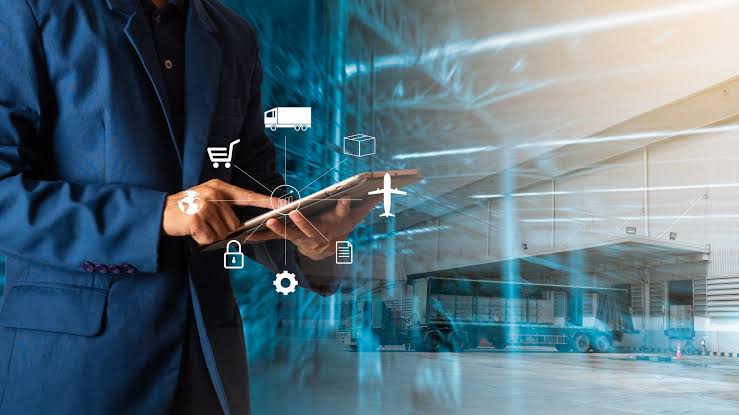
E-commerce has changed customer expectations around how quickly products should move from an online store to a doorstep. Shoppers increasingly expect accurate delivery estimates, real-time tracking, flexible delivery options, and convenient returns. As online retailers expand across cities and countries, logistics has become much more than transporting packages. It now involves inventory planning, warehouse management, order processing, route optimization, last-mile delivery, and customer communication. In this environment, startup solutions are helping businesses rethink traditional logistics operations and create faster, more responsive fulfillment systems.
The growth of online shopping has also created new challenges. Retailers must manage fluctuating order volumes, multiple sales channels, geographically distributed customers, and increasingly demanding delivery expectations. A small delay at the warehouse can eventually affect the customer experience. Technology-focused startup businesses are addressing these problems with software platforms, automation tools, data analytics, intelligent routing systems, and flexible fulfillment models. These developments are making sophisticated logistics capabilities accessible to businesses that may not have the resources to build everything internally.
For e-commerce companies, adopting startup-driven logistics ideas does not necessarily mean replacing an entire supply chain. Instead, businesses can introduce targeted improvements in areas where delays or inefficiencies commonly occur. Better inventory visibility, automated order allocation, predictive analytics, and optimized delivery routes can collectively reduce unnecessary waiting time. The result is a logistics network designed around speed, visibility, flexibility, and customer satisfaction.
How E-commerce Logistics Is Changing
Traditional logistics models often relied on fixed warehouse processes, manual coordination, and predetermined transportation schedules. Modern e-commerce operates differently because demand can change rapidly. A product may receive thousands of orders after a social media campaign, while another item may remain in storage for weeks. Logistics systems therefore need to respond quickly rather than simply follow fixed schedules.
This shift has increased the importance of technology throughout the fulfillment journey. When an order is placed, software can identify inventory availability, select an appropriate fulfillment location, generate warehouse instructions, arrange transportation, and provide tracking information. These connected processes reduce the amount of manual coordination required between departments.
Another major change is the growing importance of the last mile. The final movement from a distribution center or local facility to the customer can be one of the most expensive and complicated stages of delivery. Traffic, address accuracy, customer availability, weather, and delivery density can all influence performance. Startup-led solutions increasingly focus on solving these problems through route optimization, local fulfillment centers, delivery management platforms, and real-time communication.
The Role of Startup Solutions in Faster Fulfillment
Modern startup solutions are often designed around a specific operational problem rather than attempting to replace an entire logistics network. This makes them useful for e-commerce companies that want to improve particular stages of fulfillment. For example, one technology may focus on warehouse automation while another specializes in delivery route optimization or inventory forecasting.
The advantage of this approach is flexibility. E-commerce businesses can integrate specialized technologies into existing systems and measure their effect before expanding their use. A retailer experiencing frequent warehouse delays could introduce automated picking technology, while a company struggling with late deliveries might prioritize route optimization. This targeted approach can help businesses improve efficiency without undertaking a complete operational transformation.
The broader startup ecosystem is also encouraging experimentation. New logistics businesses are testing different fulfillment models, including shared warehouses, micro-fulfillment centers, crowdsourced delivery networks, electric delivery fleets, and software-as-a-service logistics platforms. These models can provide alternatives to conventional infrastructure and allow retailers to adapt their operations according to demand.
Automation and Warehouse Efficiency
Warehouse operations have a direct influence on delivery speed. If products are difficult to locate, picking is slow, or packages wait too long before dispatch, transportation improvements alone cannot solve the problem. Automation is therefore becoming increasingly important in modern e-commerce fulfillment.
Automated storage systems, barcode scanning, conveyor systems, robotic assistance, and warehouse management software can reduce repetitive manual work. Instead of relying entirely on employees to determine where items should be stored or which orders should be processed first, intelligent systems can organize workflows according to inventory levels, order priority, product dimensions, and shipping requirements.
Startup companies are contributing to this transformation by developing flexible automation technologies that can be introduced without completely rebuilding a warehouse. Cloud-based warehouse management systems can also provide smaller retailers with capabilities that were once primarily available to large logistics operations.
The impact goes beyond speed. Better warehouse organization can reduce picking errors, improve inventory accuracy, and make it easier to process returns. When these improvements are combined, customers receive more reliable service while businesses spend less time correcting avoidable operational problems.
Artificial Intelligence and Predictive Logistics
Artificial intelligence is increasingly being applied to logistics because e-commerce generates large quantities of operational data. Historical orders, seasonal trends, product demand, delivery times, warehouse activity, and customer locations can all provide useful signals for planning future operations.
Predictive systems can help businesses estimate demand before it occurs. If a retailer expects higher demand for certain products during a festival or promotional event, inventory can be positioned closer to likely customers. This can reduce the distance packages need to travel and help prevent fulfillment centers from becoming overloaded.
AI can also support transportation decisions. Algorithms can evaluate multiple delivery variables and identify efficient routes based on traffic conditions, delivery locations, vehicle capacity, and time windows. Although human oversight remains important, automated analysis can process large amounts of information much faster than manual planning.
For many businesses, the value of AI is not simply automation. It is the ability to make decisions earlier. Anticipating demand, identifying potential bottlenecks, and adjusting inventory before a problem occurs can make logistics more resilient.
Real-Time Tracking and Customer Visibility
Customers increasingly expect to know where their packages are after placing an order. Real-time tracking has therefore become an important part of the e-commerce experience. A delivery that takes two days can feel very different when customers receive clear updates compared with a shipment that provides no information for several days.
Modern logistics platforms can connect warehouse systems, transportation providers, and customer-facing applications to create a continuous flow of information. Updates can include order confirmation, dispatch, pickup, transit, arrival at a local facility, and estimated delivery time.
Startup technology providers are helping retailers improve this visibility by creating centralized tracking systems that can work across multiple carriers. Instead of requiring customers to check separate shipping services, businesses can provide a unified tracking experience.
Greater visibility also benefits retailers. If a package becomes delayed, support teams can identify its status and communicate with the customer before frustration increases. This turns tracking from a simple information feature into an important customer-service tool.
Last-Mile Delivery Optimization
Last-mile delivery presents unique challenges because packages must travel through complex urban and suburban environments before reaching individual customers. A delivery vehicle may need to make dozens of stops while dealing with traffic congestion, parking limitations, narrow roads, and changing customer availability.
Route optimization technology can help solve some of these problems. Instead of assigning routes manually, software can analyze delivery addresses and determine sequences that reduce unnecessary travel. When conditions change during the day, some systems can also adjust routes dynamically.
Local fulfillment facilities are another strategy. Rather than shipping every order from a large centralized warehouse, retailers can store popular products closer to customers. This can shorten delivery distances and support same-day or next-day delivery in suitable markets.
Startup companies are also exploring alternative delivery models. These include neighborhood fulfillment networks, specialized delivery fleets, electric vehicles, and technology-enabled partnerships with local logistics providers. The appropriate model depends on order density, geography, product characteristics, and customer expectations.
Key Logistics Areas Improved by Startup Solutions
Several areas of e-commerce logistics can benefit from technology-driven improvements. The most effective approach is usually to identify the operational bottleneck first and then select a solution that directly addresses it.
- Inventory forecasting can help businesses position products closer to expected demand.
- Warehouse automation can reduce processing time and repetitive manual work.
- Route optimization can improve delivery efficiency and reduce unnecessary travel.
- Real-time tracking can improve customer visibility and service communication.
- Data analytics can reveal recurring delays and operational inefficiencies.
These improvements work best when they are connected. Faster warehouse processing is valuable, but its impact may be limited if transportation is poorly planned. Similarly, excellent delivery tracking cannot compensate for inaccurate inventory data. An integrated logistics strategy connects each stage of fulfillment.
Comparing Traditional and Technology-Driven Logistics
| Logistics Area | Traditional Approach | Technology-Driven Approach |
|---|---|---|
| Inventory | Periodic manual checks | Real-time inventory visibility |
| Order Processing | Manual coordination | Automated order workflows |
| Warehousing | Fixed processes | Intelligent automation |
| Delivery Routes | Pre-planned routes | Dynamic route optimization |
| Tracking | Limited updates | Real-time shipment visibility |
| Demand Planning | Historical estimates | Predictive analytics |
| Customer Support | Reactive communication | Proactive delivery updates |
The comparison shows that technology-driven logistics is primarily about improving responsiveness. Traditional systems can still work effectively for certain businesses, but rapidly changing e-commerce environments often require faster access to operational information.
How Startups Are Supporting Sustainable Delivery
Speed is important, but modern logistics also has to consider environmental efficiency. Unnecessary transportation, poorly planned routes, excessive packaging, and repeated delivery attempts can increase operational costs as well as environmental impact.
Startup companies are developing technologies that can help reduce these inefficiencies. Route optimization can lower unnecessary vehicle travel, while better demand forecasting can reduce emergency shipments. Electric delivery vehicles are also becoming more relevant for suitable urban routes where charging infrastructure and operating conditions support their use.
Packaging technology can contribute as well. Right-sized packaging can reduce wasted material and improve vehicle utilization because more appropriately sized packages can fit into transportation loads. Although these changes may appear small individually, their cumulative effect can become significant for high-volume e-commerce operations.
Sustainability also increasingly intersects with customer expectations. Businesses that can reduce unnecessary transportation while maintaining delivery performance may improve both operational efficiency and their broader environmental practices.
The Importance of Data Integration
One of the biggest challenges in e-commerce logistics is fragmented information. A retailer may have separate systems for its online store, inventory, warehouse, shipping partners, customer support, and returns. If these systems cannot communicate effectively, employees may have to transfer information manually.
Integrated logistics platforms can create a more connected operational environment. When an order enters the system, relevant information can automatically flow to inventory management, warehouse operations, transportation planning, and customer notifications.
Data integration also makes performance measurement easier. Managers can examine order processing times, fulfillment accuracy, delivery delays, return rates, and transportation costs from a more unified perspective. This helps businesses identify where improvements are actually needed instead of relying on assumptions.
For a growing retailer, integration becomes particularly important as sales channels increase. Orders may come from a company website, marketplaces, mobile applications, and social commerce platforms. A centralized logistics system can help coordinate these orders without creating separate fulfillment processes for every channel.
Building Faster Delivery Without Sacrificing Accuracy
Fast delivery is only valuable when the order is correct. Sending the wrong product quickly does not create a better customer experience. For this reason, e-commerce businesses need to balance speed with accuracy throughout the fulfillment process.
Barcode scanning, automated inventory systems, digital picking instructions, and quality-control checkpoints can reduce common fulfillment errors. Technology can also flag unusual orders or inventory discrepancies before packages leave the warehouse.
Startup solutions can support this balance by combining automation with exception management. Instead of attempting to automate every decision, systems can automatically process routine orders while directing unusual cases to human employees. This creates a practical combination of machine efficiency and human judgment.
The result is a fulfillment process where speed becomes sustainable rather than temporary. Businesses can handle higher order volumes without allowing error rates to increase at the same pace.
Challenges of Adopting New Logistics Technology
Technology adoption is not without challenges. Businesses must consider implementation costs, employee training, data security, system compatibility, and the reliability of external technology providers. A solution that works well for one retailer may not produce the same results for another because logistics networks differ significantly.
Integration is often one of the most important considerations. A new platform needs to work with existing e-commerce systems, warehouse software, payment processes, and carrier networks. Poor integration can create additional complexity rather than eliminating it.
Businesses should therefore begin with clearly defined objectives. Instead of adopting technology simply because it is new, companies can identify measurable problems such as slow order processing, high delivery costs, inventory inaccuracies, or excessive failed deliveries. The technology can then be evaluated according to whether it improves those specific areas.
The Future of E-commerce Logistics
The future of e-commerce logistics is likely to involve increasingly connected systems that combine automation, artificial intelligence, real-time data, and flexible delivery networks. Warehouses will continue becoming more intelligent, while transportation systems will increasingly respond to changing demand and road conditions.
Startup companies are likely to remain important contributors to this evolution because they can experiment with specialized technologies and new operating models. Some innovations may focus on software, while others may address robotics, transportation, packaging, or localized fulfillment.
The strongest logistics strategies will not necessarily depend on a single technology. Instead, they will combine multiple capabilities into a coordinated system. Inventory forecasting can determine where products should be positioned, warehouse automation can accelerate processing, route optimization can improve transportation, and tracking systems can keep customers informed.
Another important development will be greater personalization. Delivery services may increasingly allow customers to choose time windows, pickup locations, delivery instructions, or alternative addresses. This can make logistics more customer-centered while giving retailers additional ways to manage delivery capacity.
Practical Steps for E-commerce Businesses
Businesses looking to improve delivery performance should begin by mapping the complete order journey. This includes the moment an order is received through inventory allocation, picking, packing, dispatch, transportation, last-mile delivery, and returns. Measuring each stage can reveal where the greatest delays occur.
After identifying the main bottleneck, businesses can test a focused solution. A retailer with warehouse congestion may prioritize inventory software or automation, while another business with high transportation costs may focus on route optimization. Pilot programs can provide useful performance data before larger investments are made.
Businesses should also establish measurable indicators. Delivery time, fulfillment accuracy, inventory accuracy, cost per shipment, failed delivery rate, and customer satisfaction can provide a clearer picture of whether a logistics improvement is producing meaningful results.
A gradual approach can make transformation more manageable. Instead of replacing every system simultaneously, companies can improve one stage, measure the outcome, and then connect the improvement to the next stage.
Conclusion
E-commerce logistics is evolving from a largely transportation-focused function into a connected technology ecosystem. Customers expect speed, reliability, visibility, and convenience, while retailers need logistics systems capable of handling changing demand without allowing costs and errors to rise. Startup solutions are helping address these requirements through automation, predictive analytics, real-time tracking, intelligent routing, and flexible fulfillment models. The growing role of startup innovation demonstrates that faster delivery is not simply about moving packages more quickly. It involves improving every stage that influences the customer journey, from inventory placement to warehouse processing and final delivery. Businesses that carefully identify their operational challenges can use these technologies to build more responsive and efficient logistics networks.