


Building a business involves much more than developing a product, attracting customers, and generating revenue. Founders also create valuable intellectual assets, including original software, product designs, brand identities, business processes, creative content, and innovative technologies. These assets can become important sources of competitive advantage, especially when a company operates in a crowded market. Without appropriate protection, however, competitors, former employees, contractors, or business partners may copy certain creations, misuse confidential information, or challenge ownership rights. Understanding intellectual property early helps founders make informed decisions about protecting the work that gives their businesses a distinct identity.
In the current business environment, intellectual property has become increasingly important because digital products can be reproduced quickly, artificial intelligence tools can accelerate content and software development, and businesses often collaborate with people across different locations. A company might spend months developing an application only to discover that its brand name is already registered by another business. Another founder might share a product prototype with a potential investor without considering confidentiality or ownership arrangements. These situations can create expensive disputes and delay growth. A thoughtful protection strategy helps reduce these risks while allowing a business to collaborate, innovate, and expand with greater confidence.
For founders, the objective is not to register every possible intellectual asset immediately. It is to identify what makes the business valuable, understand which legal protections apply, and prioritize actions according to the company’s budget, industry, and growth plans. A practical approach to Intellectual Property Protection for Startup Founders combines legal awareness, internal documentation, secure information management, and carefully drafted agreements. By treating intellectual property as a business asset from the beginning, founders can establish a stronger foundation for sustainable growth.
Understanding the Main Types of Intellectual Property
Intellectual property refers to creations of the mind that can have commercial value and may qualify for legal protection. Different assets require different approaches, and choosing the appropriate protection depends on what a business has created and how it intends to use it. For example, a company developing a new machine may consider patent protection, while a business launching a distinctive consumer product may focus on trademark registration. Software developers may rely on copyright, confidentiality agreements, and trade secret practices to safeguard different parts of their work. Understanding these distinctions helps founders avoid spending money on protection that does not address their actual risks.
Patents for New Inventions
Patents may protect qualifying inventions that satisfy the applicable legal requirements, such as novelty and inventive step or non-obviousness, depending on the jurisdiction. They can be particularly relevant to businesses creating new manufacturing processes, technical devices, specialized machinery, or certain technological solutions. A patent generally provides time-limited exclusive rights in the jurisdiction where protection is granted, subject to applicable law and maintenance requirements. However, not every business idea, software feature, or commercial method qualifies for patent protection. Founders should evaluate the technical contribution, commercial value, cost of filing, and potential markets before investing in an application.
Timing is especially important because public disclosure can affect patent eligibility in many jurisdictions. Publishing a detailed product demonstration, releasing technical documentation, or presenting an invention publicly before filing may create difficulties. A founder planning to exhibit a prototype should discuss the disclosure strategy with a qualified patent professional beforehand. Patent applications also require careful consideration of what information becomes public through the filing process. The objective is to determine whether the potential benefits of exclusive rights outweigh the costs, disclosure obligations, and enforcement challenges.
Trademarks for Brand Identity
A trademark helps distinguish the goods or services of one business from those of another. Depending on the jurisdiction, protection may cover names, logos, slogans, and other distinctive signs. For a new company, a brand can become one of its most recognizable assets because customers use it to identify products, evaluate reputation, and develop trust. Choosing a distinctive name and checking for conflicting existing marks before investing heavily in branding can reduce the risk of costly rebranding later.
Founders should not assume that purchasing a domain name, creating a social media account, or registering a business entity automatically provides comprehensive trademark protection. These activities serve different purposes and may not establish the rights required to prevent another company from using a confusingly similar mark. Trademark searches, appropriate classification of goods and services, and timely applications can help establish a more reliable brand strategy. Businesses intending to expand internationally should also assess protection in each important market rather than assuming a registration in one country applies everywhere.
Copyright for Creative and Digital Work
Copyright may protect original creative expression, including written material, graphics, photographs, videos, music, and qualifying software code. It generally protects the expression of an idea rather than the underlying idea, concept, or business method itself. This distinction matters to digital businesses because two developers may independently create applications that serve similar purposes, while copying protected source code or original creative material can raise separate legal concerns.
Founders should maintain records showing when creative work was developed, who contributed to it, and what agreements govern its ownership. Version histories, dated project files, written assignments, and contributor contracts can help establish a clearer ownership record. Copyright registration is available or beneficial in certain jurisdictions and can provide additional legal advantages, but the rules differ between countries. Companies should therefore understand the requirements that apply where they operate rather than assuming the same procedures work internationally.
Trade Secrets and Confidential Business Information
Trade secrets can protect commercially valuable information that is not generally known, provided the applicable legal requirements are met. Examples may include confidential formulas, internal pricing models, manufacturing techniques, customer insights, proprietary processes, and certain technical methods. Unlike patents, trade secret protection does not necessarily require public registration. However, secrecy is central to maintaining this type of protection, so businesses must take reasonable steps to prevent unauthorized access or disclosure.
A founder can begin by identifying sensitive information, limiting access to people who need it, using appropriate confidentiality agreements, and establishing secure storage practices. Simply labeling a document confidential may not be enough if the business routinely shares it without restrictions. Access permissions, employee training, controlled file sharing, and clear departure procedures can help preserve secrecy. Trade secrets are particularly useful when information can remain confidential for a long time, but they may not prevent a competitor from independently developing the same information or lawfully discovering it through permitted means.
Comparison of Intellectual Property Protections
Each form of intellectual property serves a different purpose. The following table provides a practical overview to help founders identify which protections may be relevant to their business.
| IP protection | Common example | Main consideration |
|---|---|---|
| Patent | New technical invention | Eligibility, filing costs, and disclosure |
| Trademark | Brand name or logo | Distinctiveness and conflicting marks |
| Copyright | Original software code or content | Ownership and evidence of creation |
| Trade secret | Confidential formula or process | Secrecy and access controls |
| Industrial design | Product appearance or ornamental design | Registration rules and design eligibility |
These categories can overlap. A technology product might use a patented mechanism, a registered brand name, copyrighted software, and confidential manufacturing information simultaneously. The most suitable approach depends on the nature of the asset, the applicable law, and the commercial strategy.
Creating an Intellectual Property Strategy Early
A company does not need a large legal department to begin managing its intellectual property responsibly. Even a small team can develop a basic inventory of its valuable assets, identify possible ownership issues, and create a schedule for reviewing protection needs. The important step is to make IP management part of ordinary business planning instead of waiting until a competitor launches a similar product or an investor requests documentation during due diligence.
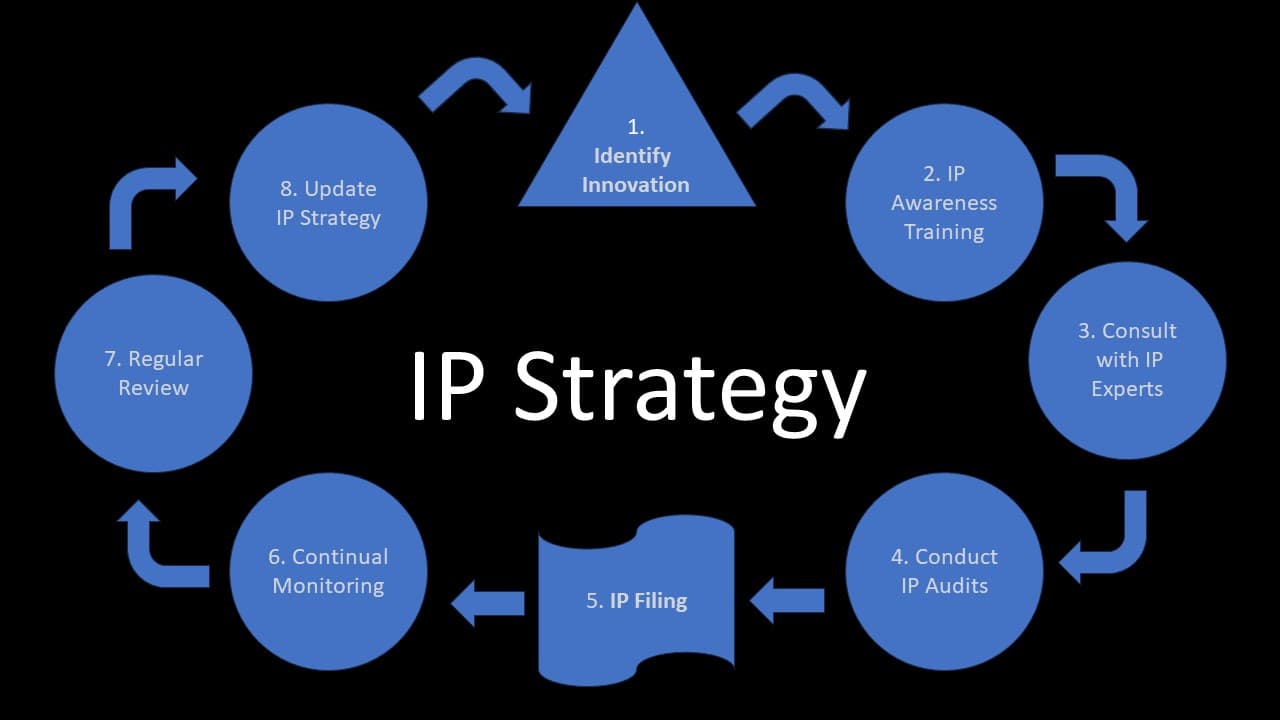
For a Startup, an early review should cover its brand, website content, software, product designs, technical inventions, internal processes, customer information, and marketing materials. Founders should determine who created each asset, whether the business owns it, and whether any third-party rights are involved. This exercise often reveals overlooked issues, such as a logo created by a freelancer without a clear ownership assignment or software incorporating components subject to license restrictions. Resolving these questions early is usually easier than addressing them during a fundraising round, acquisition, or legal dispute.
Prioritizing Protection Within a Limited Budget
Early-stage businesses frequently operate with limited funding, so protecting every asset at once may not be realistic. Founders should prioritize assets according to their commercial importance, likelihood of imitation, potential damage from misuse, and cost of obtaining and maintaining protection. A distinctive brand used across a major product line may deserve immediate attention, while a minor internal document may require only routine access controls.
A practical review can also distinguish between protections that require formal applications and measures that can be implemented internally. Confidentiality rules, clear ownership agreements, access restrictions, and accurate documentation can often begin before a company makes significant legal investments. However, these measures do not replace formal registration where registration is necessary or strategically valuable. The aim is to use available resources effectively while identifying situations that require professional advice.
Protecting Ownership When Working With Employees and Freelancers
One of the most common sources of intellectual property uncertainty is the assumption that whoever pays for a project automatically owns everything created during that project. The actual position depends on the applicable law, the relationship between the parties, and the terms of their agreements. A company may hire a designer to develop its visual identity, a developer to build its application, or an agency to produce advertising materials. Without suitable contractual terms, the business may not obtain all the rights it expects.
Founders should review employment agreements, contractor contracts, consulting arrangements, and development agreements to ensure that intellectual property ownership is addressed clearly. Relevant terms may cover assignment of rights, permitted use, confidentiality, pre-existing materials, third-party components, and responsibilities for documenting deliverables. The agreement should distinguish work created specifically for the business from tools, templates, or technologies the contributor already owned. Local legal requirements should also be considered because ownership rules and the enforceability of particular clauses vary by jurisdiction.
Written agreements are particularly important when several founders contribute to the same project. Friends or colleagues may initially rely on informal understandings, but disagreements can emerge when one person leaves, a company receives investment, or the business becomes profitable. Founders should establish who owns the intellectual property, how it can be used, and what happens if a founder departs. Resolving these questions early can protect working relationships and reduce uncertainty for future investors.
Managing Intellectual Property in the Age of Artificial Intelligence
Artificial intelligence tools have changed how businesses develop software, create marketing materials, design products, and conduct research. They can increase productivity, but they also introduce questions about ownership, confidentiality, licensing, and originality. A team might use an AI assistant to generate code, create product illustrations, summarize technical information, or produce website copy. Whether the resulting material qualifies for copyright protection, who owns any relevant rights, and what restrictions apply depend on the jurisdiction, the degree of human contribution, the tool’s terms, and the material involved.
Founders should establish internal guidelines describing which tools employees may use and what information they may submit. Uploading confidential source code, customer records, unpublished inventions, or trade secrets to an external service may create risks if the service’s data-handling terms are unsuitable. Businesses should review relevant privacy, retention, training, and licensing provisions before using AI tools for sensitive work. Human review is also important because generated content can contain errors, resemble existing material, or introduce third-party code with license obligations.
Another consideration is maintaining records of how important assets were created. Where appropriate, teams can document human contributions, review generated material, retain relevant licenses, and record approvals. These steps do not guarantee that a work is protectable or free of infringement, but they make it easier to assess ownership and compliance. A well-designed AI policy allows a business to benefit from new technology without ignoring the legal and commercial implications.
Preventing Infringement and Handling Disputes
Protecting intellectual property involves more than obtaining registrations. Founders must also avoid infringing the rights of other businesses. A new company may unintentionally adopt a similar brand name, use photographs without suitable permission, copy code with incompatible licensing conditions, or incorporate protected designs into a product. Such mistakes can lead to demands to stop using an asset, unexpected licensing expenses, reputational damage, or litigation.

Before launching a product, businesses should review relevant third-party materials, confirm the permissions they need, and investigate potential conflicts involving important brand names and inventions. Software teams should maintain an inventory of open-source and commercial components, including their applicable license terms. Marketing teams should verify that images, fonts, videos, and other materials are properly licensed or otherwise lawfully available for the intended use. These checks should be proportionate to the risks and importance of the launch.
If a potential infringement is identified, founders should preserve relevant documents, avoid making unsupported public accusations, and obtain appropriate legal advice before taking action. A dispute may sometimes be resolved through a license, a negotiated change, or another commercial arrangement. In other situations, formal legal remedies may be necessary. The appropriate response depends on the evidence, the nature of the rights, the jurisdiction, and the potential consequences of continuing the disputed activity.
Building a Practical IP Protection Checklist
An effective protection process should be easy to follow and reviewed as the business evolves. Rather than treating intellectual property as a one-time administrative task, founders can incorporate it into product development, hiring, marketing, and strategic planning. A brief internal review at important milestones can identify newly created assets, changes in ownership, upcoming filing deadlines, and emerging risks.
The following actions provide a useful starting point:
-
Create an inventory of valuable brands, inventions, creative works, software, and confidential information.
-
Review founder, employee, contractor, and agency agreements for ownership and confidentiality provisions.
-
Assess which assets may need registration, legal review, or additional documentation.
-
Secure sensitive files, control access, and maintain records of licenses and third-party materials.
-
Revisit protection needs before major product launches, fundraising, partnerships, or international expansion.
Responsibility should also be clearly assigned. One founder or team member can maintain the asset inventory, coordinate with legal advisers, and track relevant deadlines. As the business grows, this responsibility may move to an operations manager, legal professional, or dedicated IP specialist. Regular reviews help ensure that the company’s protection strategy keeps pace with new products, additional employees, changing technology, and expansion into new markets.
Using Intellectual Property to Support Business Growth
Intellectual property can influence how investors, business partners, and potential buyers assess a company’s long-term value. Investors may examine whether the business owns the technology it claims to have developed, whether its trademarks face conflicts, and whether important contractor agreements properly transfer ownership. Incomplete records or unresolved disputes can delay due diligence and create uncertainty around a company’s commercial prospects.
For a Startup seeking investment, a clear IP portfolio can demonstrate that its founders understand the assets supporting the business model. This does not mean that every company needs numerous patents or registrations to attract funding. A software business might derive much of its value from customer relationships, product quality, proprietary code, and a recognizable brand, while a medical technology company may depend more heavily on patent rights and regulatory requirements. The relevant protections should reflect how the company actually creates and maintains value.
Intellectual property can also support licensing, strategic partnerships, franchising, and expansion into new markets. A company may license technology to another business, authorize a partner to use its brand, or commercialize a protected design through a manufacturing agreement. These opportunities require careful contracts that define permitted uses, payment terms, quality standards, confidentiality, and ownership of future improvements. With sound planning, IP protection becomes more than a defensive measure; it can contribute directly to business development and revenue generation.
Conclusion
Intellectual property is an important part of building a resilient business in a competitive and increasingly digital economy. Patents, trademarks, copyrights, trade secrets, and industrial design protections address different types of assets, and each comes with specific requirements and limitations. Founders who understand these differences can make better decisions about which creations to protect, how to document ownership, and when professional legal guidance is necessary. The most effective approach combines early planning with practical safeguards. Clear agreements, secure information management, careful use of third-party materials, responsible AI policies, and regular reviews can reduce avoidable risks. Businesses should also remember that legal protection differs between jurisdictions and that not every idea or asset qualifies for every form of protection. Qualified legal advice is particularly valuable before major disclosures, registrations, licensing arrangements, and international expansion.