

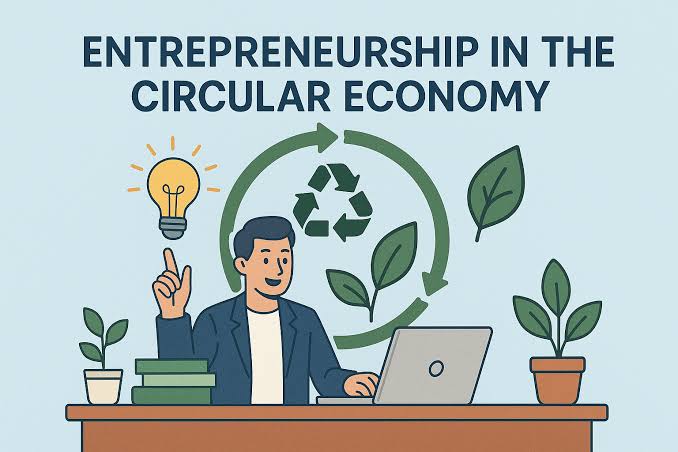
The way businesses produce, sell, and manage products is changing as environmental concerns, resource shortages, and rising operating costs influence business decisions. Traditional business models often follow a linear pattern in which companies obtain raw materials, manufacture products, sell them, and eventually allow those products to become waste. Although this approach has supported economic development for decades, it can create unnecessary expenses, increase environmental pressure, and waste valuable resources. As customers and businesses become more conscious of sustainability, alternative approaches are gaining attention. One of the most promising approaches is the circular economy, which focuses on keeping materials and products useful for as long as possible.
For a Startup entering a competitive market, adopting circular economy principles can provide opportunities to develop innovative products, improve resource efficiency, and build stronger relationships with customers. Instead of treating used materials as worthless waste, businesses can repair, reuse, refurbish, recycle, or redesign them for another purpose. This approach can create additional revenue streams while reducing dependence on newly extracted resources. It also encourages entrepreneurs to consider the complete life cycle of a product, from its initial design to its eventual reuse or recovery.
The growing interest in sustainable consumption makes circular business models particularly relevant in the current business environment. Customers increasingly evaluate product durability, packaging, repair options, and environmental responsibility alongside price and quality. Meanwhile, businesses are exploring practical ways to manage costs and reduce material waste. Circular economy strategies do not guarantee profitability, but when they address genuine customer needs and make economic sense, they can help young businesses build resilient operations and establish a meaningful position in the market.
Understanding the Circular Economy Business Model
A circular economy business model is designed to preserve the value of products, components, and materials instead of allowing them to become waste after a single use. It challenges the assumption that economic growth must always depend on increasing the consumption of new resources. Businesses using this approach look for ways to extend product life, recover useful materials, reduce unnecessary packaging, and make better use of existing assets. The objective is to create economic value while minimizing avoidable waste and environmental damage.
For entrepreneurs, this concept involves more than switching to recyclable packaging or advertising an environmentally friendly product. It requires examining how the entire business operates. A furniture company might manufacture tables using recovered wood, offer repair services, and accept old furniture for refurbishment. A technology company might collect used electronic devices, restore them, and sell them with a limited warranty. A clothing business could introduce a resale service that allows customers to return garments for resale after inspection. Each example demonstrates how circular principles can become part of a practical commercial strategy.
The most effective approach depends on the product, customer expectations, supply chain, and available resources. Some businesses can adopt circular practices during product development, while others may begin by improving packaging or establishing a take-back program. The important consideration is whether the model creates measurable value for customers and the business without introducing costs that outweigh its benefits.
Why Circular Economy Models Matter for Modern Businesses
Reducing Operating Costs and Material Waste
One of the main advantages of circular business practices is the potential to reduce operating expenses. Raw materials, packaging, transportation, and waste disposal can represent substantial costs, particularly for companies operating with limited financial resources. When businesses reuse materials or improve manufacturing efficiency, they may reduce the amount of new material they need to purchase. Better inventory management can also prevent overproduction and limit the financial losses associated with unsold products.
For example, a small food-processing company might collaborate with another local business to find productive uses for suitable by-products that would otherwise be discarded. Depending on safety requirements and the materials involved, these by-products could become inputs for animal feed, compost, or another commercial application. The original business may reduce disposal costs, while its partner gains access to a useful resource. Such arrangements require appropriate quality controls, reliable demand, and clear agreements, but they illustrate how waste reduction can create financial opportunities.
Meeting Changing Customer Expectations
Modern customers are paying greater attention to product quality, durability, affordability, and environmental impact. However, sustainability alone is rarely enough to persuade every customer to purchase a product. Consumers still expect reliable performance, convenient service, transparent pricing, and good value for money. Businesses that combine these qualities with credible environmental improvements are better positioned to build lasting customer relationships.
Circular practices can support this objective by giving customers more choices. Repair services, refurbished products, refill systems, and trade-in programs can provide affordable alternatives to buying new items. A customer who cannot justify the price of a new electronic device may prefer a professionally refurbished model with a warranty. Similarly, someone who purchases cleaning products regularly may appreciate a refill system that reduces packaging waste and simplifies repeat purchases. These services can encourage repeat business while making sustainability more accessible.
Building Resilience Against Resource Disruptions
Businesses that depend entirely on newly purchased raw materials can be vulnerable to supply shortages, price fluctuations, and transportation disruptions. Circular systems can reduce some of these risks by recovering materials from existing products or developing relationships with local suppliers. Reusing suitable components may also give businesses greater flexibility when certain materials become expensive or difficult to obtain.
Nevertheless, recovered materials are not always cheaper or easier to source. Collection, sorting, cleaning, testing, and transportation may introduce additional expenses. Entrepreneurs should compare the full cost of recovered materials with conventional alternatives rather than assuming that circular sourcing will automatically improve profitability. A well-designed system balances environmental objectives with dependable supply, consistent quality, and commercial practicality.
Major Circular Economy Models for Startup Businesses
Different circular models serve different industries and customer needs. Some focus on extending the useful life of products, while others generate revenue through access, recovery, or material reuse. The following table summarizes several approaches that entrepreneurs can evaluate before choosing a suitable strategy.
| Business model | How it works | Potential business benefit |
|---|---|---|
| Repair and refurbishment | Restores used products to working condition | Service revenue and extended product value |
| Product-as-a-service | Customers pay for access or usage instead of ownership | Recurring revenue and stronger customer relationships |
| Reuse and resale | Collects and resells suitable pre-owned products | Additional sales and reduced demand for new products |
| Recycled material production | Converts recovered materials into usable inputs | Alternative sourcing and new product opportunities |
| Refill and reuse systems | Uses reusable containers or packaging | Repeat purchases and reduced single-use packaging |
Repair, Refurbishment, and Resale
Repair and refurbishment models focus on keeping products useful for longer. Instead of encouraging customers to replace an item whenever it develops a fault or becomes outdated, a business provides maintenance, replacement components, upgrades, or restoration services. This approach is particularly relevant to electronics, household appliances, furniture, bicycles, industrial equipment, and certain fashion products.
A business can generate revenue through repair charges, refurbishment packages, warranties, and resale margins. It may also build customer trust by offering transparent product assessments and clear service policies. However, success depends on access to spare parts, trained technicians, product safety, and reliable quality checks. Products that are difficult to disassemble or repair may require redesigning or establishing stronger supplier relationships before this model becomes commercially attractive.
Product-as-a-Service Models
In a product-as-a-service model, customers pay for the use or performance of a product rather than purchasing it outright. Depending on the arrangement, payments may be monthly, annual, or based on actual usage. Examples include equipment leasing, reusable packaging services, shared machinery, and subscription-based access to selected business tools.
This model can create recurring revenue and encourage companies to manufacture or select durable products because the provider remains responsible for maintenance and eventual recovery. For instance, a business supplying office equipment could offer a monthly service that includes installation, maintenance, and replacement when necessary. Customers gain predictable costs, while the provider retains an opportunity to recover components at the end of the contract. The model requires sufficient working capital, careful asset tracking, and realistic calculations of maintenance, depreciation, and collection expenses.
Recycling and Upcycling
Recycling involves processing recovered materials so they can be used again, sometimes after substantial transformation. Upcycling takes a different approach by turning discarded or unwanted materials into products with a new or higher perceived value. Both approaches can help businesses reduce waste, although the environmental and financial results depend on the materials, processing methods, energy requirements, and final product demand.
For example, a fashion business could transform suitable textile offcuts into bags, accessories, or decorative items. A construction-focused business might investigate whether recovered timber or other materials can safely be used in new products. Before launching, entrepreneurs should verify material quality, legal requirements, processing costs, and customer demand. A recycled product is not automatically profitable, and an upcycled product still needs a clear market, competitive pricing, and consistent production standards.
How a Startup Can Implement a Circular Business Strategy
Identify the Most Valuable Opportunity
The first step is to understand where waste, unnecessary costs, and unused value occur within the business. Entrepreneurs should examine product design, purchasing, packaging, manufacturing, delivery, customer usage, and end-of-life handling. The goal is to identify a specific problem that can be solved commercially rather than adopting a broad sustainability concept without a clear business purpose.
For example, an online retailer might discover that excessive packaging creates unnecessary expenses and customer complaints. Its initial opportunity could be to introduce right-sized packaging, use suitable recycled materials, or test reusable shipping containers in a limited delivery area. A manufacturer may instead discover that production offcuts represent a significant material cost. By measuring the volume and type of waste generated, the business can determine whether redesigning products or selling recovered materials would offer a stronger financial return.
Design Products for Durability and Reuse
Product design plays a central role in circular operations. Products that are easy to repair, disassemble, upgrade, or recycle generally provide more opportunities for recovering their value. Entrepreneurs can consider replaceable components, standardized parts, durable materials, modular construction, and packaging that can be reused without compromising hygiene or safety.
Design decisions should reflect how customers actually use products. A modular device may be easier to repair, but unnecessary complexity could increase its purchase price. A reusable container may reduce disposable packaging, but only when customers return it and the cleaning and transportation system remains efficient. Testing prototypes with real users can reveal whether the proposed design is practical, affordable, and sufficiently durable before a company commits to large-scale production.
Build Partnerships and Reverse Logistics
Circular business models often require cooperation between organizations. Suppliers, repair professionals, recyclers, logistics companies, retailers, and customers may all contribute to recovering products or materials. Establishing these relationships early can help an entrepreneur determine whether materials will be available in sufficient quantities and whether recovered products can be transported, inspected, and processed economically.
Reverse logistics refers to moving products or materials from customers back to a business or recovery partner. This process can include returns, collection points, sorting, cleaning, repair, and resale. For example, a retailer offering trade-in credits needs a clear system for accepting used products, evaluating their condition, and deciding whether each item should be repaired, resold, dismantled, or recycled. Without an efficient recovery process, transportation and handling costs can quickly reduce the model’s profitability.
Start Small and Measure Results
Launching a complete circular system immediately can be expensive and operationally complicated. A limited pilot allows businesses to test customer interest, operational requirements, and financial assumptions before expanding. Entrepreneurs can begin with one product category, a small geographic area, or a specific group of customers. The pilot should have clear goals and a defined period for evaluating results.
Useful measurements include material savings, product return rates, repair success, resale revenue, customer retention, and the total cost of collecting and processing returned items. Businesses should also track product quality and customer satisfaction to ensure that the new model does not weaken the customer experience. These measurements help decision-makers identify what works, what needs improvement, and whether the circular approach can scale sustainably.
Practical Steps for Entrepreneurs Exploring Circular Opportunities
An entrepreneur does not need to build a recycling facility or redesign an entire industry to begin using circular principles. Small, targeted changes can reveal valuable opportunities and help a business develop the experience needed for more advanced initiatives. The following actions provide a practical starting point:
-
Review purchasing, packaging, production, and disposal costs to identify avoidable waste.
-
Speak with customers about repair services, refill options, refurbished goods, and return programs.
-
Test one circular offering and compare its total costs and revenue with the existing model.
-
Establish quality standards and partnerships for collecting, repairing, or recovering materials.
-
Track measurable environmental and financial outcomes before expanding the initiative.
These steps help entrepreneurs replace assumptions with evidence. A promising concept should demonstrate that customers are willing to participate, suppliers can provide suitable materials, and the business can deliver consistent quality at a sustainable cost. Starting with a manageable experiment also makes it easier to learn from operational problems without putting the entire business at risk.
Challenges and Risks of Circular Business Models
Although circular models offer several opportunities, they can introduce challenges that traditional businesses do not face to the same degree. Collecting used products, sorting mixed materials, maintaining reusable assets, and organizing repairs can require additional staff, storage space, equipment, and transportation. In some industries, recycled materials may also have inconsistent quality or limited availability. These factors can make early operations more expensive than expected, particularly when a business has not yet reached sufficient scale.
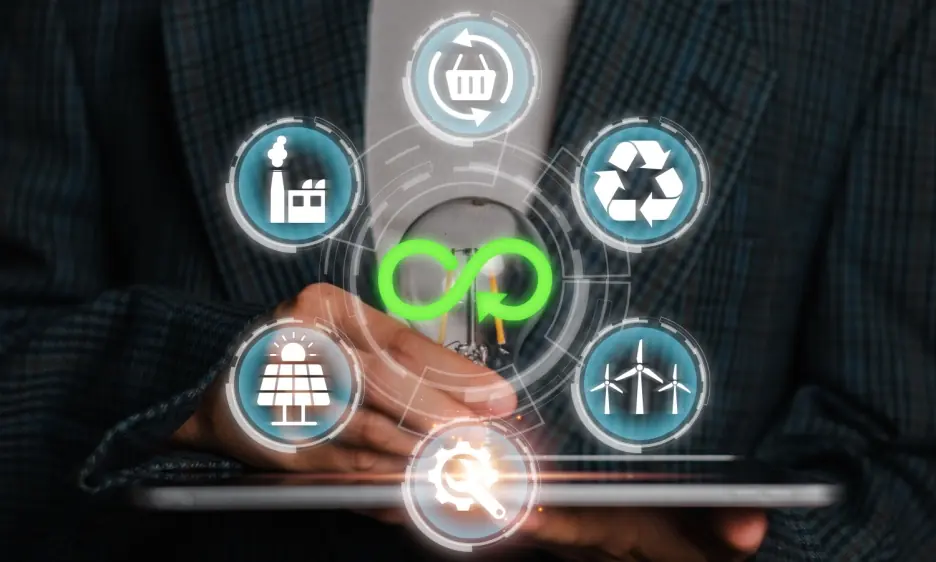
Customer behavior is another important consideration. A return program cannot recover many products if customers find the process inconvenient or see little benefit in participating. Similarly, a subscription model may struggle when customers prefer ownership or when monthly payments cost more than purchasing an item outright. Businesses should test incentives, collection methods, and pricing with their target audience instead of assuming that environmental awareness will automatically translate into purchases.
Entrepreneurs must also consider product safety, consumer protection, waste-handling regulations, and any industry-specific standards. Refurbished electronics may need testing and accurate condition descriptions, while food-related reuse systems may require strict hygiene procedures. Environmental claims should be supported by evidence and should not exaggerate the benefits of a product or service. Clear communication helps prevent misleading marketing and protects customer trust.
A final challenge is balancing growth with environmental performance. Increased sales of a supposedly sustainable product do not necessarily guarantee a lower overall environmental impact if production, transport, or resource consumption grows disproportionately. Businesses should evaluate the complete process and make improvements where they create genuine value. A thoughtful strategy recognizes both the potential benefits and the limitations of the chosen model.
The Role of Technology in Circular Business Growth
Technology can make circular operations easier to manage by improving visibility across products, materials, and supply chains. Inventory software can track reusable containers, while product identification systems can help businesses record repairs, replacements, and material composition. Data analysis can reveal which products fail most often, which components are frequently replaced, and where unnecessary waste occurs. These insights support better product design and more informed purchasing decisions.
Artificial intelligence can also assist with forecasting demand, identifying patterns in product returns, and planning inventory. For instance, a refurbishment business may use historical sales and return data to estimate which used devices are likely to sell quickly and which may require costly repairs. Digital marketplaces can connect businesses that generate surplus materials with organizations capable of using them. However, these tools should solve a clearly identified operational problem. Their financial costs, data quality requirements, and maintenance needs must be considered before adoption.
Digital product records may become increasingly useful as businesses seek greater transparency about product origin, composition, repair history, and recovery options. Better information can support repair technicians, recycling partners, and customers who need to understand how a product can be maintained or processed at the end of its useful life. The appropriate technology depends on the company’s scale and industry; a small enterprise may achieve meaningful results with basic inventory tracking before investing in advanced systems.
Measuring the Long-Term Value of Circular Strategies
Evaluating circular business performance requires looking beyond sales growth alone. Revenue and profit remain important, but businesses should also measure how effectively they use materials, extend product life, and recover value from existing resources. Relevant indicators may include the percentage of products repaired rather than replaced, the amount of material reused, the number of successful returns, and the cost per recovered item.
Financial analysis should include the complete cost of implementation. A reusable packaging program, for example, may require an initial investment in containers, cleaning, storage, and return transportation. Its value depends on how many times containers can be reused, how frequently customers return them, and whether the savings exceed the total operating expenses. Similar calculations can be applied to refurbished products, equipment leasing, and material recovery programs.
Long-term evaluation also helps a business understand whether its circular strategy supports customer loyalty and operational resilience. Repeat purchases, service renewals, customer referrals, and lower material losses can indicate that the model is creating value beyond its immediate environmental benefits. Reviewing these indicators regularly allows entrepreneurs to adjust pricing, improve product design, and discontinue initiatives that do not deliver the expected results.
Conclusion
Circular economy models provide entrepreneurs with a practical way to rethink how products are designed, sold, maintained, and recovered. By focusing on durability, repair, reuse, refurbishment, recycling, and resource efficiency, businesses can identify opportunities to reduce waste while creating new services and revenue streams. These approaches are relevant across industries, from fashion and electronics to food processing, furniture, packaging, and equipment leasing. For a Startup, the most effective strategy is not necessarily the most technologically advanced or environmentally ambitious option. It is the model that addresses a genuine market need, works within available resources, and delivers measurable financial and environmental value. Careful research, customer feedback, reliable partnerships, and small-scale testing can help entrepreneurs identify a sustainable path forward.