


Men’s hairstyles continue to evolve, bringing classic looks back with fresh details and contemporary styling techniques. One haircut that has gained considerable attention is the modern mullet taper. It combines the distinctive shape of a traditional mullet with the clean, gradual finish of a taper haircut. The result is a balanced appearance that feels fashionable, expressive, and suitable for different personal styles. Unlike older mullet designs that often featured dramatic differences between the sides and back, today’s versions offer more flexibility and a refined overall appearance.
What makes this hairstyle particularly interesting is its ability to combine individuality with everyday practicality. The tapered sides create a neat outline around the temples, ears, and neckline, while the longer back provides movement and character. Depending on hair texture, length, and personal preference, the haircut can look subtle, edgy, relaxed, or bold. Whether someone prefers a polished appearance or a more rebellious aesthetic, this hairstyle provides plenty of opportunities for customization.
What Is a Modern Mullet Taper?
A modern mullet taper is a contemporary haircut that combines the recognizable mullet silhouette with gradually shortened hair around the sides and neckline. The top generally retains enough length for styling, while the back remains noticeably longer than the surrounding areas. The taper creates a smooth transition between different hair lengths instead of producing an extremely disconnected appearance.
Traditional mullets became popular because of their distinctive short-front, short-side, and long-back structure. Modern interpretations maintain this recognizable foundation but introduce softer transitions, textured layers, and more controlled proportions. Barbers can adjust the taper according to individual preferences, creating anything from a low and subtle finish to a more noticeable temple taper. This adaptability makes the haircut suitable for people who want something different without sacrificing a clean appearance.
Why Is This Hairstyle Becoming Popular?
One major reason behind the popularity of this haircut is its versatility. Modern fashion increasingly embraces hairstyles that reflect individual personality rather than following one universal standard. The mullet provides an opportunity to experiment with length and texture, while the taper keeps the overall design looking intentional and well-maintained.
Social media, professional barbers, athletes, musicians, and fashion influencers have also contributed to the renewed interest in mullet-inspired hairstyles. People regularly discover different variations through hairstyle transformations and barber showcases. Instead of copying an old-fashioned mullet, many prefer updated versions that incorporate fades, textured tops, natural curls, and carefully shaped necklines.
Another advantage is that the haircut can complement casual and streetwear-inspired outfits while remaining adaptable enough for everyday situations. The final appearance depends heavily on the taper height, back length, and styling technique.
Popular Modern Mullet Taper Variations
There are several ways to customize this haircut. Each variation creates a slightly different appearance, making it important to understand the available options before visiting a barber.
Low Taper Mullet
A low taper mullet is an excellent choice for someone who prefers a balanced and understated hairstyle. The taper begins close to the ears and gradually blends into the surrounding hair. The top and back retain their length, creating the familiar mullet shape without making the sides look excessively short.
This variation works particularly well for people who are trying the mullet style for the first time. It provides enough contrast to make the haircut noticeable while maintaining a relatively natural appearance. It can also complement straight, wavy, and curly hair.
Mid Taper Mullet
The mid taper creates a more noticeable transition around the sides of the head. The barber begins the blending process slightly higher than with a low taper, producing additional contrast between the shorter sides and longer upper sections.
This version is suitable for individuals who want a modern and confident appearance. The back can be kept moderately long or extended for a more traditional mullet silhouette. Adding texture to the crown helps create a fuller and more dynamic finish.
Curly Mullet Taper
Curly hair naturally creates volume and movement, making it an excellent match for mullet-inspired cuts. The tapered sides help control excess bulk around the temples and ears, while the longer back allows the curls to maintain their natural shape.
A skilled barber can create layers that prevent the back from looking too heavy. Lightweight curl creams and leave-in conditioners can help maintain definition without making the hairstyle appear greasy or stiff.
Textured Mullet Taper
The textured version focuses on creating separation and movement throughout the top and back. Instead of maintaining one uniform length, the barber introduces carefully placed layers that make the hair look fuller and more natural.

This option is particularly attractive for people with straight or slightly wavy hair. A small amount of matte styling paste can emphasize individual sections and produce a relaxed finish. It is also a useful choice for anyone who prefers a slightly messy hairstyle instead of a perfectly arranged appearance.
How to Choose the Right Variation
Choosing the right variation depends on several factors, including hair texture, face shape, personal style, and maintenance preferences. A hairstyle that looks excellent on someone with thick, naturally wavy hair may require different adjustments for someone with fine, straight hair.
The following table highlights some common options and their characteristics.
| Hairstyle variation | Best suited for | Overall appearance |
|---|---|---|
| Low taper mullet | Beginners and subtle styling | Clean and natural |
| Mid taper mullet | People wanting more contrast | Modern and defined |
| Curly mullet taper | Naturally curly hair | Voluminous and textured |
| Textured mullet | Straight or wavy hair | Relaxed and layered |
| Burst taper mullet | People wanting a bold finish | Rounded and distinctive |
Face shape can also influence the final result. People with round faces may prefer additional height on top to create a more elongated appearance. Those with longer faces might benefit from keeping more volume around the sides. However, these are general styling considerations rather than strict rules. Hair density, natural growth patterns, and individual preferences are equally important.
Modern Mullet Taper for Different Hair Types
Straight Hair
Straight hair provides a clean foundation for structured mullet styles. Because it naturally falls in a predictable direction, barbers can use layers and texture to introduce additional movement. Without proper layering, straight hair may sometimes appear flat or overly heavy at the back.
Using a lightweight texturizing product can help create separation without making the hair look stiff. People with fine hair should avoid excessive amounts of heavy wax because it can reduce volume.
Wavy Hair
Wavy hair offers a natural advantage because its texture creates movement without requiring extensive styling. A modern mullet taper can highlight these natural waves while keeping the sides neat and controlled.
A lightweight styling cream or sea salt spray can help define the waves. The back can be maintained at a medium length to create a relaxed shape that looks attractive even with minimal daily effort.
Thick Hair
Thick hair provides plenty of styling possibilities, but it can become difficult to manage if too much weight remains around the crown and back. Layering helps remove unnecessary bulk while maintaining the overall mullet silhouette.
A barber may use scissors to create movement and carefully blend the transition between different sections. Regular trimming also prevents the hairstyle from becoming excessively wide or unbalanced.
How to Ask Your Barber for This Haircut
Communication is essential when requesting a specific haircut. The term mullet can describe several different styles, so simply asking for one may not produce the exact result you expect. Explain how much length you want to retain at the back and how gradually you want the sides to transition.
When requesting a modern mullet taper, consider discussing these details with your barber:
-
Specify whether you prefer a low, mid, or higher taper.
-
Explain how long you want the back section to remain.
-
Discuss whether you want a textured, layered, or natural top.
-
Mention whether you prefer a subtle or noticeable contrast.
Bringing a reference photograph can make the conversation easier. It allows your barber to understand the proportions, neckline, and overall silhouette you have in mind. A professional barber can then adapt the reference to your hair density, head shape, and natural growth direction.
How to Style a Modern Mullet Taper at Home
Styling this haircut does not necessarily require an extensive collection of products. The main objective is to maintain natural movement while keeping the overall shape under control. The appropriate technique depends on whether your hair is straight, wavy, or curly.
Start by washing your hair with a suitable shampoo and applying conditioner to prevent dryness. Gently towel-dry your hair instead of rubbing it aggressively. If you want additional volume, use a blow dryer on a moderate setting while directing the top upward or backward with your fingers.
For a textured appearance, apply a small amount of m
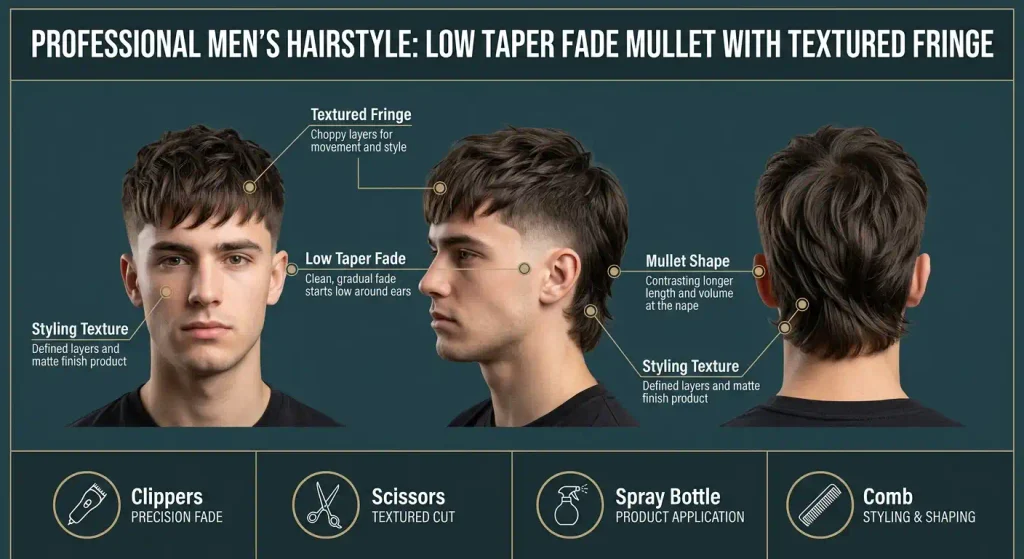 atte paste or styling cream. Distribute the product evenly before shaping individual sections. Avoid applying too much product to the back because excessive weight can make longer hair appear flat.
Curly hair generally benefits from a moisturizing curl cream. Apply it while the hair is slightly damp and allow the curls to dry naturally or use a diffuser. This approach helps preserve the natural curl pattern and reduces unnecessary frizz.
Maintenance and Regular Barber Visits
Although the longer back gives this hairstyle its distinctive character, the tapered sections require occasional maintenance. As the sides grow, the original blending becomes less noticeable, and the haircut may gradually lose its clean appearance.
Most people benefit from visiting their barber approximately every three to five weeks, depending on how quickly their hair grows and how sharp they want the taper to remain. Someone who prefers a softer, more natural finish may wait longer between appointments.
The back does not always need to be trimmed at the same frequency as the sides. Allowing it to grow gradually can preserve the desired length and silhouette. However, occasional shaping helps prevent uneven ends and excessive bulk.
Maintaining healthy hair is equally important. Regular conditioning, gentle drying, and avoiding unnecessary heat exposure can improve the appearance of longer sections. A balanced maintenance routine keeps the haircut looking intentional rather than neglected.
Common Mistakes to Avoid
Even a well-designed haircut can lose its appeal when the proportions are not balanced. One common mistake is choosing a taper that is too high for the desired appearance. While a high taper can create dramatic contrast, it may make the sides appear disconnected from the longer back.
Another issue is leaving too much weight around the crown. When the top and back are both excessively bulky, the hairstyle can become difficult to manage. Proper layering helps create a smoother overall silhouette.
People should also avoid selecting a style exclusively because it looks attractive in a photograph. Hair texture, density, and natural growth direction can significantly influence the final result. A barber should consider these characteristics before deciding on the exact cutting technique.
Finally, using too much styling product can make the hair look greasy and reduce its natural movement. Lightweight products usually provide better results when the goal is a relaxed and contemporary appearance.
Is a Modern Mullet Taper Suitable for Professional Settings?
A common misconception is that mullet-inspired hairstyles are always too bold for professional environments. In reality, the overall appearance depends on the haircut’s proportions and finishing details. A low taper with a moderately long back and controlled texture can look considerably more understated than an exaggerated version.
People working in creative industries may have more freedom to experiment with dramatic styling, while individuals in conservative workplaces might prefer a shorter back and cleaner sides. The key is to choose a version that reflects personal taste without conflicting with workplace expectations.
A neat neckline, properly maintained sides, and a manageable top can make the haircut appear polished. This demonstrates how a distinctive hairstyle can still work in environments where a clean and presentable appearance matters.
Styling Products That Can Improve the Overall Look
The right products can make everyday styling easier and help preserve the haircut’s natural shape. However, choosing products according to hair type is more important than purchasing numerous styling items.
Matte clay and texturizing paste are useful for straight and thick hair because they provide separation and moderate hold. Lightweight styling creams work well for wavy hair, particularly when someone wants movement without excessive stiffness. Curly hair generally benefits from curl-defining creams and moisturizing conditioners.
Heat protection products are also worth considering when using blow dryers or other heated styling tools regularly. They help reduce unnecessary damage caused by repeated exposure to high temperatures. Regardless of the product selected, applying a small amount first is usually the best approach.
Conclusion
The modern mullet taper represents an interesting combination of classic barbering and contemporary hairstyling. Its distinctive back length, textured top, and gradually blended sides create an appearance that can be customized for different personalities and hair types. From subtle low tapers to more noticeable mid-taper variations, there are plenty of ways to make the haircut feel individual and stylish.
Its biggest advantage is versatility. People can experiment with different lengths, textures, and finishes without losing the recognizable mullet silhouette. With the right barber, suitable styling products, and regular maintenance, this hairstyle can remain attractive and manageable.
Ultimately, the best haircut is one that complements your natural hair, matches your lifestyle, and makes you feel confident. Choosing the right proportions and communicating your preferences clearly will help you achieve a modern look that feels fresh, distinctive, and comfortable for everyday wear.

.jpg&description=Discover the modern mullet taper, a stylish haircut combining clean tapered sides with textured length at the back. Explore variations, styling tips, and maintenance advice.)