

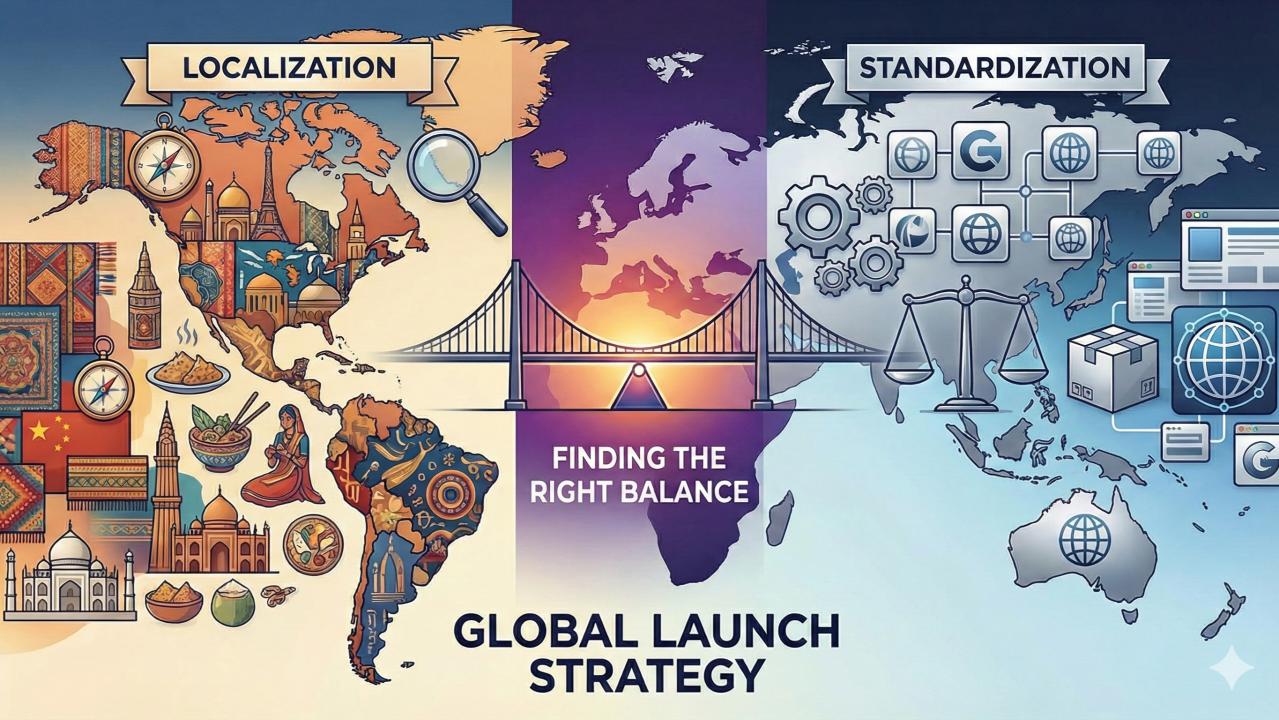
Expanding into a regional market involves much more than making a product available in another location. Customers in different regions can have distinct languages, cultural expectations, purchasing habits, preferred payment methods, and ideas about what makes a product trustworthy. A business that understands these differences can create experiences that feel familiar rather than foreign. This is where product localization becomes an important part of modern expansion strategies.
For a startup, localization can create a stronger connection with customers while helping the business compete against established companies that may already understand the local market. Instead of simply translating product information, localization adapts the complete customer experience to regional expectations. This may include the interface, product descriptions, pricing, customer support, images, payment options, measurements, legal information, and marketing communication.
As digital commerce continues to connect businesses with customers across borders, regional relevance has become increasingly important. Consumers have more choices than ever, and they can quickly move toward products that communicate clearly and understand their needs. Effective localization allows companies to reduce that distance and build a more natural relationship with audiences in new markets.
Understanding Product Localization
Product localization is the process of adapting a product or service to suit the language, culture, preferences, regulations, and practical expectations of a particular market. Translation is one part of this process, but it is not the entire strategy. A localized product should feel as though it was designed with the target region in mind from the beginning.
For example, a software company entering a new country may translate its interface but still fail to deliver a genuinely localized experience if its payment options are unfamiliar, its date formats are incorrect, or its customer support operates according to another region’s expectations. Localization considers these details together so customers can interact with the product comfortably.
A successful localization strategy also recognizes that regions within the same country can differ. Language preferences, purchasing behavior, cultural references, and consumer priorities may vary between cities or communities. Businesses therefore need market research before deciding what should be adapted and how deeply the product needs to change.
Why Regional Relevance Matters for Business Growth
Regional customers are more likely to engage with products that reflect their everyday environment. Familiar language, local currency, relevant examples, appropriate visuals, and convenient purchasing methods can reduce confusion during the buying process. When these elements work together, customers can understand the value of a product without having to overcome unnecessary barriers.
For a startup, this can be especially valuable because early customer relationships can influence long-term growth. A localized experience can help a new company appear more approachable and attentive to customer needs. Rather than presenting the same generic experience everywhere, the business demonstrates that it has invested time in understanding its audience.
Localization can also improve communication between a company and its customers. Product instructions, onboarding messages, promotional material, and support responses become easier to understand when they reflect local language and communication patterns. This can contribute to stronger customer satisfaction and potentially encourage repeat purchases and referrals.
How Localization Helps a Startup Enter Regional Markets
When a startup enters an unfamiliar market, one of its biggest challenges is building trust. Customers may not recognize the brand, understand its background, or know whether the product will work well for their specific needs. Localization can address some of these concerns by making the product and communication feel more familiar.
A startup can adapt its website, application, product packaging, support channels, and promotional material to match local expectations. Even small changes can influence how customers perceive a new brand. Displaying prices in the appropriate currency, using locally familiar payment methods, and providing support during suitable business hours can make the buying journey considerably easier.
Localization can also help businesses identify market-specific opportunities. Customer research may reveal that a feature considered secondary in one region is highly important in another. Similarly, certain products may need different configurations, sizes, subscription plans, or service packages depending on local demand. This information allows companies to move beyond simply exporting an existing product and instead develop a market-specific growth strategy.
Language and Cultural Adaptation
Language is one of the most visible aspects of localization, but effective adaptation goes beyond word-for-word translation. Direct translations can sometimes produce unnatural phrases, confusing terminology, or messages that do not carry the intended meaning. Professional localization considers context, tone, regional vocabulary, and cultural expectations.
Cultural adaptation is equally important. Colors, images, symbols, humor, advertising styles, and examples can have different meanings across markets. A marketing message that works well in one country may be ineffective or inappropriate somewhere else. Businesses therefore need to review creative content carefully before introducing it to a new audience.
For a startup, this process can also provide an opportunity to develop a more distinctive regional identity. Rather than changing its entire brand, the company can preserve its core identity while adjusting communication so it feels natural to local customers. This balance allows the business to remain consistent while still demonstrating cultural awareness.
Pricing, Payments, and Purchasing Behavior
Pricing is another major part of localization. Customers do not simply evaluate the numerical price of a product; they also consider local income levels, competing products, taxes, shipping costs, payment preferences, and perceived value. A pricing structure that succeeds in one market may require adjustment in another.
Payment methods can have an equally significant effect on conversions. Some customers prefer cards, while others may rely on bank transfers, digital wallets, cash-based systems, or regionally popular payment platforms. Providing appropriate options can reduce friction during checkout and make the product easier to purchase.
A startup should also consider local purchasing habits when designing subscriptions, bundles, discounts, and promotional offers. Regional customers may respond differently to monthly plans, annual subscriptions, limited-time promotions, or family-oriented packages. Testing these approaches can provide useful information about customer expectations before a company commits substantial resources to a market.
Adapting Product Design for Local Customers
Localization can influence the actual design and functionality of a product. Software products may need different date, time, address, currency, measurement, and numbering formats. Mobile applications may require language-specific layouts because translated text can take more or less space than the original version.

Physical products can require even deeper adaptation. Packaging, labeling, instructions, product sizes, electrical specifications, ingredients, and regulatory information may need to change depending on the market. Businesses should identify these requirements early because product modifications can affect manufacturing, inventory, logistics, and compliance.
The goal is not to make unnecessary changes. Instead, companies should identify the aspects of the product that genuinely affect usability and customer expectations. This creates a more efficient localization process and prevents resources from being spent on changes that provide little practical value.
Localization and Customer Experience
Customer experience extends across every interaction a person has with a brand. This includes discovering a product, researching it, purchasing it, using it, receiving assistance, and deciding whether to purchase again. Localization should therefore cover the complete customer journey rather than focusing only on the product interface.
Customer support is particularly important. Local-language assistance can make it easier for customers to explain problems and understand solutions. Support teams should also be aware of regional communication styles and operating hours. When customers receive assistance in a familiar and convenient manner, the brand can become easier to trust.
A startup can use customer feedback to continuously improve this experience. Reviews, support conversations, surveys, product analytics, and conversion data can reveal where regional customers are experiencing difficulty. Localization should therefore be treated as an ongoing process rather than a one-time translation project.
Key Areas to Review Before Regional Expansion
Before entering a new market, companies can evaluate several important aspects of their product and customer experience:
- Language, terminology, and communication style
- Local pricing, taxes, currencies, and payment methods
- Cultural preferences, imagery, and regional expectations
- Product regulations, accessibility, and compliance requirements
- Customer support, delivery, and service availability
These areas provide a practical starting point for identifying localization requirements. The exact priorities will depend on the product, industry, target market, and expansion model.
Using Technology to Support Localization
Modern technology can make localization more manageable, especially when a business operates across multiple markets. Translation management systems, content management platforms, analytics tools, customer relationship systems, and automated testing can help teams coordinate localized content.
Artificial intelligence can also support certain parts of the workflow, such as generating initial translations, identifying terminology inconsistencies, analyzing customer feedback, and helping teams manage large volumes of content. However, automated output still benefits from human review because cultural context, tone, and regional nuances can be difficult for automated systems to interpret accurately.
For a startup, technology can help control the cost and complexity of expansion. Reusable translation resources, centralized content management, and structured localization workflows can reduce duplicated effort as the business enters additional markets.
Building a Practical Localization Strategy
A successful localization strategy should begin with research rather than immediate implementation. Businesses should understand the target audience, competitors, local regulations, consumer behavior, and existing market expectations. This research helps determine which changes are essential and which can be introduced later.
The next step is prioritization. Not every part of a product needs to be localized simultaneously. A company could begin with its most important customer-facing elements, such as product pages, checkout, pricing, onboarding, and support. Performance can then be monitored to determine whether additional localization is required.
For a startup, this phased approach can reduce unnecessary spending while creating opportunities to learn from actual customers. Regional expansion becomes an iterative process where feedback influences future improvements rather than a single large project completed without market validation.
Localization, Trust, and Brand Loyalty
Customers often develop stronger relationships with brands that demonstrate an understanding of their circumstances. Localization can communicate this understanding through practical details as well as broader brand messaging. When a product speaks naturally to its audience and removes unnecessary friction, customers may feel that the company has designed the experience with them in mind.
For a startup, trust can be particularly valuable because the company may not yet have the reputation or recognition of larger competitors. A thoughtful regional experience can help reduce the perceived distance between a new brand and its customers. Over time, consistent service and relevant communication can support stronger relationships.
Localization should not, however, be viewed as a shortcut to loyalty. Product quality, pricing, customer service, reliability, and value remain important. Localization works best when it supports a genuinely useful product rather than attempting to compensate for weaknesses elsewhere in the customer experience.
Measuring Localization Performance
Companies need measurable indicators to understand whether localization is producing useful results. Website conversion rates, application engagement, customer retention, support requests, cart abandonment, sales performance, and customer feedback can all provide valuable signals.
Comparing performance between regions can also reveal opportunities for improvement. If customers in one market consistently abandon the checkout process at the payment stage, the issue may relate to available payment options or unexpected costs. If users stop during onboarding, language, instructions, or product complexity may require further investigation.
For a startup, measurement is especially important because resources are usually limited. Tracking the impact of localization helps the business determine which improvements are producing meaningful results and where additional investment may be justified.
Challenges Businesses May Face
Localization can introduce operational complexity. Maintaining multiple languages, product versions, pricing structures, support processes, and regulatory requirements requires coordination across teams. Poorly managed localization can result in inconsistent messaging or outdated information.
Another challenge is maintaining brand consistency. Regional adaptation should not completely change the identity of the business. Companies need clear brand guidelines that define which elements must remain consistent and which can be adjusted for local audiences.

There is also the challenge of keeping localized content current. When a product changes, all regional versions may need to be updated. This makes content management and quality control important parts of the overall process. A localization strategy should therefore account for ongoing maintenance instead of focusing only on initial market entry.
A Scalable Approach to Regional Expansion
The most sustainable approach is to create a localization framework that can be repeated across markets. Businesses can document terminology, establish review processes, define regional requirements, and create quality standards that apply to future launches. This makes each new expansion more structured.
A startup can begin with one or two carefully selected markets, learn from customer behavior, and use those lessons to improve its expansion model. This approach allows the business to understand what customers actually value instead of assuming that every market will respond in the same way.
As the company grows, localization can become part of product development from the beginning. Designers, developers, marketers, support teams, and product managers can consider regional requirements before features are finalized. This makes future adaptation easier and reduces the need for expensive changes later.
Conclusion
Product localization has become an important consideration for companies seeking growth beyond their original markets. Customers expect products to be understandable, convenient, culturally appropriate, and relevant to their everyday needs. Businesses that address these expectations can create smoother experiences and reduce barriers that might otherwise prevent customers from engaging with their products.
For a startup, localization can support regional expansion by improving communication, adapting purchasing experiences, strengthening customer support, and revealing market-specific opportunities. The process requires research, testing, technology, and continuous feedback rather than simple translation. When localization is treated as an ongoing part of product strategy, businesses can create experiences that feel more relevant while maintaining a consistent global identity.
Ultimately, successful regional expansion depends on understanding the people a company wants to serve. Localization provides a practical way to turn that understanding into product experiences, communication, and services that make sense within each market. With thoughtful planning and measurable improvements, businesses can build stronger foundations for sustainable international and regional growth.