


The software industry has changed dramatically as businesses increasingly rely on cloud-based applications instead of traditional software installations. From project management and customer relationship management to accounting, communication, analytics, and artificial intelligence, Software as a Service has become a central part of the modern digital economy. Customers now expect software to be accessible from anywhere, regularly updated, easy to integrate, and flexible enough to match changing business requirements. For companies building digital products, choosing the right way to generate recurring income is therefore just as important as developing a useful product.
A well-designed startup revenue strategy can determine whether a SaaS product remains a small application or develops into a sustainable digital business. Revenue models influence pricing, customer acquisition, product development, retention, cash flow, and long-term growth. A company may charge customers a fixed monthly subscription, calculate fees according to usage, offer different feature tiers, charge based on the number of users, or combine multiple approaches. The right model depends on the product, target audience, customer behavior, operating costs, and the value users receive from the software.
As competition continues to increase, SaaS businesses are also becoming more creative with monetization. Artificial intelligence features, automation, integrations, flexible plans, free trials, and consumption-based pricing are changing how customers evaluate software. Instead of simply asking how much a product costs, businesses increasingly consider whether its pricing reflects the value they receive. This makes revenue model design an important strategic decision for any digital company seeking sustainable and scalable growth.
Understanding SaaS Revenue Models
A SaaS revenue model explains how a software company converts its product and customer relationships into income. Unlike traditional software businesses that may depend heavily on one-time licenses, SaaS companies generally focus on recurring or repeatable revenue. Customers pay regularly to continue accessing the platform, receive updates, use cloud infrastructure, and benefit from ongoing services.
The recurring nature of SaaS can create greater financial predictability when customer retention is strong. However, recurring revenue does not automatically guarantee success. A company must balance pricing with customer acquisition costs, infrastructure expenses, support requirements, product development, and churn. If prices are too low, the business may struggle to cover its expenses. If prices are too high without providing sufficient value, customers may leave or choose alternatives.
For a startup, revenue modeling should therefore begin with understanding the customer rather than simply selecting a popular pricing structure. A small business may prefer a simple monthly plan, while a large organization may expect customized contracts, advanced security, dedicated support, and enterprise pricing. The same software can potentially serve both audiences, but its monetization strategy needs to account for their very different expectations.
Subscription-Based SaaS Pricing
Subscription pricing remains one of the most recognizable approaches in the SaaS industry. Customers pay monthly, quarterly, or annually for continued access to software. This structure is straightforward for users and provides companies with recurring revenue that can support long-term planning.
Monthly subscriptions are particularly attractive when customers want flexibility. Annual subscriptions, meanwhile, can improve revenue predictability and encourage longer customer relationships. Many companies offer both options, often providing a lower effective monthly cost when customers commit to an annual plan.
For a growing startup, subscription pricing also makes it easier to introduce multiple service levels. A basic plan can provide essential functionality for individuals or small businesses, while professional and enterprise plans can include advanced features, higher usage limits, automation, analytics, integrations, and additional support.
The key challenge is ensuring that every subscription tier has a clear purpose. If customers cannot understand why one plan is different from another, pricing pages can become confusing and conversion rates may suffer. Successful subscription models generally make the relationship between features, usage limits, and customer value easy to understand.
Freemium Models and Customer Acquisition
Freemium pricing allows users to access a basic version of a SaaS product without paying. Customers can then upgrade when they need additional features, greater capacity, advanced tools, or improved functionality. This approach can be particularly effective for products that become more valuable as users become familiar with them.

The major advantage of freemium is that it reduces the initial barrier to adoption. Instead of asking potential customers to pay before understanding the product, a company allows them to experience its capabilities. A satisfied free user may eventually become a paying customer or introduce the product to colleagues.
However, free users still consume infrastructure, support resources, and development capacity. A company therefore needs to carefully determine what functionality belongs in the free plan. The free version should provide enough value to encourage adoption while leaving meaningful reasons for customers to upgrade.
A strong freemium strategy is not simply about giving away software. It is about creating a natural progression from initial usage to deeper adoption and eventually paid usage. Companies need to monitor conversion behavior and identify which features or usage thresholds consistently encourage upgrades.
Tiered Pricing for Different Customer Needs
Tiered pricing divides customers into different packages based on features, capacity, usage, or business requirements. This model is particularly useful because SaaS customers rarely have identical needs.
A solo professional may only require basic functionality, whereas a growing company may need collaboration tools, automation, integrations, reporting, and administrative controls. Enterprise customers may additionally require security controls, advanced permissions, compliance support, service agreements, and customized onboarding.
A carefully designed startup pricing structure can capture revenue from these different segments without forcing every customer into the same package. The important consideration is to create meaningful differentiation rather than artificially removing basic features simply to push customers toward an expensive plan.
For example, a project management platform could offer basic task management at an entry level, team collaboration at a professional level, and advanced analytics and administration for larger organizations. Each tier should correspond to a genuine increase in customer value.
Usage-Based and Consumption Pricing
Usage-based pricing charges customers according to how much of a service they consume. Instead of paying a fixed amount regardless of activity, customers may pay according to API calls, storage, transactions, processed data, generated content, computing resources, or other measurable units.
This model has become especially relevant for cloud platforms and AI-powered software because infrastructure costs can increase with usage. A customer generating thousands of automated tasks may create substantially different costs from someone using the same platform occasionally.
Consumption pricing can also feel fair to customers because they pay in proportion to their activity. Smaller customers can begin with relatively low expenses while larger customers naturally contribute more revenue as their usage grows.
The challenge is predictability. Customers may hesitate if they cannot estimate their monthly bill. Businesses can address this problem through usage alerts, spending limits, transparent calculators, bundled usage allowances, and optional fixed plans.
Per-User and Per-Seat Pricing
Per-user pricing charges customers according to the number of people who access a platform. It has historically worked well for collaboration tools, business applications, CRM platforms, communication software, and productivity systems.
The simplicity of this approach is one of its biggest strengths. A company with ten users can understand that its subscription will generally cost more than a company with five users. As the customer’s organization grows, the SaaS provider also has a natural opportunity to increase revenue.
However, per-seat pricing can become less attractive when software is increasingly automated or used by large numbers of occasional users. If a customer needs to provide access to hundreds of employees who rarely use the application, paying for every individual account may discourage adoption.
Modern SaaS companies therefore increasingly experiment with hybrid approaches. They may combine a base platform fee with active-user pricing, usage limits, or feature-based tiers. This allows pricing to reflect actual customer behavior more accurately.
Revenue Model Comparison
Different monetization approaches create different advantages and challenges. The following table provides a simple comparison for businesses evaluating their options.
| Revenue Model | How Customers Pay | Major Advantage | Key Challenge |
|---|---|---|---|
| Subscription | Fixed recurring fee | Predictable recurring revenue | Requires strong retention |
| Freemium | Free entry with paid upgrades | Reduces adoption barriers | Free users create costs |
| Tiered Pricing | Different packages | Serves multiple segments | Can become confusing |
| Usage-Based | Based on consumption | Aligns price with usage | Bills can be unpredictable |
| Per-User | Based on seats | Simple and scalable | Can discourage wider adoption |
| Hybrid | Combination of models | Flexible monetization | Requires careful design |
Hybrid SaaS Revenue Strategies
A hybrid approach combines two or more pricing mechanisms to create a model that better reflects how customers use a product. For example, a SaaS company might charge a base subscription while also including usage-based fees beyond a specific threshold. Another company could combine per-seat pricing with premium feature packages.
Hybrid models are becoming increasingly useful because digital products are becoming more complex. A simple monthly subscription may work well for a lightweight productivity application but may not accurately reflect the infrastructure costs of an AI platform or data-intensive service.
For a startup, hybrid pricing can also create opportunities to serve different customer segments without developing completely separate products. Smaller customers may remain on a predictable entry-level subscription, while larger customers can pay according to their team size, usage, or additional requirements.
The most important principle is transparency. Customers should understand what they are paying for and how their bill may change. Hidden fees or complicated calculations can quickly damage trust even when the underlying product is valuable.
How AI Is Changing SaaS Monetization
Artificial intelligence is creating new opportunities and challenges for SaaS revenue models. AI-powered features often require computing resources every time they are used, which means the cost structure can differ considerably from traditional software.
For this reason, many AI-enabled SaaS products are exploring combinations of subscriptions and usage allowances. A customer might receive a fixed number of AI actions, generated documents, analysis requests, or automated tasks within a monthly plan and pay more when usage exceeds that allowance.
This approach can help businesses protect margins while allowing customers to choose how much they want to consume. It also creates a more direct connection between product usage and revenue.
At the same time, companies must avoid making AI pricing unnecessarily complicated. Customers want to understand whether they are paying for access, features, usage, outcomes, or some combination of these factors. Clear communication will become increasingly important as AI functionality becomes a standard component of business software.
Customer Retention and Recurring Revenue
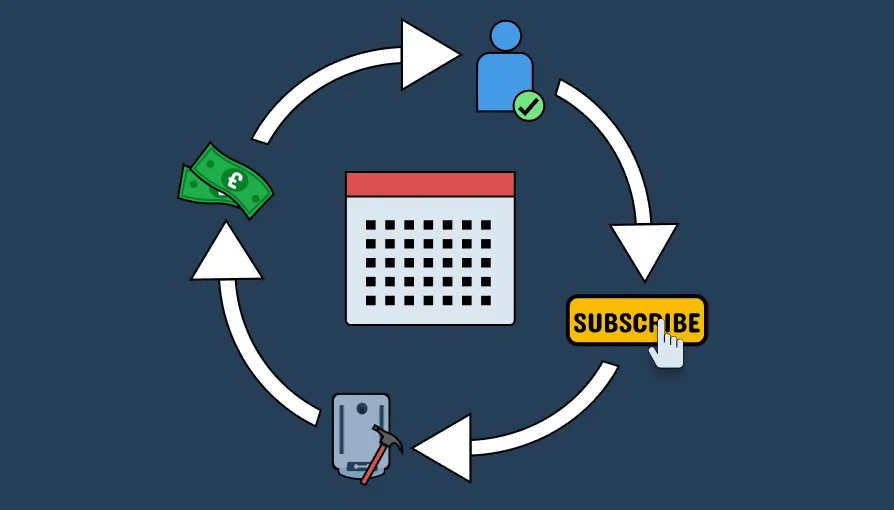
Acquiring customers is only one part of building a successful SaaS company. Retaining those customers is equally important because recurring revenue depends on continued usage and satisfaction. A business that constantly loses customers must spend heavily on acquisition simply to replace its existing revenue.
A strong startup should therefore treat pricing and retention as connected strategies. Customers are more likely to continue paying when they consistently understand the product’s value. This can come from time savings, improved productivity, reduced operational costs, better decision-making, automation, or increased revenue.
Onboarding plays a major role as well. A customer who struggles to understand the product during the first few days may never reach the point where its value becomes obvious. Guided onboarding, useful documentation, templates, educational resources, and responsive support can help customers achieve meaningful results sooner.
Companies should also study why customers cancel. Churn can reveal pricing problems, missing features, poor onboarding, weak customer support, or a mismatch between the product and the target market. These insights can be more valuable than simply increasing marketing spending.
Important Factors Before Choosing a Revenue Model
Before launching or changing a SaaS pricing strategy, businesses should examine several practical factors. Pricing should reflect both customer value and the company’s underlying economics.
Consider these core questions:
- How frequently will customers use the product?
- Does usage directly increase the company’s infrastructure costs?
- Which customer segments are most valuable?
- Is the product easier to sell through self-service or sales teams?
- Can customers clearly understand the pricing structure?
A product used every day may work well with recurring subscriptions, while an API or AI platform may benefit from usage-based pricing. Enterprise software may require customized contracts because large customers often have different security, support, and procurement requirements.
The pricing model should also leave room for future growth. A company should avoid creating a structure that works only for its first few hundred customers but becomes difficult to manage as usage increases.
Testing and Improving SaaS Pricing
Pricing should not be treated as a permanent decision. Customer expectations, competitors, product capabilities, infrastructure costs, and market conditions can change over time. A pricing strategy that worked during the early stage of a business may not remain appropriate after the product becomes more established.
Companies can test different packaging approaches, trial periods, usage allowances, annual discounts, and feature combinations. However, changes should be evaluated carefully rather than based on short-term revenue alone.
Metrics such as customer acquisition cost, average revenue per account, conversion rate, churn rate, expansion revenue, lifetime value, and recurring revenue can help businesses understand whether their pricing structure is supporting sustainable growth.
A useful pricing experiment should answer a specific question. For example, a company may want to determine whether customers value advanced reporting enough to pay for it separately. Another test might examine whether annual plans improve retention without significantly reducing conversion.
Building a Scalable Revenue Foundation
Scalability is one of the most attractive characteristics of SaaS businesses. Once a product is developed and infrastructure is established, additional customers can often be served without increasing costs at exactly the same rate. However, true scalability requires more than simply adding customers.
The revenue model should scale alongside the product. Billing systems need to handle larger customer volumes, pricing needs to accommodate different segments, and support systems must be capable of serving customers efficiently. Automation can become especially valuable as the customer base grows.
A startup should also consider international expansion, currencies, taxation, payment methods, regional purchasing behavior, and enterprise procurement requirements. These factors can influence the practical success of a pricing model even when the underlying product remains unchanged.
The strongest SaaS businesses usually develop their revenue strategy alongside product development rather than treating monetization as an afterthought. When the product’s value proposition and pricing structure support each other, customers can understand the benefit more easily and the company can build more predictable revenue.
Conclusion
SaaS revenue models provide the foundation for turning digital products into sustainable businesses. Subscription pricing, freemium strategies, tiered packages, usage-based billing, per-user plans, and hybrid approaches each offer different ways to match customer value with business revenue. The best choice depends on how customers use the product, what they value, how much the company spends to deliver the service, and how the business expects to grow. For a startup, the goal should not simply be to select the pricing model that appears most popular. Instead, businesses should build a revenue structure around real customer behavior and measurable value. Clear pricing, flexible plans, strong onboarding, reliable support, and continuous analysis can make the difference between a product that attracts temporary users and one that develops lasting customer relationships.