


Modern businesses have access to more customer information than ever before. Website interactions, search behavior, social media engagement, email responses, purchase histories, and advertising data can all reveal what potential customers want. For a Startup operating with limited resources, understanding this information can make marketing more focused and measurable. Instead of communicating with a broad audience without knowing who is most interested, businesses can use data to identify people who are actively researching solutions and are closer to making a purchasing decision.
Data-driven marketing is becoming particularly important as customers move through increasingly complex digital journeys. A potential buyer may discover a company through search, compare alternatives through online reviews, visit several product pages, interact with social content, and return weeks later before making a decision. By connecting these signals, a Startup can better understand customer intent and create campaigns that respond to specific needs rather than relying on assumptions.
Understanding High-Intent Customers
High-intent customers are people who demonstrate meaningful signals that they may be preparing to take action. Their behavior can include searching for specific products or services, comparing prices, requesting demonstrations, downloading detailed resources, checking product specifications, or repeatedly visiting important pages. These actions do not guarantee a purchase, but they can indicate a stronger level of interest than casual browsing.
Recognizing intent requires more than simply counting website visitors. A large number of visitors may create impressive traffic statistics while generating very few qualified leads. Data-driven marketing shifts attention toward the quality and context of interactions. For example, someone who spends several minutes examining pricing information may provide a stronger commercial signal than someone who views a homepage for a few seconds. Understanding these differences allows marketers to prioritize audiences more intelligently.
How Data Improves Customer Understanding
Customer data can provide a clearer picture of what different audiences need, when they need it, and which messages influence their decisions. Marketing teams can examine information from multiple touchpoints to identify common patterns. Search queries can reveal customer questions, website analytics can show areas of interest, and conversion data can identify campaigns that produce meaningful actions.
For a Startup, this approach can also reduce unnecessary marketing expenditure. Rather than distributing the same message across every channel, marketers can analyze previous campaign results and determine where qualified prospects are coming from. If a particular search campaign consistently generates users who request consultations or make purchases, the company can investigate why that campaign works and apply similar insights elsewhere.
Using Behavioral Data to Identify Intent
Behavioral data becomes especially useful when several customer actions are considered together. A single page visit may not say much about intent, but repeated visits, product comparisons, form submissions, and interaction with commercial content can create a stronger picture. Modern analytics platforms can help businesses organize these signals and understand how users move through their digital journeys.
The objective should not be to collect every possible piece of information simply because technology makes it available. Instead, marketers should focus on data that helps answer practical questions. Which customers are most engaged? What content influences conversion? Where do potential buyers leave the journey? Which campaigns attract visitors who eventually become customers? These questions turn raw information into useful marketing intelligence.
Creating More Relevant Customer Segments
Segmentation allows marketers to divide audiences according to characteristics or behaviors that matter to the business. Traditional segmentation may consider age, location, industry, or job role, while data-driven approaches can also consider browsing behavior, previous purchases, engagement levels, and stage in the buying journey.
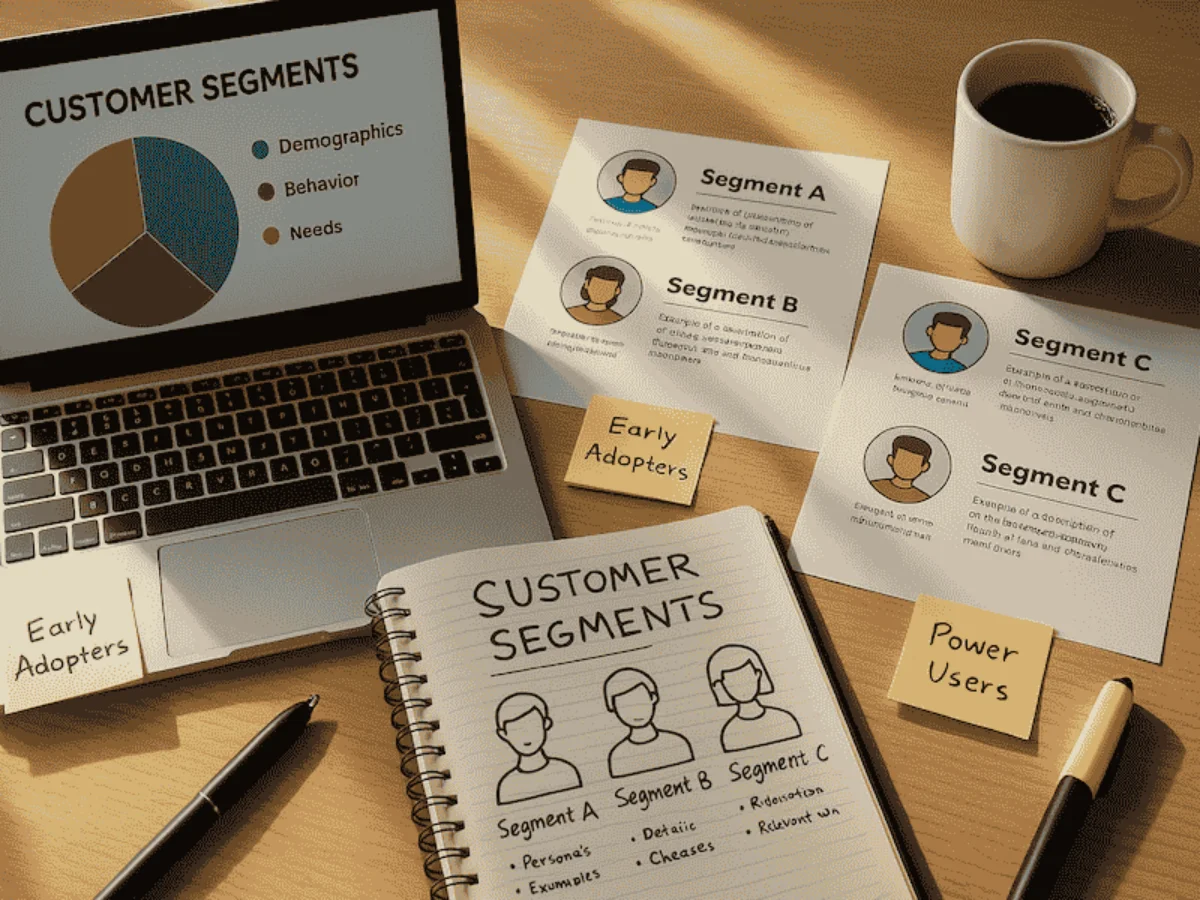
A Startup can use these insights to create messages that are more relevant to each group. Someone discovering a problem for the first time may need educational content, while a customer comparing competing solutions may respond better to product demonstrations, case examples, pricing information, or detailed specifications. Treating these audiences identically can result in ineffective communication because their expectations are different.
Intent-Based Segmentation in Practice
Intent-based segmentation focuses on what customers appear ready to do rather than only who they are. This can be especially valuable for business-to-business companies, software providers, professional services, and specialized online businesses where purchasing decisions may involve considerable research.
For example, a visitor who repeatedly reads introductory guides may still be exploring a problem. Another visitor who studies pricing, implementation details, and customer results could be much closer to contacting a sales team. Both are valuable prospects, but they require different communication. Data helps marketers recognize this distinction and deliver content according to the customer’s stage.
Personalization Without Losing Authenticity
Personalization has become an important part of digital marketing, but effective personalization should provide genuine relevance rather than simply inserting a customer’s name into an email. Customers are more likely to respond positively when marketing content addresses their actual needs, challenges, and interests.
Data can support personalization across email campaigns, websites, advertising, and content strategies. A visitor interested in a particular service may receive information related to that service rather than a generic company message. Similarly, returning customers can be shown recommendations based on previous interactions. The goal is to make communication more useful while maintaining transparency and respecting customer expectations around data.
Improving Marketing Campaign Performance
Data-driven marketing creates a continuous feedback cycle. Marketers launch a campaign, observe customer responses, analyze results, and use those findings to improve future activity. This process is particularly valuable when budgets are limited because it helps companies identify which activities deserve additional attention.
Important performance indicators can include conversion rates, qualified lead volume, customer acquisition cost, engagement rates, return on advertising spend, and revenue generated by particular campaigns. Looking at these metrics together provides a more complete picture than relying on impressions or clicks alone.
| Marketing Signal | What It Can Reveal | Possible Action |
|---|---|---|
| Product-page visits | Interest in a specific offering | Provide deeper product information |
| Pricing-page activity | Possible purchase consideration | Offer relevant commercial content |
| Form submissions | Direct engagement | Follow up with appropriate messaging |
| Repeat visits | Continuing interest | Retarget with useful information |
| Conversion data | Campaign effectiveness | Increase focus on successful channels |
The value of this approach comes from connecting metrics to business outcomes. A campaign generating thousands of clicks may appear successful, but if those visitors rarely become qualified leads, its business value may be limited. Conversely, a smaller campaign that attracts fewer but highly interested prospects could contribute more directly to revenue.
Using Predictive Insights for Better Decisions
As analytics technology develops, companies can use historical and real-time information to identify patterns that may indicate future customer behavior. Predictive approaches can help marketers determine which audiences are more likely to engage, convert, or require additional communication.
For a Startup, predictive insights can support better allocation of limited resources. Marketing teams can prioritize audiences showing stronger engagement while continuing to nurture prospects who are not yet ready to buy. However, predictive systems should support human decision-making rather than replace it completely. Data can reveal patterns, but marketers still need to understand customer motivations, market conditions, brand positioning, and broader business objectives.
The Role of Artificial Intelligence in Data-Driven Marketing
Artificial intelligence is increasingly being incorporated into marketing workflows. AI-powered systems can process large amounts of information, identify behavioral patterns, assist with audience segmentation, generate customer insights, and help marketers test different messages. These capabilities can reduce the time required to analyze information manually.
However, AI does not eliminate the need for reliable data or strategic thinking. Poor-quality information can lead to inaccurate conclusions, while excessive automation can make communication feel impersonal. Businesses should combine automated analysis with human oversight to ensure that campaigns remain relevant, accurate, and aligned with customer expectations.
Building a Privacy-Conscious Marketing Strategy
The increasing importance of customer data also creates greater responsibility. Customers expect companies to handle their information carefully and transparently. Businesses should understand applicable privacy requirements, communicate clearly about data collection, and avoid collecting information that has no legitimate marketing purpose.
Trust can directly influence the quality of customer relationships. A Startup that treats privacy as an important part of its marketing strategy can create stronger confidence among potential buyers. Data-driven marketing should therefore focus not only on what information can be collected, but also on whether collecting and using that information is appropriate and beneficial.
Turning Insights Into Long-Term Growth
The strongest marketing strategies do not treat data as a one-time resource. Customer behavior changes as markets evolve, competitors introduce new products, economic conditions shift, and technologies influence purchasing habits. Regular analysis helps businesses recognize these changes and adjust their strategies.
A Startup can establish a practical process by reviewing campaign performance, identifying customer behavior patterns, testing new approaches, and measuring the results. Over time, these repeated improvements can create a more efficient marketing system. The objective is not to predict every customer action perfectly but to make better decisions using evidence rather than assumptions.
Key Practices for Reaching High-Intent Customers
A focused approach can help marketing teams turn customer information into meaningful action:
- Analyze behavioral signals alongside traditional demographic information.
- Create content that matches different stages of the buying journey.
- Measure conversions and qualified leads rather than relying only on traffic.
- Test campaigns continuously and use performance data to refine them.
- Maintain transparency and responsible practices when handling customer information.
These practices help create a marketing environment where customer needs remain central. Instead of trying to reach everyone with the same message, businesses can concentrate their resources on audiences demonstrating genuine interest.
Conclusion
Data-driven marketing gives businesses a practical way to understand customer behavior and focus their efforts on people who demonstrate stronger purchasing intent. By analyzing website activity, search behavior, campaign interactions, customer journeys, and conversion patterns, marketers can develop more relevant campaigns while reducing inefficient spending. The approach also creates opportunities for personalization, predictive analysis, improved segmentation, and continuous campaign optimization. For a Startup, the real advantage comes from turning data into actionable knowledge rather than simply accumulating large amounts of information. When customer insights are combined with thoughtful content, responsible data practices, human judgment, and ongoing experimentation, marketing becomes more precise and adaptable.