

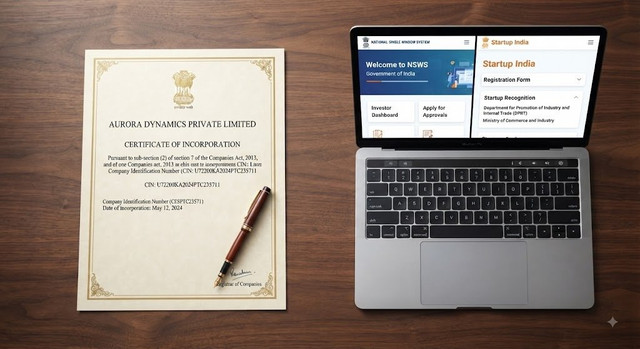
The startup ecosystem in India has expanded significantly, giving entrepreneurs more opportunities to turn innovative ideas into sustainable businesses. One of the most important government recognitions available to eligible businesses is the startup india certificate, officially associated with recognition under the Startup India initiative. It can help a qualifying business access certain regulatory, tax, intellectual property, and funding-related benefits.
However, obtaining recognition is not simply about having a new business idea. A company must satisfy specific eligibility conditions and complete the prescribed application process. Entrepreneurs should therefore understand what the recognition means, who can apply, what documents are required, and what advantages may become available after approval.
The recognition is particularly useful for businesses developing innovative products, improving existing processes, or creating scalable solutions. It can provide a formal identity within India’s startup ecosystem while making it easier to explore government-supported opportunities.
What Is Startup India Recognition?
The Startup India initiative was introduced to encourage entrepreneurship, innovation, investment, and employment generation. Under this framework, eligible entities can apply for recognition from the Department for Promotion of Industry and Internal Trade (DPIIT).
A startup india certificate serves as evidence that an eligible business has received this recognition. It should not be confused with a certificate of incorporation. Incorporation establishes the legal existence of a business, while DPIIT recognition identifies an eligible entity as a startup under the applicable government framework.
Recognition does not automatically mean that every available startup benefit will apply. Different incentives can have separate eligibility requirements, application procedures, or approvals. Businesses should therefore check the conditions attached to each benefit before relying on it.
Who Can Apply for Startup Recognition?
Eligibility depends on the legal structure, age of the entity, business purpose, and other conditions prescribed under the current framework. Startups are generally expected to operate as an eligible incorporated entity or partnership structure and demonstrate that their business is working toward innovation, improvement, development, or scalability.
The enterprise should also meet the applicable turnover and age-related requirements. Because government rules can change, founders should verify the current criteria before submitting an application.
Common considerations include:
- The business must have an eligible legal structure.
- It should fall within the prescribed period from its incorporation or registration.
- Its turnover must remain within the applicable government threshold.
- The business should demonstrate innovation, improvement, or potential for employment or wealth creation.
- The entity must satisfy the applicable conditions relating to restructuring or formation from an existing business.
A founder should evaluate these requirements before preparing an application. Correct eligibility assessment can reduce the possibility of delays or rejection caused by incomplete or inaccurate information.
Why the Startup India Certificate Matters
For an eligible entrepreneur, recognition can provide more than a formal government acknowledgment. It can support access to several programs designed for emerging businesses. The exact benefits depend on the startup’s circumstances and the requirements of individual schemes.
One important advantage is improved access to the broader startup support ecosystem. Recognized startups may be able to explore government initiatives connected with intellectual property protection, procurement, funding, compliance, and taxation.
Recognition can also strengthen a startup’s documentation when approaching institutions, investors, incubators, or government-supported programs. It does not guarantee investment or business success, but it can provide useful supporting credentials.
The startup india certificate may therefore become an important document for founders who intend to participate in government startup programs or seek benefits available to recognized entities.
Major Benefits Available to Eligible Startups
The benefits associated with startup recognition can vary according to the nature of the business and the specific scheme involved. Entrepreneurs should treat recognition as an entry point to opportunities rather than as an automatic package of incentives.
Potential areas of support include:
| Benefit Area | How It Can Help |
|---|---|
| Intellectual Property | Eligible startups may receive support or concessions under applicable IP-related programs. |
| Tax Benefits | Certain tax incentives may be available when separate conditions are satisfied. |
| Government Procurement | Eligible startups may receive specified relaxations under procurement policies. |
| Funding Ecosystem | Recognition can help startups explore government-supported funding initiatives. |
| Compliance | Certain regulatory provisions may provide simplified compliance opportunities where applicable. |
| Networking | Recognition can help businesses participate in startup-focused programs and ecosystems. |
Intellectual property support can be particularly valuable for businesses developing technology, original designs, brands, or other protectable assets. Early attention to patents, trademarks, and copyrights can help founders establish stronger ownership over their work.
Tax-related advantages require special attention because recognition alone does not necessarily provide every tax benefit. Some incentives require additional applications, certifications, declarations, or fulfillment of separate conditions.
Documents Usually Needed for the Application
Preparing accurate information before beginning the online process can make registration smoother. The exact documents and declarations may vary depending on the entity type and current government requirements.
 Founders commonly need business registration details, incorporation information, identity and contact details of authorized representatives, and a description of the startup’s activities. Supporting information about innovation, product development, technology, or scalability may also be relevant.
Before applying, it is sensible to keep the following information ready:
- Incorporation or registration certificate
- Details of directors, partners, or authorized representatives
- Permanent Account Number and other applicable business information
- Business address and contact details
- A clear explanation of the startup’s products or services
- Information explaining innovation, improvement, or scalability
- Supporting documents where specifically requested
Documents should contain consistent information. Differences in company names, addresses, dates, or ownership details can create unnecessary questions during verification.
How to Apply for Startup India Recognition
The application process is primarily online. A founder first needs to ensure that the business has an appropriate legal identity and that the eligibility conditions are satisfied.
The general process involves creating or accessing the relevant government portal account, entering business information, providing the required declarations and supporting details, and submitting the application for consideration.
A practical approach is to follow these stages:
1. Confirm eligibility: Review the current criteria before preparing the application.
2. Organize business information: Keep incorporation details, authorized-person information, and business descriptions accurate and readily available.
3. Explain the business clearly: Describe what the company does, what problem it addresses, and how its solution demonstrates innovation, improvement, or scalability.
4. Submit the application: Complete the online form and provide the required declarations and documents.
5. Monitor the application: Keep track of the submitted application and respond appropriately if additional information is requested.
Once recognition is granted, the entrepreneur should retain the issued documentation and use it when applying for benefits for which the startup separately qualifies.
Common Mistakes Found in Applications
Many application problems can be avoided with careful preparation. One frequent mistake is providing a vague description of the business. Simply stating that a company is “innovative” may not adequately explain why it qualifies.
A stronger explanation identifies the customer problem, the solution being developed, the distinctive element of the product or process, and how the business could grow.
Another issue is submitting inconsistent information. Details in government records should correspond with the company’s incorporation documents and other official records.
Founders should also avoid assuming that recognition automatically grants every startup incentive. Benefits involving taxation, intellectual property, procurement, or funding can have additional requirements.
Finally, entrepreneurs should keep records updated after receiving recognition. Changes in business structure, ownership, operations, or other material details may affect eligibility for specific programs.
How Recognition Can Support a Growing Business
A startup’s early years often involve more than product development. Founders must establish credibility, protect intellectual property, manage compliance, understand funding options, and build relationships with customers and institutions.
Government recognition can become one part of this broader business foundation. For example, a technology company developing an original software-enabled manufacturing solution may use its recognized status while exploring applicable intellectual property support, incubator programs, procurement opportunities, or other ecosystem initiatives.
Similarly, a startup working in education, agriculture, clean technology, healthcare technology, logistics, or financial services may investigate programs relevant to its particular sector. Recognition does not replace a strong business model, but it can help an eligible company navigate opportunities created for India’s startup community.
What to Do After Receiving Recognition
Receiving a startup india certificate should be treated as the beginning of the process rather than the final objective. Founders should review the benefits for which their business may qualify and identify which ones are genuinely relevant to their current stage.
Maintain copies of the recognition documents and supporting records. When applying for a particular incentive, carefully review its separate eligibility requirements. If professional advice is needed for taxation, intellectual property, accounting, or legal compliance, consult a qualified professional rather than relying solely on general information.
Startups should also focus on measurable business fundamentals: customer demand, revenue planning, product quality, intellectual property ownership, financial controls, and sustainable growth. Government recognition can support these efforts, but it cannot substitute for sound business management.
Conclusion
The startup india certificate can be a valuable recognition for eligible Indian businesses seeking to participate in the country’s growing entrepreneurial ecosystem. It distinguishes a qualifying startup from an ordinary business registration and may open the door to programs covering areas such as intellectual property, procurement, taxation, funding, and compliance.
The key to a successful application is preparation. Founders should verify the current eligibility requirements, organize accurate documents, describe their innovation clearly, and understand that individual benefits may require additional conditions. With the right approach, startup recognition can become a useful component of a broader strategy for building, protecting, and scaling a business in India.