

Introduction
Starting a business has become more accessible than ever. People can turn their skills, interests, and everyday observations into businesses without necessarily needing a large office, expensive equipment, or a big team. The growth of digital platforms, online payments, remote work, and changing consumer preferences has created opportunities for students, professionals, homemakers, and first-time entrepreneurs. However, having an interesting concept is only the beginning. A successful business also requires market research, planning, consistent execution, customer understanding, and financial discipline.
For beginners, choosing from thousands of possible opportunities can feel overwhelming. The best approach is to look for a business idea that matches your skills, available budget, and the needs of a specific audience. In this guide, we explore practical startup ideas that can be started on a small scale and developed over time. Whether you prefer online work, local services, creative activities, or technology-based solutions, there are several options worth considering.
What Makes a Good Startup Idea?
A strong business idea generally solves a real problem or makes an existing process easier, faster, cheaper, or more convenient. Entrepreneurs should avoid selecting an idea only because it appears popular. A market may be crowded, and customer demand can change quickly. Instead, look for a specific group of people whose needs are not being served effectively.
A good opportunity should also match the entrepreneur’s capabilities and resources. Someone with strong writing skills might perform well with content services, while a person experienced in cooking could explore a food-related business. Similarly, someone comfortable with technology may find opportunities in website development or digital services. The most practical startup ideas often begin with something the founder already understands. This reduces the learning curve and makes it easier to identify customer problems.
1. Digital Marketing Services
Businesses increasingly need an online presence to reach customers, build awareness, and generate sales. This has created opportunities for freelancers and small agencies offering digital marketing services. A beginner can start with a focused service such as social media management, search optimization, content creation, email campaigns, or online advertising support.
The initial investment can be relatively low because much of the work can be performed using a computer and internet connection. Entrepreneurs can begin by working with local businesses, small online stores, professionals, or startups. Building a portfolio is important, so offering a limited number of projects at an introductory price can help establish credibility. As experience grows, the business can expand into a full-service agency with multiple employees and specialized departments.
2. Online Tutoring Business
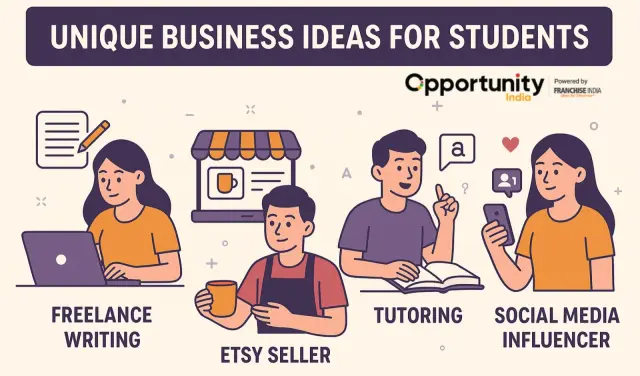
Education is another area with strong potential for entrepreneurs who have expertise in a particular subject. Online tutoring allows teachers and specialists to reach students beyond their local communities. Classes can focus on school subjects, competitive examinations, languages, coding, communication skills, music, or professional development.
A tutoring business can start with individual sessions and gradually move toward group classes, recorded courses, or subscription-based learning. The key is to select a specific audience and create a clear learning outcome. For example, instead of simply offering mathematics classes, an entrepreneur could focus on helping a particular age group prepare for examinations. Clear positioning makes marketing easier and helps students understand the value of the service.
3. Freelance Content Writing
Content writing remains an accessible option for people who enjoy research and communication. Businesses need website articles, product descriptions, newsletters, social media posts, brochures, and other written materials. A freelance writer can start independently and gradually develop a specialized service.
Specialization can make this opportunity more attractive. Writers may focus on areas such as technology, finance, education, travel, business, healthcare, or lifestyle. Building samples that demonstrate knowledge of the chosen subject can help attract suitable clients. Over time, a freelancer can create a small writing agency by working with other writers and editors. This model allows the founder to move from selling personal time toward managing a larger service operation.
4. Home-Based Food Business
People with cooking skills can consider starting a home-based food business. Depending on local regulations, entrepreneurs may sell prepared meals, snacks, baked products, desserts, specialty foods, or regional dishes. A focused menu can make the operation easier to manage during the early stage.
Customer feedback should play an important role in developing the business. Entrepreneurs can start with a limited selection rather than offering dozens of products. Consistent taste, hygiene, packaging, pricing, and reliable service are essential for building repeat customers. Once demand becomes predictable, the business can expand its menu, delivery coverage, production capacity, or even move into a dedicated commercial kitchen.
5. Website Development Services
Website development is another promising option for people with technical skills. Small businesses, professionals, creators, and organizations frequently need websites to present information, sell products, collect inquiries, or establish credibility.
A beginner does not necessarily need to target large corporations. Local shops, consultants, restaurants, schools, coaches, and independent professionals can provide an accessible starting market. Offering simple website packages with clear pricing can make the service easier to sell. Entrepreneurs can later add maintenance, hosting management, security updates, design improvements, and other recurring services. This can create a more predictable revenue model than relying only on one-time projects.
Choosing the Right Opportunity
 With so many startup ideas available, selecting one should be based on practical factors rather than excitement alone. Entrepreneurs should evaluate their skills, budget, available time, location, competition, and potential customer demand. A business that looks profitable on paper may not be suitable if the founder lacks the necessary skills or cannot reach the target audience.
A useful approach is to begin with a small experiment. Instead of spending heavily on equipment, branding, or office space, test whether real customers are willing to pay for the proposed product or service. Early feedback can reveal problems before they become expensive mistakes. Once an idea demonstrates consistent demand, the entrepreneur can invest more confidently in marketing, technology, staff, and expansion.
Comparison of Startup Opportunities
| Business Idea | Initial Investment | Skill Level | Growth Potential |
|---|---|---|---|
| Digital Marketing | Low | Medium | High |
| Online Tutoring | Low | Medium | High |
| Content Writing | Low | Medium | Medium |
| Home Food Business | Medium | Medium | High |
| Website Development | Low | High | High |
| Social Media Management | Low | Medium | High |
| Print-on-Demand | Low | Medium | Medium |
| Cleaning Services | Medium | Low to Medium | High |
| Fitness Coaching | Low to Medium | High | High |
| Technical Support | Medium | High | High |
How to Start With a Small Budget
Many entrepreneurs make the mistake of believing that a business must look large from the beginning. In reality, starting small can reduce financial risk and provide valuable market information. Begin with the minimum resources required to deliver the product or service properly. Avoid unnecessary expenses such as expensive offices, excessive inventory, or complicated technology before customer demand has been established.
Create a simple business plan covering the target customer, product or service, pricing, expected expenses, marketing approach, and revenue goal. Then test the concept with a small group of potential customers. Their responses can help determine whether the offering needs improvement. Once sales become consistent, profits can be reinvested into better equipment, advertising, employees, technology, and customer experience.
Common Mistakes New Entrepreneurs Should Avoid
One of the biggest mistakes is launching without understanding the customer. Entrepreneurs sometimes create products they personally like but fail to determine whether enough people are willing to purchase them. Another common problem is underestimating operating costs. Revenue does not equal profit, and expenses such as materials, transportation, advertising, software, taxes, salaries, and maintenance can significantly affect profitability.
New entrepreneurs should also avoid trying to expand too quickly. Growth is valuable only when the business can maintain quality. Poor customer service, delayed deliveries, inconsistent products, or weak communication can damage a young brand. Instead, focus on building a reliable foundation. Strong customer relationships and repeat purchases are often more valuable than short-term growth numbers.
How to Grow a New Business
After validating one of these startup ideas, entrepreneurs can focus on sustainable growth. The first step is to understand which activities generate the best results. If a particular customer segment produces most of the revenue, marketing efforts can be concentrated there. If one product sells significantly better than others, the business can prioritize that product.
Customer feedback should remain part of the growth strategy. Reviews, surveys, direct conversations, and purchase patterns can reveal what customers appreciate and what needs improvement. Entrepreneurs can also develop referral programs, loyalty offers, partnerships, and educational content to increase visibility. As revenue becomes more stable, automation and delegation can reduce the founder’s workload and create room for strategic planning.
Final Tips for First-Time Entrepreneurs
The most useful startup ideas are not always the most complicated ones. A simple service that solves a clear problem can become more successful than an ambitious concept with no confirmed demand. First-time entrepreneurs should concentrate on understanding customers, testing their offer, managing money carefully, and improving the business through feedback.
Before launching, consider these practical steps:
- Identify a specific customer problem and test whether people will pay for a solution.
- Start with manageable costs and reinvest profits as demand grows.
Consistency is also essential. Most businesses do not become successful overnight. Entrepreneurs may need to adjust their pricing, marketing, product, or target market several times before finding the right combination. Patience combined with regular learning can create a stronger foundation for long-term growth.
Conclusion
Choosing from different startup ideas can be challenging, but the process becomes easier when entrepreneurs focus on skills, customer problems, available resources, and market demand. Digital services, tutoring, content writing, food businesses, website development, social media management, local services, and technical support are among the opportunities that can be started on a relatively small scale.
The ideal business is not necessarily the one with the highest theoretical profit. It is the one that matches your abilities, solves a genuine customer problem, and can be operated consistently. Start with a simple version, test the market, listen to customers, control expenses, and improve gradually. With careful planning and disciplined execution, a small idea can develop into a sustainable business.