


Building a recognizable market identity has become increasingly important as businesses compete for attention across search engines, social platforms, marketplaces, and crowded digital channels. Customers can encounter dozens of companies offering similar products or services within minutes, making it difficult for a new business to stand out through products alone. Strong brand positioning gives a company a clear reason to be remembered by defining what it offers, who it serves, and why customers should consider it different.
For a Startup, positioning is especially valuable because the business is still establishing credibility and developing relationships with its target audience. A new company may not have the recognition, customer base, or marketing budget of established competitors, but it can create a distinctive identity by communicating a focused value proposition. Effective positioning is not simply about creating an attractive logo or memorable slogan. It involves aligning the brand’s message, customer experience, pricing, product benefits, communication style, and competitive advantages around a consistent market perception.
Modern consumers also expect brands to communicate with greater clarity. They want to understand what a company does, how its offering solves a problem, and whether its values or approach match their expectations. This makes strategic positioning an ongoing business activity rather than a one-time marketing exercise.
Understanding the Foundation of Brand Positioning
Brand positioning describes the place a company aims to occupy in the minds of its target customers compared with alternatives in the market. It connects the business’s strengths with a specific customer need and translates that connection into a clear message. When positioning is effective, customers can quickly understand the company’s purpose without having to study every product detail.
A strong positioning strategy starts with understanding the market rather than immediately creating promotional messages. Businesses need to identify customer problems, purchasing motivations, expectations, frustrations, and existing alternatives. Competitor research is equally important because it reveals which promises are already common in the industry. If every competitor describes itself as affordable, innovative, reliable, and customer-focused, repeating the same claims will not create meaningful differentiation.
For a Startup, this research can reveal opportunities to specialize. Instead of trying to appeal to everyone, the company can identify a narrower customer segment with a specific problem and build its identity around solving that problem exceptionally well. A focused position can become easier to communicate, market, and remember than a broad message attempting to cover multiple audiences.
Define a Specific Target Audience
One of the most important positioning techniques is defining exactly who the brand is designed to serve. A company that attempts to communicate with everyone often ends up with generic messaging because it cannot address the unique priorities of different customer groups. Clear segmentation allows the brand to speak directly to the people most likely to value its offering.
Audience research should consider more than age, location, or occupation. Businesses can examine purchasing behavior, preferred communication channels, common challenges, budgets, expectations, and reasons for choosing one solution over another. These insights can help shape everything from website copy to advertising messages and product development.
For example, a software company could position itself around helping small professional teams simplify complicated administrative tasks. That is more distinctive than simply saying it provides business software. The narrower statement gives the audience a clearer reason to pay attention and helps the company develop supporting content around a recognizable customer problem.
Create a Clear and Defensible Value Proposition
A value proposition explains the practical benefit customers can expect from choosing a business. It should answer three fundamental questions: who the product is for, what problem it solves, and what makes the solution meaningfully different.
A strong value proposition should also be believable. Modern customers can quickly become skeptical when brands make exaggerated promises such as being the “best,” “number one,” or “revolutionary” without providing evidence. Instead, companies can focus on specific benefits supported by product capabilities, customer outcomes, service standards, or specialized expertise.
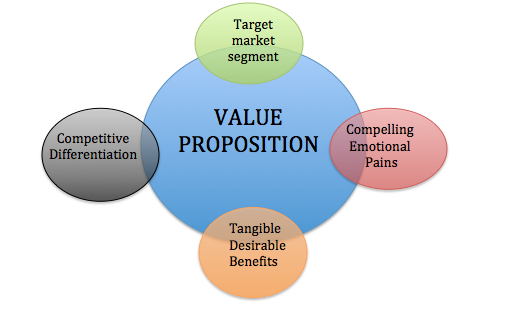
For a Startup, a defensible value proposition can become an important foundation for growth. It provides direction for marketing campaigns, website messaging, sales presentations, social media content, and customer conversations. As the company gathers more customer feedback, the value proposition can be refined without completely changing the brand’s identity.
Use Differentiation Beyond Price
Price is an easy way to distinguish an offering, but competing primarily on price can create long-term challenges. Customers may switch when another business offers a cheaper alternative, while lower margins can make it difficult to invest in product development and customer service.
Differentiation can instead come from specialization, convenience, technology, design, service, expertise, speed, reliability, customization, or a distinctive customer experience. A company might serve a highly specific industry, provide unusually simple onboarding, offer personalized support, or solve a complicated problem through a streamlined process.
The strongest differentiation usually connects directly with something customers value. A feature is not automatically a competitive advantage simply because it is technically impressive. Its importance depends on whether it improves the customer’s experience or solves a meaningful problem.
| Positioning Element | Key Question | Potential Business Impact |
|---|---|---|
| Target audience | Who is the brand primarily serving? | More relevant communication |
| Value proposition | What customer problem does it solve? | Clearer market understanding |
| Differentiation | Why choose this company instead? | Stronger competitive identity |
| Brand personality | How should the company communicate? | More consistent recognition |
| Customer experience | What should customers remember? | Greater trust and retention |
Build a Consistent Brand Personality
Brand personality gives a company a recognizable human character. It influences the language used on websites, social media, advertising, emails, packaging, and customer support. Depending on the market, a company might communicate as professional, approachable, energetic, educational, practical, premium, innovative, or community-focused.
Consistency matters because customers form impressions through repeated interactions. If a company’s website sounds formal while its social media uses a completely different personality and customer service communicates inconsistently, the overall identity can become unclear.
A Startup does not necessarily need an elaborate brand personality guide from day one, but it should establish basic communication principles. Deciding how the business speaks, which ideas it emphasizes, and which tone it avoids can make future marketing significantly more coherent.
Develop Visual Identity Around the Position
Visual branding should support positioning rather than exist independently from it. Logos, typography, colors, photography, packaging, website layouts, and graphic elements all contribute to the way customers interpret a business.
A premium brand, for example, may use a restrained visual system that communicates sophistication, while an education-focused company might prioritize clarity and accessibility. The goal is not to follow every design trend but to create visual signals that reinforce the desired market identity.
Consistency across digital and physical touchpoints is equally important. Customers should be able to recognize the brand when they encounter its website, social profile, presentation, advertisement, product packaging, or email. Repeated visual cues gradually strengthen recognition and make the company easier to distinguish from competitors.
Position Through Customer Experience
Positioning is not limited to what a company says about itself. Customers also form opinions based on what actually happens after they interact with the business. Website usability, response times, onboarding, delivery, support, billing, product quality, and follow-up communication can all influence brand perception.
This is particularly important when a company claims to compete on convenience, personalization, reliability, or premium service. If the customer experience does not support the positioning, the message can lose credibility. A business promising effortless service but providing complicated processes creates a contradiction that marketing cannot easily fix.

Companies should therefore treat customer experience as part of their positioning strategy. Every interaction represents an opportunity to reinforce the central promise.
Use Content to Reinforce Market Identity
Content marketing can help establish expertise while repeatedly communicating the problems and themes associated with a brand. Instead of producing unrelated articles simply to generate traffic, businesses can create content around the questions their target audience regularly asks.
Educational articles, case studies, product explanations, research-based insights, videos, newsletters, and social content can all reinforce the same market position from different angles. For example, a company positioned around simplifying complex business technology could consistently publish practical guides that make technical subjects easier to understand.
Content also gives emerging businesses an opportunity to demonstrate knowledge before customers make a purchase. Over time, useful information can contribute to credibility and help the company become associated with a particular problem or area of expertise.
Strengthen Positioning Through Social Proof
Customers often look for evidence before trusting an unfamiliar company. Reviews, testimonials, case studies, customer stories, demonstrations, certifications, partnerships, and measurable results can provide that evidence when used accurately.
For a Startup, early customer experiences can become valuable positioning assets. Instead of making broad claims about customer satisfaction, the business can demonstrate how its solution helped a particular customer overcome a specific challenge. Authentic evidence generally communicates more effectively than exaggerated promotional language.
Social proof should also remain relevant to the target market. A testimonial from a customer with circumstances similar to the intended audience may provide more useful context than a generic statement praising the company.
Avoid Common Positioning Mistakes
Many businesses weaken their positioning by trying to communicate too many benefits simultaneously. A homepage filled with claims about affordability, innovation, quality, speed, customization, sustainability, security, and customer service can leave visitors unsure about the company’s primary identity.
Another common problem is copying competitor language. Competitor research is useful for identifying market gaps, but repeating familiar phrases rarely creates differentiation. Positioning should emerge from the company’s own strengths and customer insights.
Businesses should also avoid changing their identity too frequently. Market conditions evolve, but constant repositioning can make it difficult for customers to understand what the company represents. Adjustments should normally be based on meaningful evidence such as customer feedback, changing demand, new capabilities, or significant market shifts.
Test and Refine the Positioning Strategy
Positioning should be treated as an evolving process. Customer expectations, competitors, technologies, and market conditions can change, so businesses should periodically evaluate whether their message still reflects their actual strengths and audience needs.
Useful signals include customer interviews, sales conversations, website behavior, support questions, conversion data, reviews, and campaign performance. If potential customers repeatedly misunderstand the offering, the positioning may need greater clarity. If customers consistently associate the company with a benefit that was not originally emphasized, that insight may reveal an opportunity to strengthen the brand around an authentic advantage.
For a Startup, regular feedback is particularly valuable because the business can often make changes faster than a large organization. The objective is not to change the brand every few months but to continuously improve the connection between what the business delivers and what customers understand about it.
Conclusion
A distinct market identity is built through clarity, consistency, differentiation, and customer experience rather than through visual branding alone. Successful positioning begins with a specific audience and a genuine understanding of its needs. From there, businesses can develop a focused value proposition, identify meaningful differentiation, establish a consistent personality, and reinforce the same message through content and customer interactions. The most effective positioning strategies also remain connected to reality. A company should be able to support its promises through its products, services, expertise, and customer experience. When the message and experience consistently reinforce one another, customers have a clearer reason to remember and consider the brand.