


Customer loyalty has become one of the most valuable growth assets for any startup operating in today’s competitive market. New businesses can attract attention through innovative products, affordable pricing, social media campaigns, or promotional offers, but attracting a customer once is very different from convincing that customer to return. Long-term loyalty develops when people consistently receive value and feel confident about the company they choose. Trust plays a central role in this process because customers want to know that a business will deliver what it promises, communicate honestly, and remain dependable after a purchase.
For a startup, building customer loyalty can be particularly challenging because it often has fewer resources and a shorter track record than established competitors. Customers may hesitate to purchase from a new business when they have no previous experience with its products or services. However, this challenge can also become an opportunity. Smaller businesses can create closer relationships with customers, respond quickly to feedback, and provide experiences that feel more personal. When these advantages are combined with transparent communication and reliable service, a startup can gradually turn first-time buyers into returning customers.
Trust is no longer created only through face-to-face interactions. Customers evaluate businesses through websites, online reviews, social media conversations, customer support experiences, payment processes, product information, and post-purchase communication. Every interaction can influence how reliable a company appears. This means that loyalty must be built across the entire customer journey rather than treated as a marketing activity that happens after a sale.
Why Trust Matters for Customer Loyalty
Trust reduces uncertainty. Before purchasing from a new business, customers naturally have questions about product quality, pricing, delivery, customer service, refunds, privacy, and overall reliability. A company that clearly answers these concerns makes the buying process more comfortable. When the actual experience matches the expectations created before the purchase, customers gain confidence and become more willing to interact with the business again.
For a startup, this consistency can be more important than making a perfect first impression. A visually attractive website may encourage someone to explore a product, but dependable delivery and responsive support are what can encourage a second purchase. Customers remember whether a company solved problems fairly, communicated delays honestly, and respected their time. These experiences accumulate and form an overall perception of the brand.
Trust also influences how customers respond when something goes wrong. Every business eventually encounters complaints, delivery problems, technical issues, or product-related concerns. A company that accepts responsibility and communicates clearly can protect a customer relationship even when the original experience was disappointing. In contrast, avoiding communication or making unrealistic promises can quickly damage confidence.
How a Startup Can Create Trust From the First Interaction
The customer relationship begins before the first transaction. Website content, product descriptions, pricing information, advertisements, social media posts, and customer reviews all shape expectations. A startup should therefore make sure that its public communication accurately represents what customers can expect. Exaggerated claims may generate short-term attention, but they can create dissatisfaction when customers discover that the actual experience does not match the marketing message.
Clear information is particularly valuable for online businesses. Customers should be able to understand what a product does, who it is designed for, how much it costs, and what happens after an order is placed. Simple language can make a company appear more approachable and credible. Instead of attempting to impress customers with complicated terminology, businesses can focus on answering the practical questions that influence purchasing decisions.
A startup can strengthen its first impression by focusing on several trust-building fundamentals:
- Provide accurate product and service information.
- Display pricing and important conditions clearly.
- Make customer support easy to reach.
- Communicate realistic delivery or service timelines.
- Keep promises consistent across marketing and actual service.
These practices may appear simple, but their combined effect can be significant. Customers tend to develop stronger confidence when a business demonstrates reliability through repeated small actions rather than relying entirely on promotional statements.
Consistency Is the Foundation of Customer Loyalty
Customers do not usually become loyal because of a single excellent interaction. Loyalty develops when positive experiences are repeated over time. A startup that provides excellent service one month but becomes difficult to contact the next month may struggle to maintain customer confidence. Consistency creates predictability, and predictability makes customers more comfortable choosing the same business again.
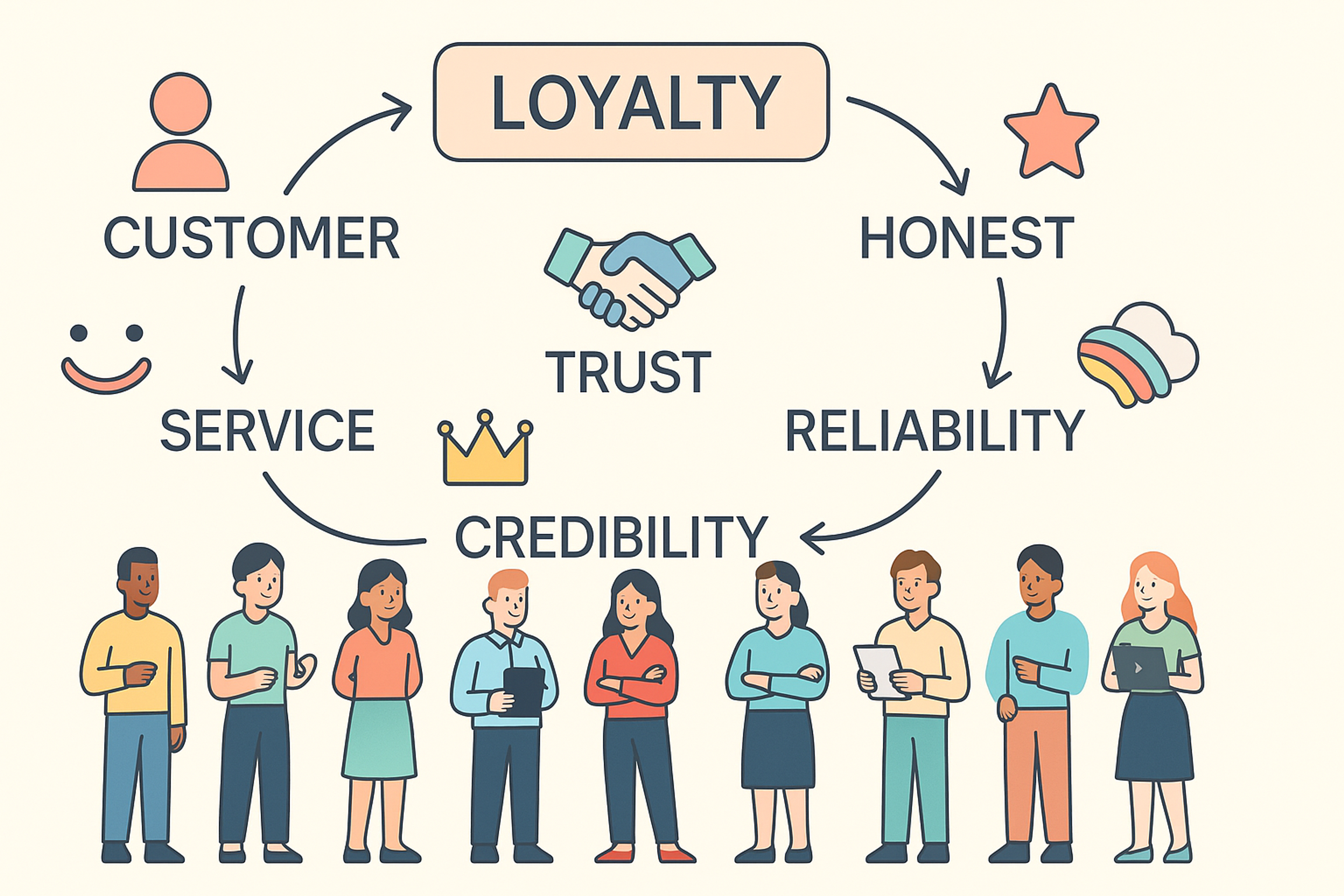
Consistency should exist across multiple touchpoints. Product quality, customer support, delivery, billing, communication, and after-sales assistance should all support the same basic promise. If a company positions itself as convenient but makes customers navigate complicated support procedures, the experience contradicts the brand message. Similarly, if a business emphasizes affordability but introduces unexpected charges during checkout, customers may feel that the original promise was misleading.
Maintaining consistency does not mean that every customer must receive exactly the same interaction. Personalization can still be used effectively. The important point is that the underlying standards remain dependable. Customers should know that the business will treat their concerns seriously regardless of the specific situation.
Personalization Can Strengthen the Customer Relationship
Modern customers increasingly expect businesses to understand their needs. Personalization can help a startup create a stronger connection by using relevant information to make interactions more useful. Recommendations based on previous purchases, reminders that match customer interests, personalized offers, and relevant educational content can make communication feel more meaningful.
However, personalization should be useful rather than intrusive. Customers may appreciate a recommendation based on something they previously purchased, but excessive or unexplained use of personal information can create discomfort. Businesses should therefore approach customer data responsibly and provide value in return for the information customers choose to share.
A startup can also personalize experiences without relying heavily on technology. Remembering customer preferences, providing thoughtful support, addressing customers by name, and following up after resolving a problem can create a sense of recognition. These small human touches can be especially valuable for growing businesses because they help customers feel that they are interacting with people rather than an anonymous organization.
Customer Service Can Turn Problems Into Loyalty Opportunities
Customer service is one of the clearest demonstrations of whether a company actually values its customers. When everything works correctly, it is relatively easy to provide a positive experience. The real test often comes when a customer faces a problem. A delayed order, incorrect product, billing issue, or technical failure can become an opportunity to demonstrate responsibility.
A startup should aim to make problem resolution straightforward. Customers should not have to repeatedly explain the same issue to different representatives or search through multiple channels to find assistance. Clear processes, responsive communication, and reasonable solutions can reduce frustration. Even when the business cannot provide exactly what the customer wants, explaining the situation honestly can help preserve trust.
The tone of customer service also matters. Automated systems can handle routine questions efficiently, but customers with complicated concerns may need human assistance. Combining automation with accessible human support can provide both speed and empathy. The objective should not simply be to close support tickets quickly but to resolve customer concerns effectively.
Using Feedback to Build Stronger Relationships
Customer feedback provides valuable insight into how people experience a business. Reviews, surveys, support conversations, social media comments, and direct messages can reveal problems that internal teams may not notice. A startup that actively listens to customers can identify weaknesses and improve its products or services accordingly.
Feedback becomes more powerful when customers can see that their opinions lead to action. If several customers mention the same usability problem and the company eventually improves it, those customers may feel that their contribution mattered. Communicating improvements can therefore strengthen the relationship between the business and its audience.
At the same time, not every piece of feedback should automatically become a business decision. Companies need to identify recurring patterns and distinguish individual preferences from broader customer needs. Thoughtful analysis allows a startup to make improvements without constantly changing its direction based on isolated comments.
Building Loyalty Through Transparency
Transparency is particularly important for businesses that are still developing their reputation. Customers may forgive an honest mistake more easily than a misleading explanation. If a product launch is delayed, a service becomes temporarily unavailable, or an order cannot be fulfilled as expected, explaining the situation clearly can protect credibility.
Transparency also applies to pricing, policies, limitations, and expectations. Customers should not have to discover important conditions only after completing a purchase. Clear communication reduces misunderstandings and demonstrates respect for the customer.
A startup that consistently communicates honestly can develop a reputation that extends beyond individual transactions. Satisfied customers may share their experiences with friends, colleagues, or online communities, creating a form of organic awareness that paid advertising cannot always reproduce.
The Role of Rewards and Loyalty Programs
Rewards can encourage repeat purchases, but discounts alone do not create genuine loyalty. If customers remain with a company only because it constantly offers lower prices, they may quickly move to another competitor offering a better promotion. Sustainable loyalty programs should therefore complement a strong customer experience rather than attempt to replace it.
A startup can design rewards around behaviors that create mutual value. Repeat purchases, referrals, long-term subscriptions, early access, educational resources, or exclusive experiences can all become part of a loyalty strategy. The rewards should be easy to understand and realistically achievable so customers do not feel that the program exists primarily to encourage spending without providing meaningful benefits.
| Loyalty Approach | Customer Benefit | Business Benefit |
|---|---|---|
| Personalized offers | More relevant experiences | Better engagement |
| Referral rewards | Benefits for sharing | New customer acquisition |
| Exclusive access | Sense of recognition | Stronger retention |
| Helpful follow-ups | Continued support | Higher customer confidence |
| Feedback programs | Opportunity to be heard | Product improvement |
The most effective loyalty strategies generally combine financial and emotional value. Customers may appreciate a discount, but they can become more strongly connected to a business when they also feel understood, respected, and supported.
Technology and Modern Customer Expectations
Technology has changed how customers interact with businesses. People can compare products, read reviews, contact support, complete payments, and share experiences within minutes. This has raised expectations for convenience and responsiveness. A startup therefore needs to consider the digital experience as part of its overall trust strategy.
Fast websites, simple checkout processes, mobile-friendly interfaces, reliable payment systems, and timely notifications can remove unnecessary friction. Customer relationship management tools can also help businesses organize customer information and understand interaction history. When used responsibly, these technologies allow companies to provide more consistent service without losing the personal element of customer relationships.
Artificial intelligence and automation are also becoming increasingly common in customer support and marketing. These technologies can handle routine tasks and provide faster responses, but businesses should monitor automated interactions carefully. Customers can become frustrated when automated systems fail to understand unusual or complicated requests. The strongest approach is often to use technology for efficiency while keeping human assistance available when it matters.
Creating a Culture That Values Customers
Customer loyalty cannot be created solely by the marketing department. It depends on the behavior of the entire organization. Product teams influence quality, operations influence delivery, finance influences billing, technology teams influence usability, and support teams influence problem resolution. Every department can affect whether customers continue trusting the company.
For a startup, creating a customer-focused culture early can provide long-term advantages. Employees should understand the promises made to customers and recognize how their individual responsibilities contribute to those promises. When teams share a clear commitment to reliability and transparency, customers are more likely to experience consistent service.
Leadership also plays an important role. If company leaders treat customer complaints as valuable information rather than inconvenient criticism, employees are more likely to adopt the same attitude. This can create a continuous improvement culture in which customer experiences influence business decisions.
Measuring Customer Loyalty Effectively
Businesses need measurable indicators to understand whether their loyalty efforts are working. Repeat purchase rates can show how many customers return, while customer retention can indicate how well a business maintains relationships over time. Customer satisfaction surveys and feedback can provide additional context about why people remain loyal or decide to leave.
A startup should avoid focusing on a single metric. A high repeat purchase rate may look positive, but it does not necessarily explain customer sentiment. Similarly, a large number of loyalty-program members does not automatically mean that customers have strong emotional connections with the brand.
Useful indicators can include:
- Repeat purchase and retention rates.
- Customer satisfaction and feedback trends.
- Referral activity and recommendations.
- Support response and resolution experiences.
- Customer lifetime value over time.
Looking at these measurements together can provide a clearer picture of customer relationships. More importantly, businesses should use the information to identify areas where the customer experience can be improved.
Why Long-Term Trust Supports Sustainable Growth
A startup that earns customer trust can benefit from more than repeat purchases. Loyal customers may recommend products to others, provide constructive feedback, tolerate occasional mistakes more patiently, and remain interested when the company introduces new offerings. These behaviors can reduce the pressure to acquire every customer through expensive advertising.
Trust can also make growth more sustainable. When a company expands its product range, enters a new market, or changes its business model, an established base of satisfied customers can provide valuable support. Existing customers already understand the brand and have previous experiences that influence their willingness to explore something new.
However, trust should never be treated as permanent. Customer expectations change, competitors introduce new services, and technology continuously alters the buying experience. A business must therefore continue earning trust rather than assuming that previous loyalty guarantees future behavior.
Conclusion
Building customer loyalty is a long-term process based on reliable experiences, honest communication, useful products, responsive service, and genuine attention to customer needs. For a startup, trust can become one of the strongest foundations for sustainable relationships because customers are more likely to return when they know what to expect and believe that the company will act responsibly. A startup does not need to compete with established companies on every resource or marketing channel. It can focus on creating dependable experiences, listening carefully to customers, solving problems responsibly, and delivering on its promises. Over time, these consistent actions can transform unfamiliar buyers into returning customers and satisfied customers into voluntary advocates.