

.jpg "How Data Analytics Helps a Startup Make Smarter Business Decisions")
Modern businesses generate enormous amounts of information every day. Customer interactions, website visits, sales transactions, advertising performance, product usage, operational expenses, and feedback all create valuable data. For a growing company, the challenge is no longer simply collecting information. The real challenge is understanding what that information means and turning it into practical decisions. This is where data analytics has become an important part of modern business strategy.
For a Startup, making decisions based only on assumptions can be particularly risky. Early-stage companies normally operate with limited budgets, small teams, and constantly changing customer expectations. A decision about pricing, marketing, hiring, product development, or inventory can have a significant effect on cash flow and growth. Analytics gives founders and managers a clearer picture of what is happening inside the business and why it is happening.
The increasing availability of cloud platforms, artificial intelligence, business intelligence software, and automated reporting has also made analytics more accessible than it was in the past. Companies do not necessarily need large data teams or expensive infrastructure to begin analyzing business information. Even a small organization can use well-organized data to identify patterns, measure performance, understand customers, and make more informed choices.
Why Data Analytics Matters for a Startup
A Startup often has to make important decisions before it has years of historical information available. This creates uncertainty. Founders may have an idea about which customers are most valuable, which marketing channel performs best, or which product feature deserves investment, but assumptions can be very different from actual customer behavior.
Data analytics reduces some of this uncertainty by providing measurable evidence. Instead of asking whether customers appear interested in a product, a company can examine conversion rates, repeat purchases, engagement levels, customer retention, and other relevant indicators. This does not eliminate uncertainty completely, but it allows decision-makers to work with stronger evidence.
Analytics is also useful because business performance is rarely determined by one metric. A company might experience growing revenue while simultaneously losing customers because acquisition costs are increasing. Another business might have strong website traffic but weak conversions. Looking at several connected measurements gives management a more realistic understanding of the company’s overall health.
Understanding Customers Through Data
One of the most valuable applications of analytics is customer understanding. Businesses can examine purchasing behavior, browsing patterns, demographic information, feedback, support interactions, and engagement data to develop a clearer picture of their audiences.
For example, suppose an online company notices that customers between certain age groups frequently purchase a particular product but rarely return for a second purchase. That information could encourage the company to investigate pricing, product quality, customer service, or post-purchase communication. Without analytics, the business might simply assume that low repeat purchases are normal.
Customer analytics can also reveal differences between customer segments. A company may discover that one group responds strongly to email campaigns while another prefers social media or search advertising. Understanding these differences allows marketing teams to create more relevant campaigns instead of using the same message for everyone.
Identifying Customer Needs
Customer behavior can provide clues about needs that customers do not always express directly. Search queries, product searches, abandoned carts, support questions, reviews, and feature usage can reveal common problems or preferences.
A Startup can use these signals to improve its products and services. If analytics shows that users repeatedly abandon a particular step during checkout, for instance, the company can investigate whether the process is confusing, slow, expensive, or difficult to complete on mobile devices.
This approach turns customer data into an ongoing feedback system. Rather than waiting for an annual survey or occasional customer complaint, businesses can continuously observe patterns and respond to changing expectations.
Improving Marketing Decisions
Marketing budgets are especially important for growing companies because wasted spending can quickly reduce available capital. Data analytics helps businesses determine which campaigns, channels, audiences, and messages are producing meaningful results.
Consider a company running campaigns across search advertising, social media, email, and content marketing. Looking only at clicks might make one channel appear highly successful. However, when the company compares qualified leads, conversions, acquisition costs, and customer lifetime value, the results may look completely different.

Analytics allows marketing teams to move beyond surface-level numbers. The goal is not necessarily to generate the largest number of visitors or impressions. The goal is to understand which activities contribute to sustainable business outcomes.
Measuring Marketing Performance
Important marketing measurements can include conversion rates, customer acquisition cost, return on advertising spend, retention, engagement, and revenue generated by different campaigns. These indicators help managers decide where additional investment could produce the greatest value.
For a Startup, this can be particularly important because marketing resources are usually limited. If one campaign consistently produces customers at a lower cost than another, management has evidence for reallocating resources. At the same time, analytics can reveal when a seemingly successful campaign is generating traffic but failing to produce profitable customers.
Supporting Better Financial Decisions
Financial analytics helps management understand where money is coming from, where it is going, and how current decisions may affect future cash flow. Revenue alone does not provide a complete picture of financial health.
A business may report strong sales while facing rising operational expenses, increasing customer acquisition costs, or slow payment collection. By examining multiple financial indicators together, managers can identify potential problems earlier.
Analytics can also help with budgeting. Historical spending patterns can show which expenses are stable, which fluctuate with demand, and which areas are growing unexpectedly. This information supports more realistic financial planning.
Cash Flow and Cost Management
Cash flow is particularly important for early-stage companies. A business can be profitable on paper and still experience financial pressure if cash arrives later than expenses need to be paid. Analytics can help management monitor payment patterns, recurring expenses, inventory costs, payroll, and other financial commitments.
The following table illustrates how different forms of analytics can support common business decisions:
| Business Area | Data Analyzed | Decision Supported | Potential Benefit |
|---|---|---|---|
| Marketing | Campaign conversions and acquisition costs | Where to invest marketing budget | Better spending efficiency |
| Sales | Leads, conversions, and deal values | Which prospects to prioritize | Improved sales productivity |
| Finance | Revenue, expenses, and cash flow | How to manage budgets | Stronger financial control |
| Customer Experience | Feedback, retention, and support data | What customer problems to solve | Higher satisfaction |
| Operations | Delivery times, inventory, and productivity | How to improve processes | Reduced waste |
| Product | Feature usage and engagement | Which features to develop | Better product-market fit |
Making Product Development More Data-Driven
Product development involves many decisions. Companies must determine which features to build, which problems to solve first, and whether customers are actually using what has already been created.
Analytics can provide direct evidence about product behavior. Usage data may show which features are frequently used, which are ignored, and where users stop interacting with a product. This information can help product teams prioritize improvements based on actual behavior rather than internal assumptions.
For example, a software company might discover that users frequently open a particular feature but rarely complete the associated workflow. Instead of immediately building another feature, the team could investigate usability issues within the existing experience. This can produce greater value from the product without unnecessarily increasing development costs.
Testing Ideas Before Large Investments
Data also supports experimentation. Businesses can test different pricing structures, website layouts, product messages, onboarding processes, or promotional offers and compare outcomes.
A Startup can use controlled experiments to determine whether a change improves measurable results. This creates a learning process in which product decisions become experiments rather than irreversible guesses.
However, analytics should not be interpreted without context. A temporary increase in conversions may be caused by a promotion rather than a genuine improvement in the product. Good analysis considers timing, customer segments, external factors, and longer-term results.
Improving Sales Forecasting
Sales forecasting is another area where analytics can make a substantial difference. Businesses need to estimate future demand to plan hiring, inventory, marketing expenditure, production, and cash requirements.
Historical sales data can reveal seasonal patterns, changes in customer demand, average order values, and conversion trends. Modern forecasting systems can also combine multiple data sources to identify relationships that may not be obvious through manual analysis.
For a growing Startup, even a basic forecast can be useful. If management expects demand to increase significantly during a particular period, it can prepare inventory and customer support capacity in advance. If demand appears likely to weaken, the company can reconsider spending and adjust its plans.
Strengthening Operational Efficiency
Analytics is not limited to customers and marketing. Internal operations generate significant amounts of data as well. Delivery times, employee productivity, inventory turnover, supplier performance, production rates, and support response times can all be analyzed.
Suppose an ecommerce business notices that orders are regularly delayed after reaching a particular stage in its fulfillment process. Management can investigate the cause and determine whether the problem is related to staffing, inventory availability, warehouse organization, or shipping procedures.
This type of analysis can reduce unnecessary costs while improving customer satisfaction. Instead of making broad operational changes, management can focus on the specific part of the process creating the greatest problem.
Using Predictive Analytics for Future Planning
Traditional analytics often explains what happened. Predictive analytics goes a step further by using historical and current information to estimate what could happen next.
Businesses can use predictive approaches to estimate customer churn, demand, sales opportunities, inventory requirements, or potential operational problems. Artificial intelligence and machine learning are increasingly being incorporated into these systems, making it possible to analyze larger and more complex datasets.
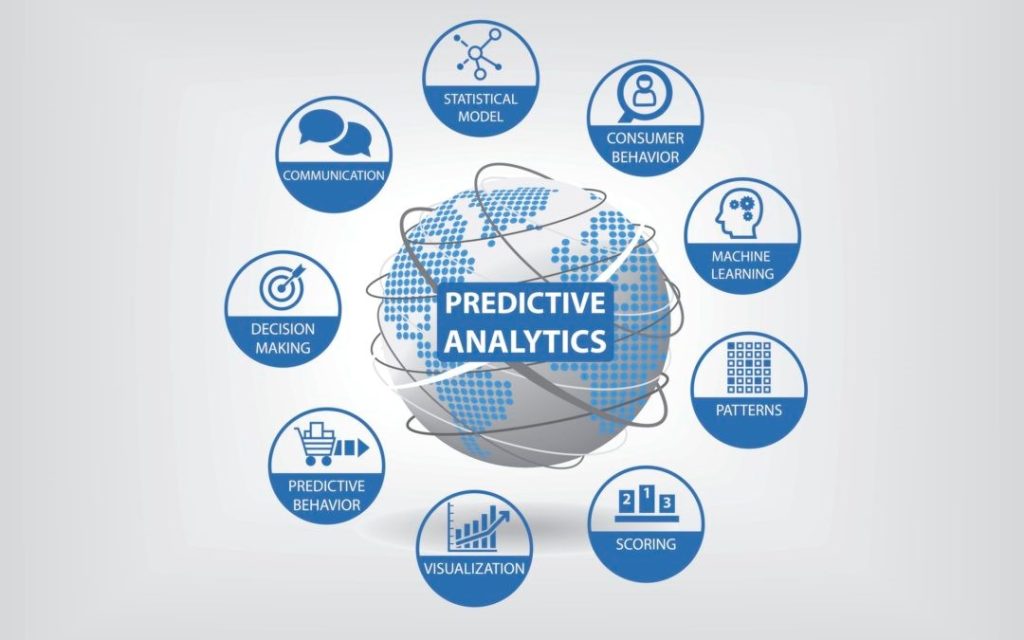
For a Startup, predictive analytics can support planning, but predictions should not be treated as guaranteed outcomes. Models depend on the quality of the information used to create them. Unexpected market changes, economic conditions, competitor actions, or changes in customer behavior can make forecasts less accurate.
The best approach is to combine predictive insights with human judgment. Analytics can indicate what appears likely, while experienced decision-makers consider whether the assumptions behind that prediction still make sense.
Turning Real-Time Data Into Faster Decisions
The speed of decision-making has become increasingly important. Markets can change quickly, and businesses often need to respond before a monthly or quarterly report becomes available.
Real-time dashboards can help managers monitor important business indicators as events occur. For example, an ecommerce company can observe current sales activity, website performance, advertising results, inventory levels, and customer support volume.
This can help management identify unusual changes quickly. If website conversions suddenly fall, the company can investigate immediately rather than discovering the issue weeks later.
However, having real-time data does not mean every decision should be made instantly. Some indicators fluctuate naturally, and reacting to every small change can lead to poor decisions. Businesses need clearly defined performance thresholds and meaningful reporting systems.
Building a Data-Driven Business Culture
Technology alone does not make a business data-driven. Employees and managers need to understand how to interpret information and use it responsibly.
A strong analytical culture encourages teams to ask questions such as why performance changed, which evidence supports a decision, and whether an experiment actually produced the expected outcome. This creates a habit of learning rather than simply reporting numbers.
A Startup does not need a huge analytics department to develop this culture. It can begin by identifying a small number of important business metrics, ensuring that data is collected consistently, and creating regular reviews around those measurements.
Common Challenges in Data Analytics
Although analytics provides significant advantages, businesses can encounter several difficulties when implementing it. Poor-quality data can produce misleading conclusions, while too many metrics can make reports confusing. Privacy and security also become increasingly important as companies collect more customer information.
Small companies should therefore focus on useful data rather than collecting everything possible. A practical analytics strategy should answer specific business questions and connect measurements to decisions.
Some common challenges include:
- Inconsistent or inaccurate data collection.
- Too many metrics without clear priorities.
- Lack of analytical skills within the team.
- Privacy, security, and data governance concerns.
- Confusing correlation with actual causation.
How Small Businesses Can Start Using Analytics
A company does not need sophisticated artificial intelligence systems on day one. A practical starting point is to identify the decisions that have the greatest financial or strategic impact.
Management can then determine which information is needed to support those decisions. For example, if customer retention is a concern, the company might focus on purchase frequency, churn, customer support interactions, product usage, and satisfaction measurements.
The next step is establishing consistent reporting. When teams measure the same indicators regularly, they can identify trends more easily. Over time, the business can introduce more advanced forecasting, automation, segmentation, and machine learning as its needs become more complex.
The important principle is to make analytics actionable. A dashboard that contains dozens of attractive charts is not necessarily useful. The strongest analytics systems help people understand a problem, identify an opportunity, and decide what action should come next.
Conclusion
Data analytics has moved from being a specialized capability to an important part of modern business decision-making. It helps companies understand customers, evaluate marketing investments, manage finances, improve products, forecast demand, and identify operational problems. Most importantly, it gives decision-makers a stronger evidence base for choosing what to do next.For a Startup, this advantage can be particularly valuable. Limited resources make it important to understand which activities create genuine value and which ones consume resources without producing meaningful results. Analytics cannot predict the future perfectly, but it can reveal patterns, test assumptions, and help businesses learn faster.

.jpg&description=Discover how data analytics helps a startup improve decisions, understand customers, control costs, forecast trends, and build sustainable growth in competitive markets.)