
Introduction: The Modern Rise of Startups
In today’s fast-moving digital economy, businesses are no longer built the same way they were a few decades ago. Technology, global connectivity, and shifting consumer behavior have completely reshaped how new ventures are created and scaled. At the center of this transformation lies a powerful question: what is a startup and why has it become such an important part of modern entrepreneurship?
A startup is generally a young company built to develop a unique product or service under conditions of extreme uncertainty. It is driven by innovation, speed, and scalability rather than stability or tradition. Unlike conventional businesses, startups are designed to grow rapidly and often aim to disrupt entire industries.
Startups today are not limited to Silicon Valley or tech hubs. They are emerging in small towns, rural areas, and developing economies, driven by internet access and digital tools. Entrepreneurs now have more opportunities than ever before to turn ideas into global businesses.
Understanding this concept deeply helps us see how innovation is reshaping economies and creating new opportunities for millions of people worldwide.
Understanding the Startup Ecosystem
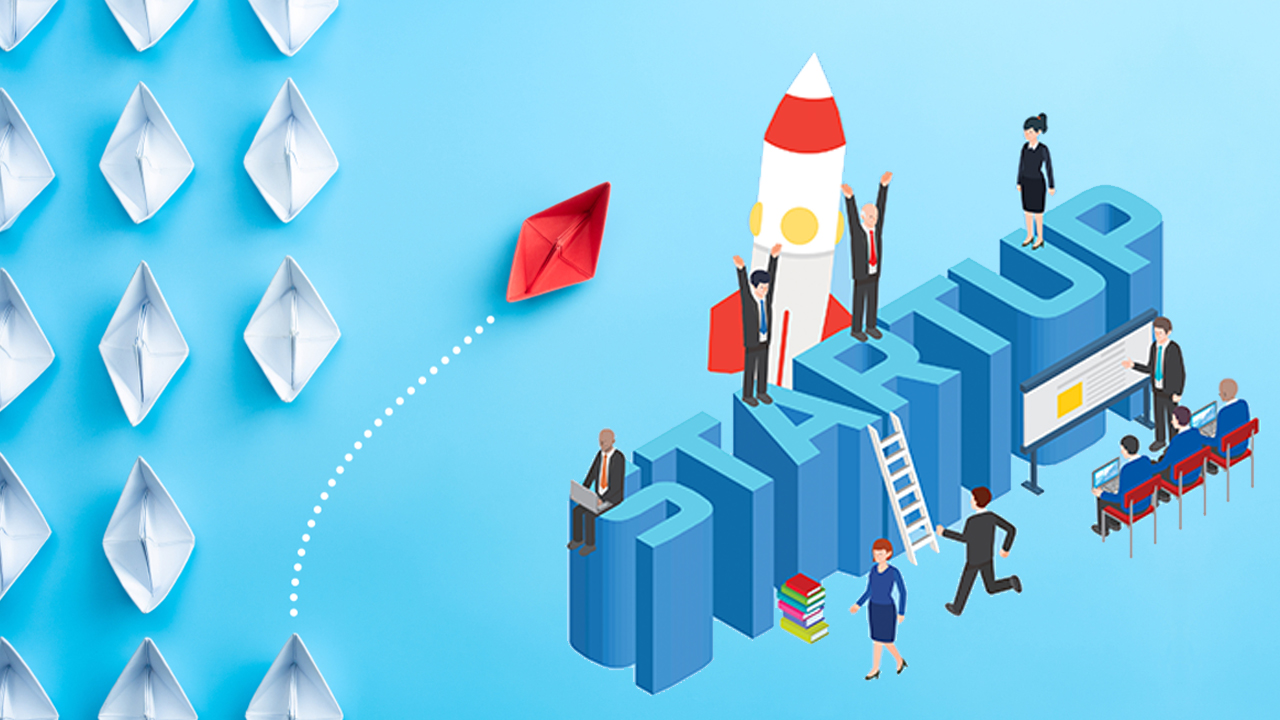
To truly understand what is a startup, we need to look at the ecosystem that supports it. A startup does not exist in isolation—it thrives in a network of investors, mentors, customers, accelerators, and technology platforms.
Startups begin with an idea that aims to solve a real-world problem. This idea is tested, refined, and developed into a product or service. The journey is rarely linear. Founders often face uncertainty, failure, and constant change before finding the right product-market fit.
The startup ecosystem also includes venture capital firms that provide funding in exchange for equity, incubators that support early-stage ideas, and digital platforms that help startups reach global audiences.
In simple terms, what is a startup can also be understood as a dynamic system where innovation meets opportunity, supported by a network that enables growth.
Core Characteristics of Startups
Startups are different from traditional businesses in many ways. They share several defining traits that shape their identity and direction.
Innovation and Problem Solving
Startups are built around innovation. They focus on solving problems in new and efficient ways. Whether it is an app that simplifies transportation or a platform that revolutionizes education, innovation is at the heart of every startup.
Scalability and Growth Potential
A key feature of startups is scalability. This means they are designed to grow quickly without a proportional increase in costs. Digital platforms, for example, can serve millions of users with minimal additional infrastructure.
Risk and Uncertainty
Startups operate in uncertain environments. Founders often do not know if their idea will succeed, which makes risk-taking an essential part of the journey.
Lean Operations
Most startups begin with small teams and limited resources. They focus on efficiency and flexibility rather than heavy structures or bureaucracy.
These characteristics help define what is a startup in practical terms—it is not just a company, but a system built for experimentation and rapid evolution.
Startup vs Traditional Business
One of the most important comparisons in entrepreneurship is between startups and traditional businesses. Although both aim to generate profit, their approaches are fundamentally different.
| Feature | Startup | Traditional Business |
|---|---|---|
| Growth Approach | Rapid and scalable | Slow and stable |
| Risk Level | High uncertainty | Lower risk |
| Innovation | Core focus | Limited focus |
| Funding | Investors & VC | Personal savings/loans |
| Expansion | Global potential | Local/regional |
A startup is built for growth and disruption, while a traditional business is often focused on stability and consistent income. This comparison helps clarify what is a startup in a more realistic business context.
Startups are not necessarily better than traditional businesses—they simply serve different purposes in the economy.
How Startups Develop and Evolve
The journey of a startup is often described as a cycle of learning and adaptation. Founders begin with an idea and gradually shape it into a viable business model.
The first step usually involves identifying a problem worth solving. This is followed by building a minimum viable product (MVP), which is a basic version of the product used for testing.
Feedback plays a crucial role in this stage. Startups rely heavily on customer responses to improve their product and refine their strategy.
Eventually, once the product gains traction, the focus shifts to scaling operations and expanding into new markets.
At this stage, what is a startup becomes clearer—it is a continuous process of experimentation, validation, and expansion rather than a fixed structure.
Funding Stages in Startup Growth
Funding is one of the most critical aspects of startup development. Without financial support, scaling becomes extremely difficult.
Startups typically go through multiple funding stages:
Bootstrapping Stage
At the beginning, founders often use personal savings or small contributions from friends and family.
Seed Funding Stage
Early investors support the startup to help build the product and validate the idea.
Growth Funding Stages
As the startup proves its potential, larger funding rounds like Series A, B, and C help expand operations, hire teams, and enter new markets.
Each stage reflects progress in the startup journey and plays a crucial role in understanding what is a startup from a financial perspective.
Funding is not just about money—it is also about mentorship, guidance, and strategic partnerships.
Innovation and Its Role in Startups

Innovation is the foundation of every successful startup. Without innovation, a startup cannot compete in a crowded market.
Startups often introduce new technologies or improve existing systems. For example, ride-sharing platforms transformed transportation, while online learning platforms reshaped education.
Innovation also extends to business models. Subscription services, freemium models, and gig economy platforms are all examples of innovative approaches introduced by startups.
The ability to innovate quickly helps explain what is a startup in today’s competitive environment—it is a business that constantly evolves to meet changing needs.
Startup Lifecycle Explained
Every startup goes through a lifecycle that includes several key stages of growth and transformation.
y = mx + b
Idea Stage
This is where the concept is born. Founders identify a problem and imagine a solution.
Development Stage
The idea is turned into a product or service. This stage involves research, design, and testing.
Launch Stage
The product is introduced to the market. Early users provide feedback that shapes future improvements.
Growth Stage
The startup begins scaling operations, expanding its customer base, and entering new markets.
Maturity Stage
At this point, the startup becomes a stable business or continues to expand globally.
Understanding this lifecycle is essential to fully grasp what is a startup because it shows how ideas evolve into successful companies.
Startup Culture and Work Environment
Startup culture is often described as fast-paced, flexible, and collaborative. Employees usually work in dynamic environments where innovation is encouraged.
Unlike traditional corporate structures, startups emphasize creativity, ownership, and adaptability. Teams often wear multiple hats and contribute to different aspects of the business.
This culture supports experimentation and allows startups to pivot quickly when needed.
Startup Challenges and Risks
Despite their potential, startups face many challenges. Some of the most common include:
- Limited funding and financial pressure
- High competition in the market
- Difficulty in acquiring customers
- Hiring skilled talent
- Uncertain market conditions
Many startups fail within the first few years due to these challenges. However, failure is often seen as a learning experience rather than an end point.
Global Startup Ecosystem
Startups are now a global phenomenon. Cities like Bangalore, San Francisco, Berlin, and London have become major startup hubs.
These ecosystems provide access to funding, mentorship, and networking opportunities. Governments and private organizations also support startups through policies and innovation programs.
This global network strengthens what is a startup by showing how interconnected and supportive the ecosystem has become.
Why Startups Matter Today
Startups play a crucial role in economic development. They create jobs, introduce innovation, and improve quality of life.
They also encourage competition, which leads to better products and services for consumers. In many industries, startups have forced traditional companies to innovate or adapt.
Startup Lifecycle in Real Terms
To understand the full journey again, it helps to revisit the startup lifecycle:
- Idea generation
- Market validation
- Product development
- Launch
- Growth
- Expansion or exit
This cycle explains what is a startup as a process of continuous transformation rather than a fixed business model.
Definition
A startup is a newly established business designed to develop innovative products or services, scale quickly, and solve real-world problems under uncertain conditions.
Frequently Asked Questions (FAQs)
1. What makes a company a startup?
A company is considered a startup when it focuses on innovation, scalability, and rapid growth in uncertain conditions.
2. How long does a startup phase last?
The startup phase usually lasts between 5 to 10 years depending on growth and market success.
3. Are all new businesses startups?
No, only businesses with scalable and innovative models are classified as startups.
4. Why do startups fail?
Startups often fail due to lack of funding, poor planning, weak market demand, or strong competition.
5. Can a startup become a big company?
Yes, many global companies today started as small startups and grew into large corporations.
Conclusion: The Future of Startups
In conclusion, what is a startup is more than just a definition—it is a journey of innovation, risk-taking, and transformation. Startups represent the future of business, where ideas matter as much as execution.
They begin with uncertainty but have the potential to reshape entire industries. From funding and innovation to growth and scaling, every stage of a startup is built on learning and adaptation.
As technology continues to evolve, startups will remain at the forefront of global change. For aspiring entrepreneurs, understanding this journey is the first step toward building something meaningful and impactful.
The world of startups is challenging, but it is also full of opportunity for those willing to take the leap.